Exploiting Profiles: Episode II – The Nit


Overview
Common sense will take you a long way when it comes to exploiting nits. Fundamentally, the Nit is too tight and too passive. Common sense suggests you exploit their tightness by betting more aggressively and their passivity by over-folding to their aggression.
Solver analysis does not turn this common sense on its head, but it does facilitate more nuanced implementation of this strategy. The details matter when it comes to just how much more aggressive you should be, and there are even cases where the optimal exploit is to play more passively.
The Experiment
We will compare BTN’s strategy when playing heads up against a Nit and against a GTO opponent in a 100bb cash game, BTN vs BB SRP. We will compare reports detailing BTN’s aggregated c-bet strategy across all possible flops against each player type. Then, briefly review the differences in strategy for future nodes.
This spot is a good one from which to generalize because it is among the most frequently occurring and because you should be the preflop aggressor in most pots you play against a Nit. This is partly because they rarely aggress, but also because, when they do aggress, you should fold more often to them before the flop.
For the sake of this experiment, both the Nit and the GTO player have the same preflop range for calling BTN’s raise from the BB. This enables an apples-to-apples comparison of how postflop strategies change as a result of the Nit’s tightness and passivity. It is also a reasonable assumption for at least some nits. Especially in the era of readily available solver strategies for preflop play, it is not uncommon to see opponents play a decent preflop strategy only to revert to their same old mistakes after the flop. It is also not uncommon for a player’s nittiness to become more pronounced as the pot gets larger. They will “flick it in” for a blind or two but become more reluctant as the risk ramps up.
That said, not all nits are like this. A player who over-folds their BB and also does not 3-bet as wide for value as a solver would against a BTN open will see the flop with an overly strong range, and that will incentivize less aggression against them despite their tendency to over-fold.
Continuation Betting
{{question-mark}}
Take a look at the following images showing BTN’s c-betting strategy against a GTO player and against a Nit, both sitting as the BB. What differences do you notice?
{{/question-mark}}
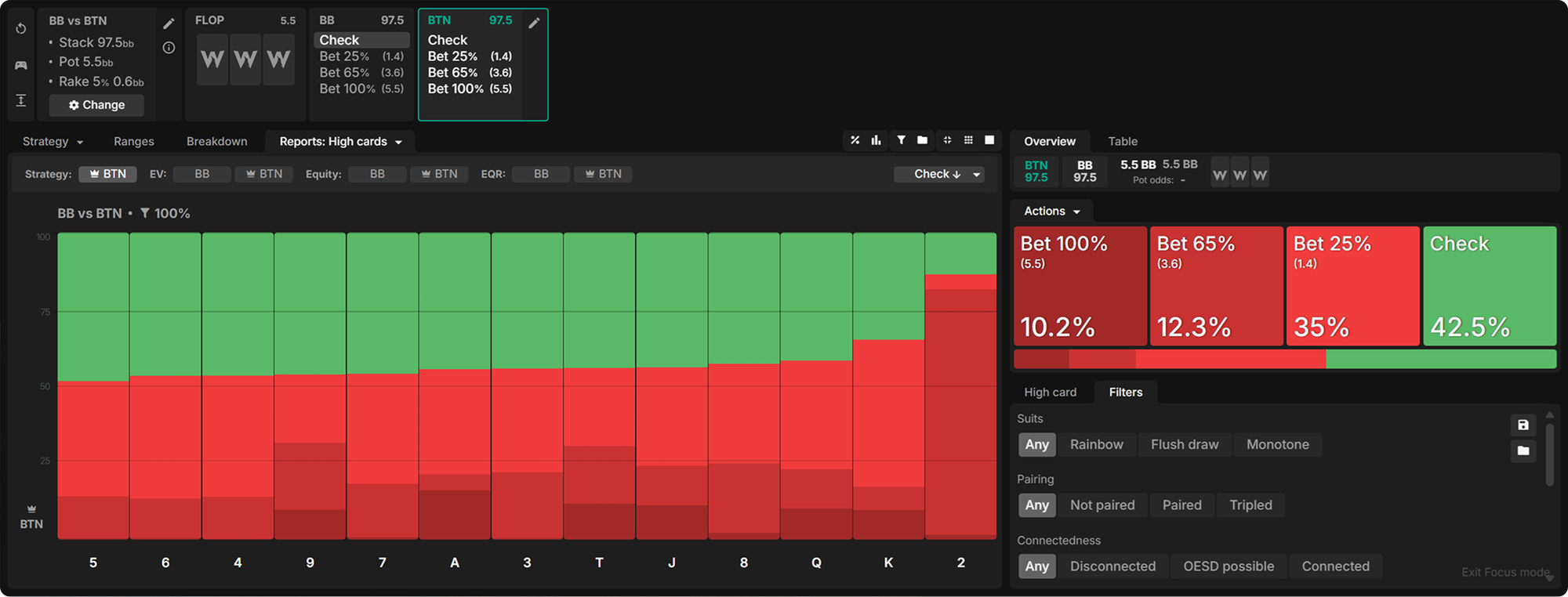
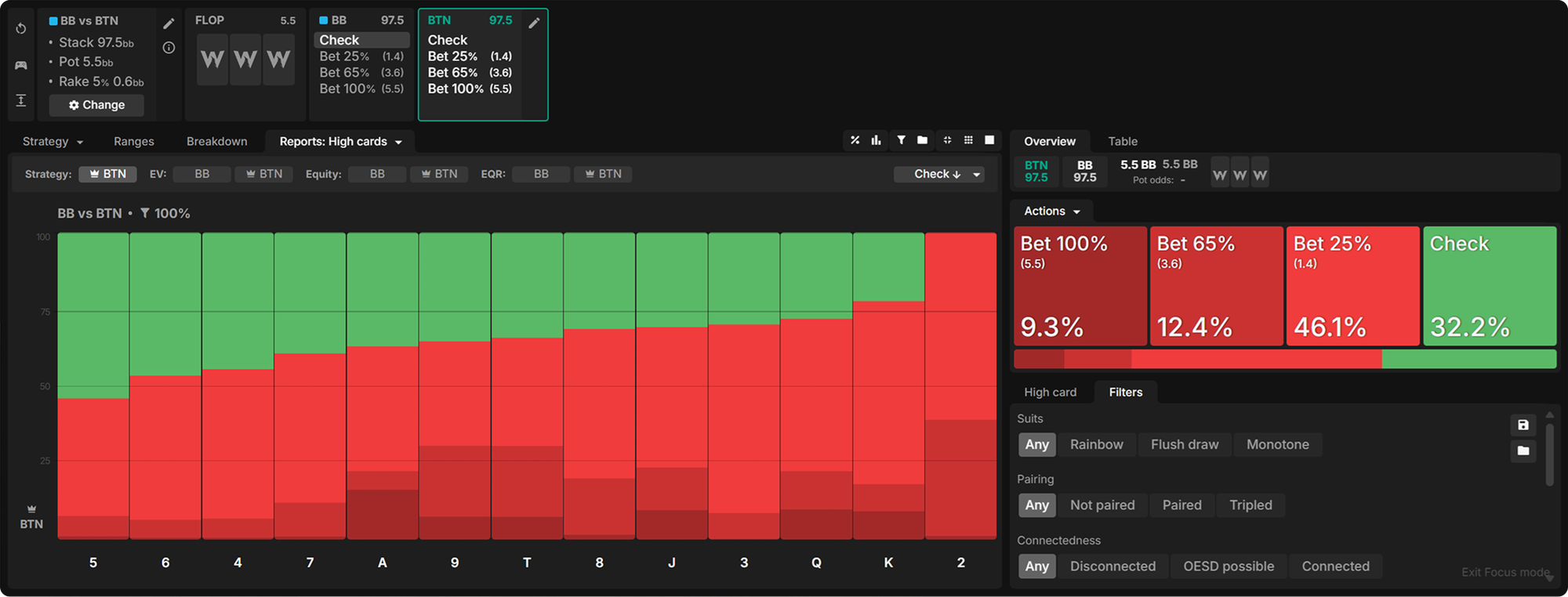
The biggest difference is that the BTN c-bets more often against the Nit, who will both fold at too high a frequency and raise at too low a frequency. Check-raises are an essential tool for combating c-bets. When the BB does not raise enough, you can get away with a lot more c-betting, even on flops that would not otherwise be good for it.
Note that these “extra” c-bets are all sized 25% pot, and even a few of the bigger bets BTN makes against a GTO BB become 25% pot against the Nit. This is to some degree an artifact of how Player Profiles work: the Nit’s mistakes do not scale linearly with bet size, so small bets are generally the most efficient way to exploit the Profile.
But there is real-world game theory at work here as well. Raises are a bigger part of BB’s optimal response to small c-bets than to large ones. So, a player who does not raise enough against any bet size makes a bigger mistake against a small bet than against a large one, which they are not often supposed to raise anyway.
Another artifact of the sim, which may or may not reflect human mistakes, is that it is not forward-looking. In other words, the solver does not consider, on the flop, that BB will also over-fold to bets on future streets. This pushes in both directions, as it sees the value in bluffing weak hands on the flop but not the value in checking the flop and then bluffing later streets. However, it also fails to anticipate the added value of barreling, which means it somewhat undervalues betting the flop as well.
The Worst Flops for C-Betting
Did you notice that the “extra” c-bets against the Nit are not evenly distributed across all flops?
The trend is that flops that were best for c-betting become disproportionately more conducive to betting against a Nit. This trend is easier to see when we filter out paired flops. It’s not obvious from the charts above, but there are exceptions; some flops where the BTN c-bets less frequently against the Nit than against the GTO opponent! Why do you think this is?
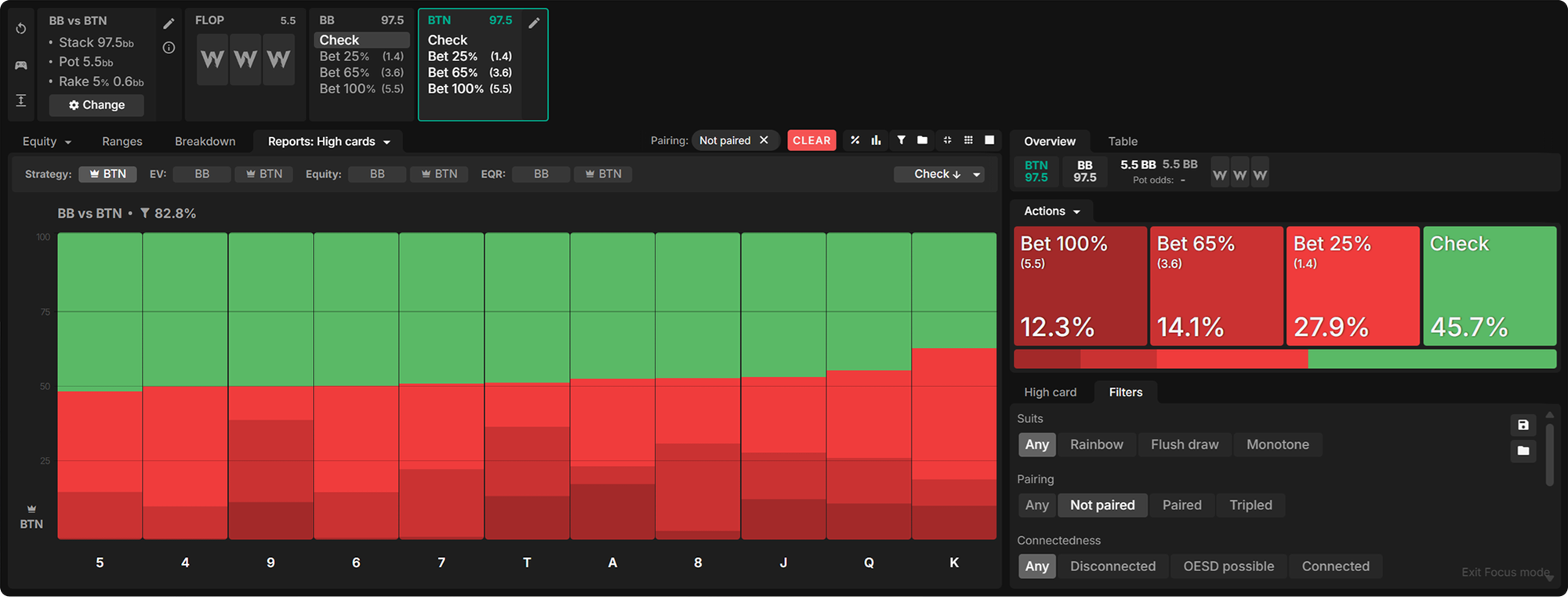
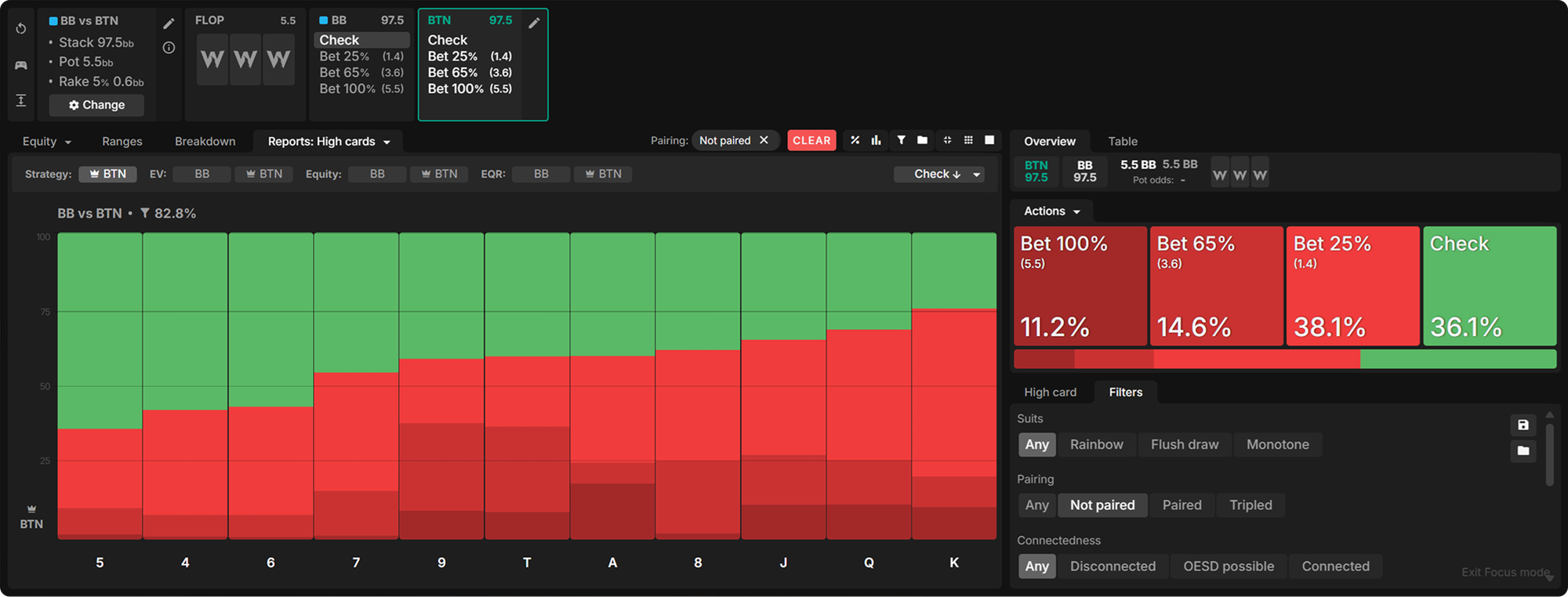
We’ve talked about folding too much and raising too little, but the Nit makes another mistake we haven’t discussed yet: Their incentive for passivity means they miss profitable donk bets that a GTO BB would find. This isn’t generally a big deal, as BB isn’t supposed to donk bet the flop often at equilibrium, but there are certain flops where it is a big deal.
On 543r, for example, a GTO BB leads 37% of their range. This includes disproportionately many strong hands, enabling BTN to bet 45% of their range when BB checks. If we force BB to check the flop and then play optimally afterward, BTN’s betting frequency plummets to 20%, lower than against the Nit who checks their entire range even when allowed the option to bet.
Responding to a Check-Raise
Precisely because the Nit plays so passively, their aggression must be taken seriously. One of the most important exploits against such players is simply to fold to their raises. It may not feel as good as a criminal bluff or heroic call, but in the long run, it makes you at least as much money.
If anything, this is even more true against real-life nits than against the Nit profile, which still makes some attempt to balance its aggression. Your nittiest human opponents will raise ranges that are much too strong—don’t pay them off when they do so!

Barreling the Turn
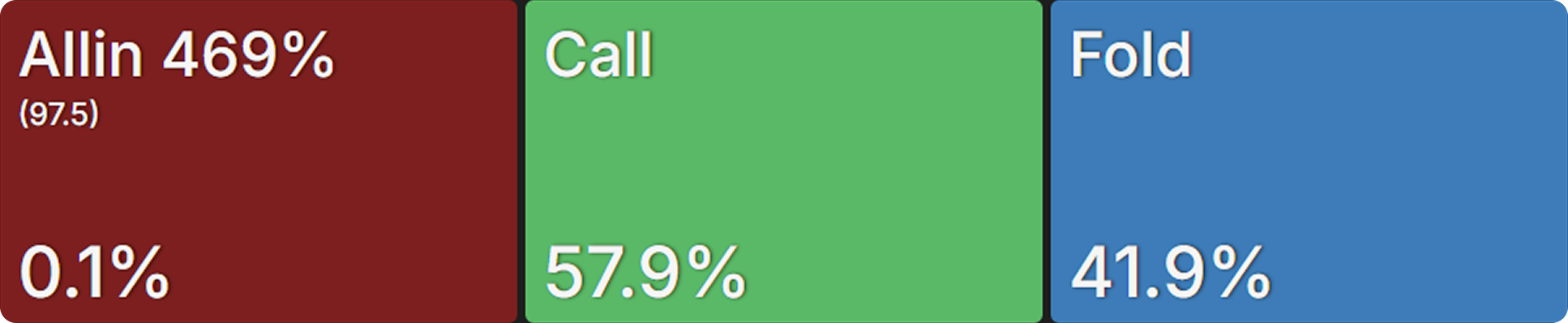
Whether to follow up a flop c-bet versus a Nit with a turn barrel is a tricky case. On the one hand, the Nit will fold too much and raise too little, just as on the flop, and that makes barreling more appealing. Your weakest bluffs benefit from the extra folds, and your semi-bluffs and thin value bets benefit from not getting raised.
On the other hand, the Nit’s tendency to over-fold the flop means they bring an overly strong range to the turn, and that makes barreling less appealing. Some of the hands you’d like to bluff them off of or get thin value from already folded the flop!
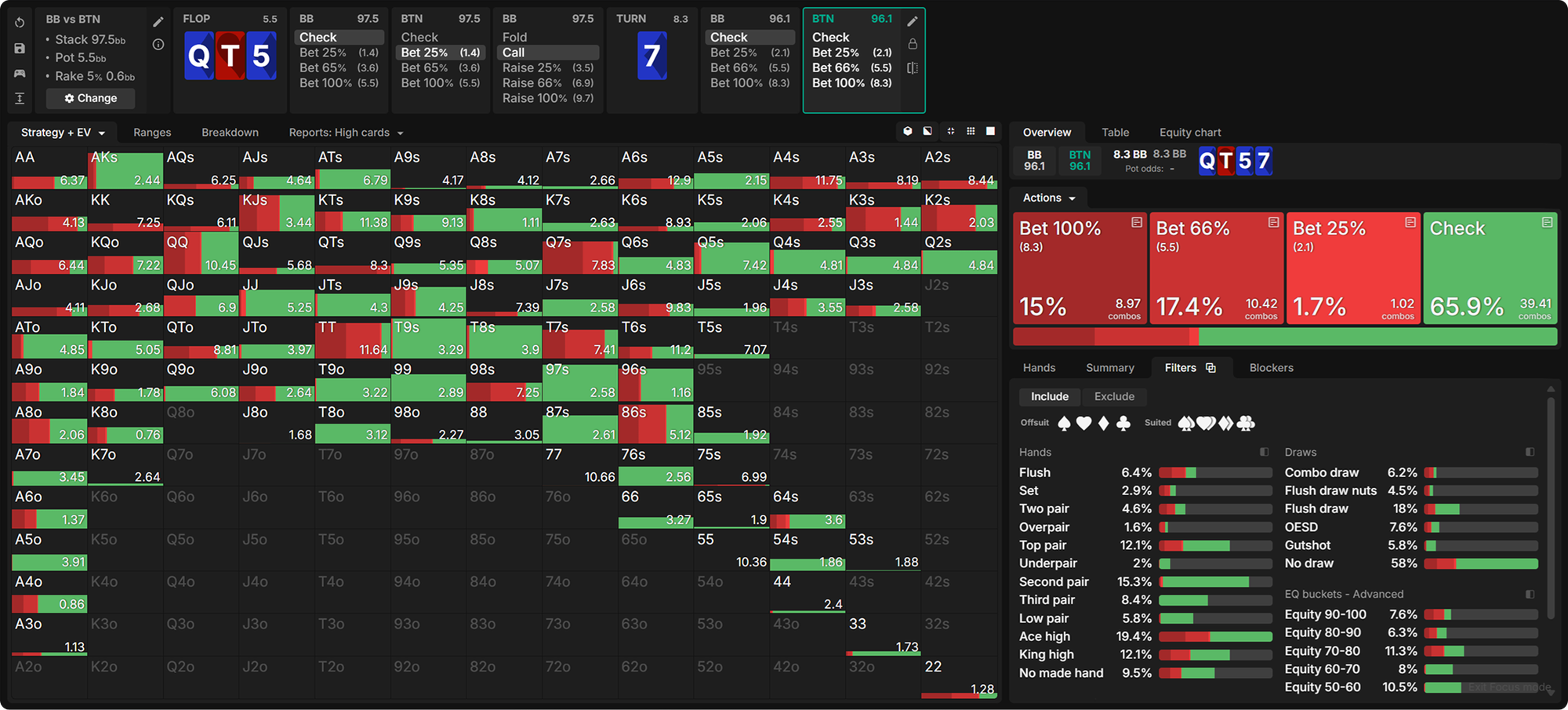
There’s no simple solution to this quandary, but a good guideline is to reduce your barreling frequency unless the new card obviously favors your range. For example, after c-betting Q♦T♥5♦ for 25% pot, here is BTN’s barreling strategy on a neutral 7♣ turn and a flush-completing 7♦ turn:
Turn: 7♦
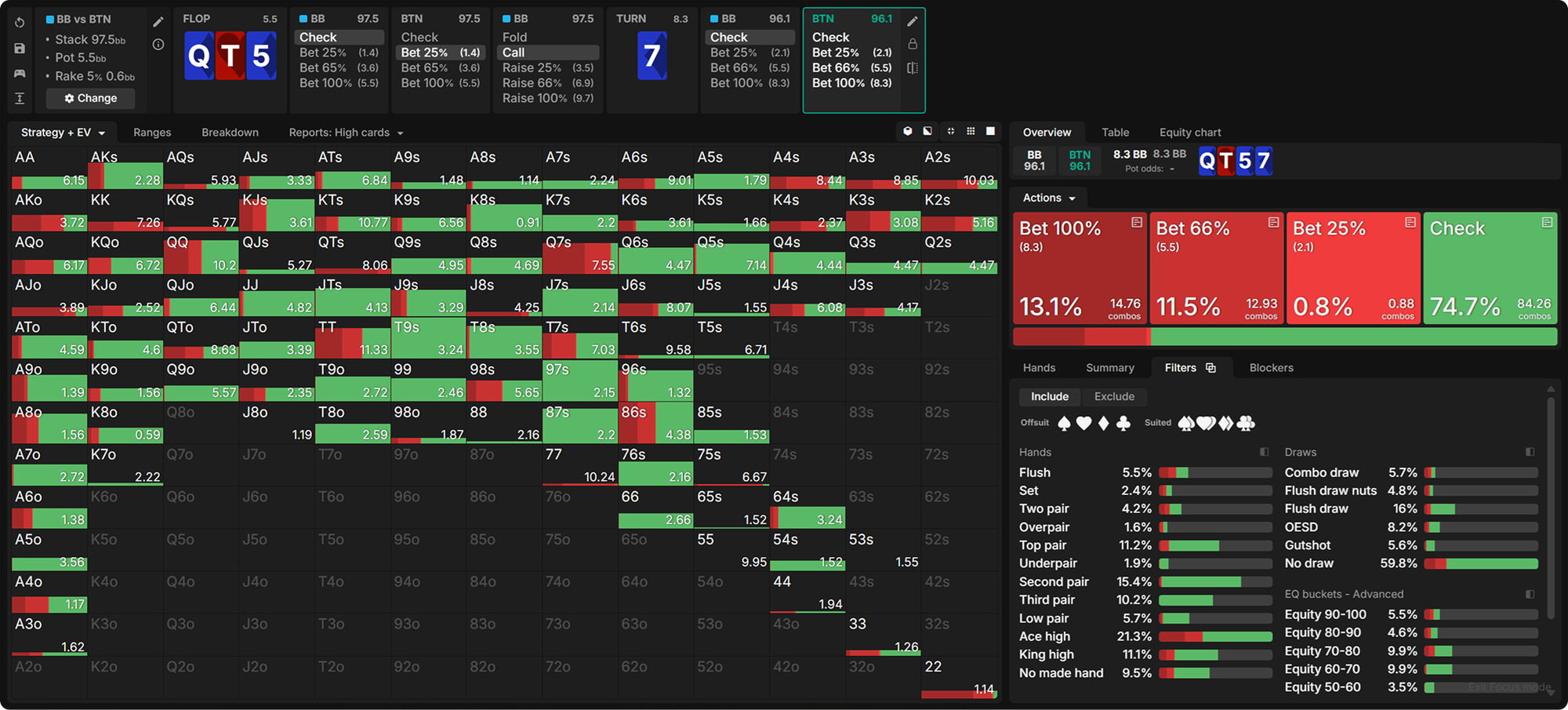
Turn: 7♣
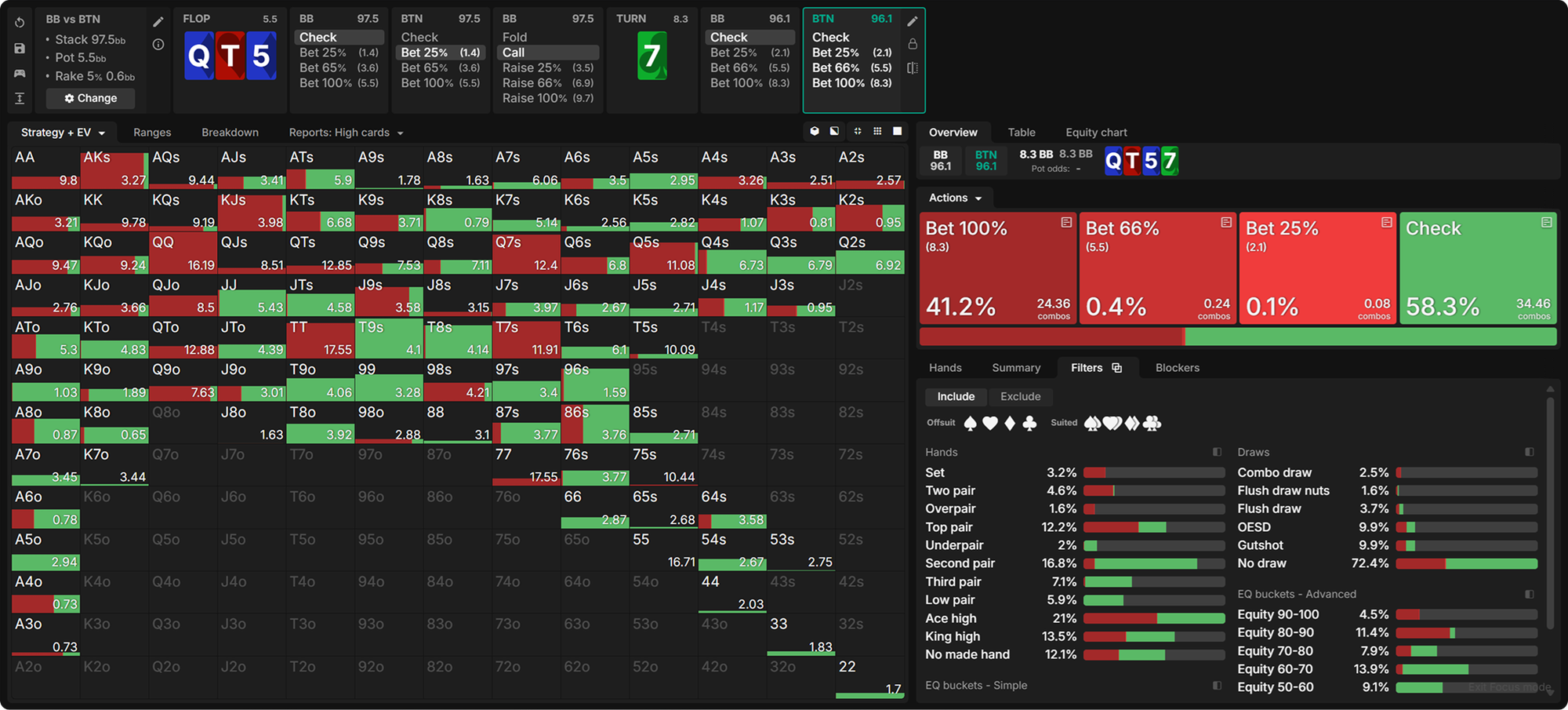
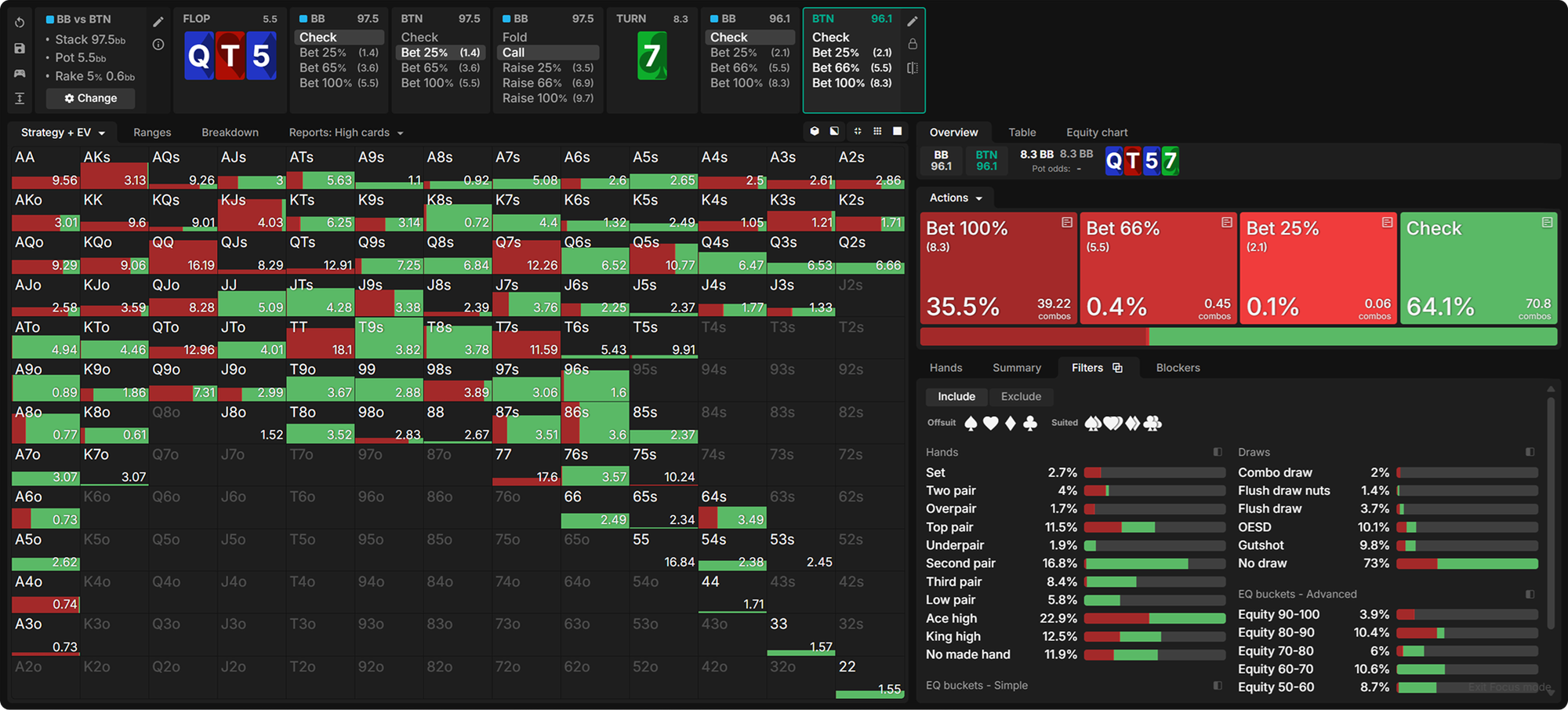
In both cases, BTN barrels less often into the Nit than into the GTO player. This is because the Nit’s range that goes to the turn has a significant equity advantage, and these new turn cards do nothing to disrupt that.
On an 8♦2♠2♥K♠ board, however, the Nit’s flop over-folding becomes a liability on the turn. They have even less King-x in their range than a GTO player would, making them more vulnerable to barrels:
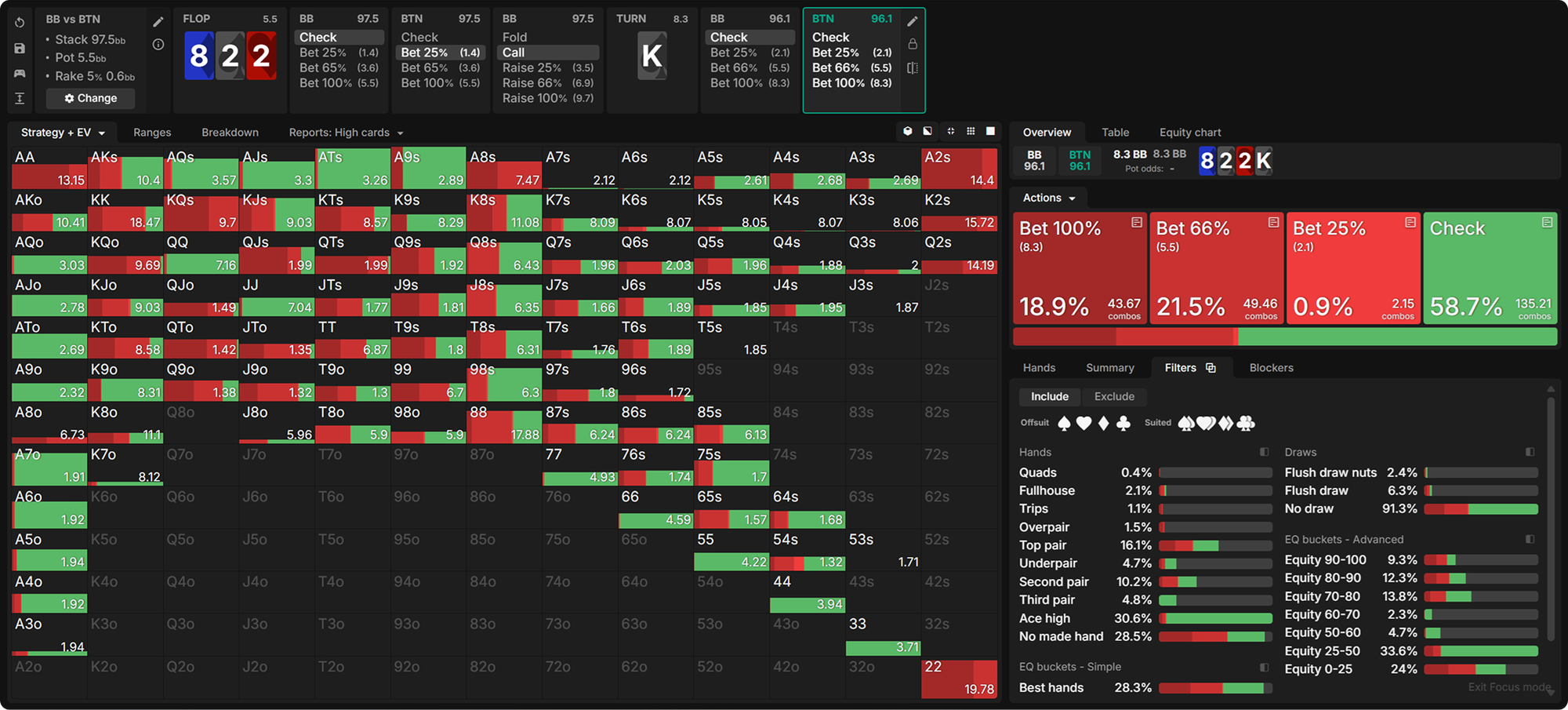
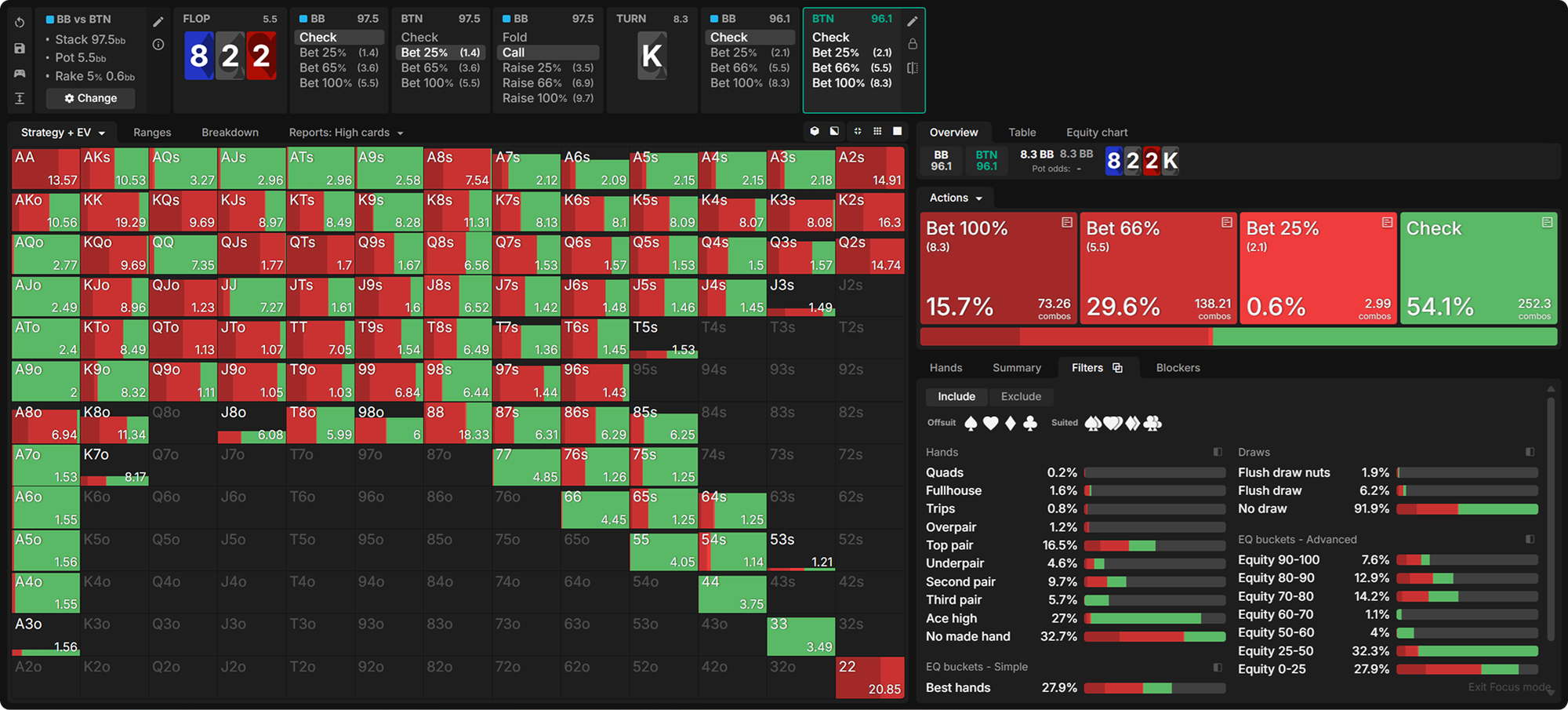
Conclusion
The basic guidelines for playing against nits are really just good advice for exploitative bluffing in general. The objective is to drive them to the point where they over-fold and then step on the brakes. So, if they over-fold preflop, you can raise their blind aggressively but will need to proceed more cautiously after the flop, as they will start with a stronger distribution of hands than a GTO player would. If they over-fold flop, you can c-bet aggressively, but then need to slow down on the turn.
Semi-bluffing can still be profitable, because they will still make some tight folds and you don’t need to worry too much about getting raised off your equity. But it’s hard to value bet thinly against them, because they have an overly strong range to begin with and they may fold some of what you’re hoping to get called by.
The Nit player profile over-folds all spots uniformly, and even so, we generally see some tightening up from the aggressor after the Nit calls. Against humans, more dramatic adjustments may be called for. A good rule of thumb is that if one street is very good for bluffing, the next is generally very bad (assuming you did bluff the earlier street and got called).
One common player type you’ll see a lot in live poker, I call “Splashy.” These splashy players are too loose on early streets, when bets are small. And they enjoy seeing flops/turns and trying to make hands. Once the bets get big, however, they switch too tight and over-fold.
A great strategy against these players is to isolate them aggressively with preflop raises, make small c-bets to cap their range, and then if you don’t get raised on the flop, bluff them out with a big bet on the turn. That’s great when it works, but if they don’t fold the turn, look out! They usually have a strong hand and are strapped in for a big river bet. Don’t give it to them unless you’ve got the goods!

Exploiting Profiles: Episode V – The LAG
LAG players are uncomfortable to play against. They barrel, they lead, they never seem to fold, and somehow they keep winning pots they have no business being in. In this article you'll learn how to perfectly exploit them so you start taking their money instead.

Exploiting Profiles: Episode IV – The TAG
They're not a fish. They're not a maniac. The TAG reg is the opponent you'll face most often, yet most players have no idea how to exploit them.

Exploiting Profiles: Episode III – The Maniac
There's a maniac at your table. They bet every street, call everything, and somehow keep winning pots they have no business being in. So what's the adjustment? Do you start blasting back?