Are You Leaving Value on the River?

Overview
In the early days of online poker, players were too loose. In the modern era, I think the prevailing leak is that they are too tight.
Perhaps the most consistent leak I have noticed in the last six months before writing this piece is players who just call with nutted hands on the river, because they misjudge relative hand strength and fear hands that make up only an insignificant part of their opponent’s range.
Think of scenarios such as having a set when straights are possible or having a straight when flushes are possible. The most egregious example I’ve recently seen was a player only calling with the nut flush because J♥9♥ could have made a straight flush.
OK, in that last hand, I actually did have a straight flush and probably gave away some massive tell, but it still felt like the player was leaving value on the table.
As is often the case with my articles, I may appear an expert, picking apart these leaks. But the reality is that I explored this issue only because it was a persistent leak of my own that I had to address. I’m not a professional; I am a writer who can use a solver, and this is another example of how I used GTO Wizard to fix my own leaks.
1) Raising Sets When Straights and Flushes Are Possible
For this scenario, let’s start with a GTO example of how to play these spots.
The Hand
This tournament hand features 60bb effective stacks. UTG opened 2.3bb, and the HJ cold called.
- The flop is J♥5♠2♦. UTG bets 39% pot, the HJ calls.
- The turn is the 9♥. UTG barrels 40% pot, the HJ calls.
- The river is the 3♥.
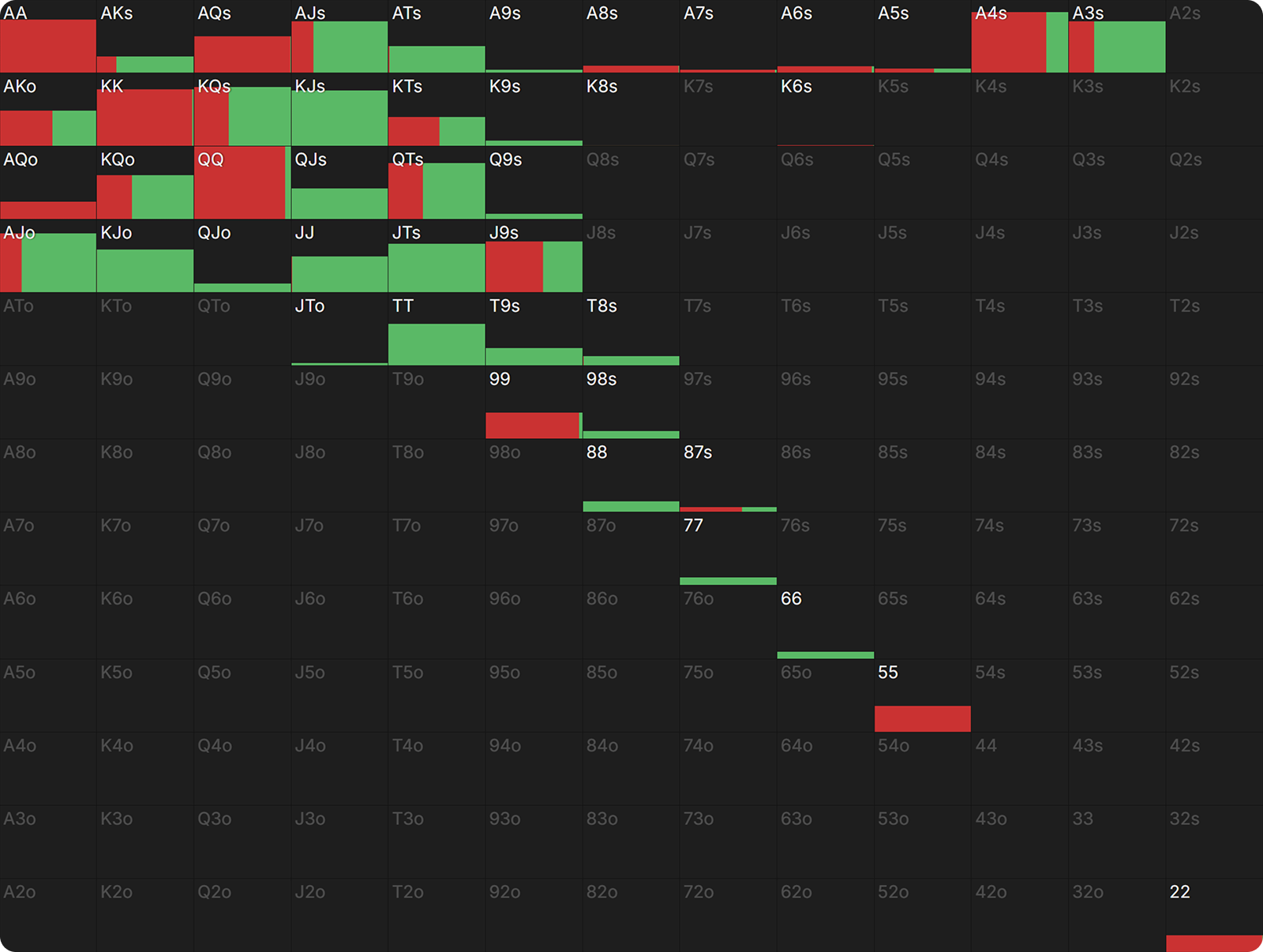
Having arrived at the final betting street, this is UTG’s first river action, at equilibrium:
{{grid: 4fr 1fr}}

{{/grid}}
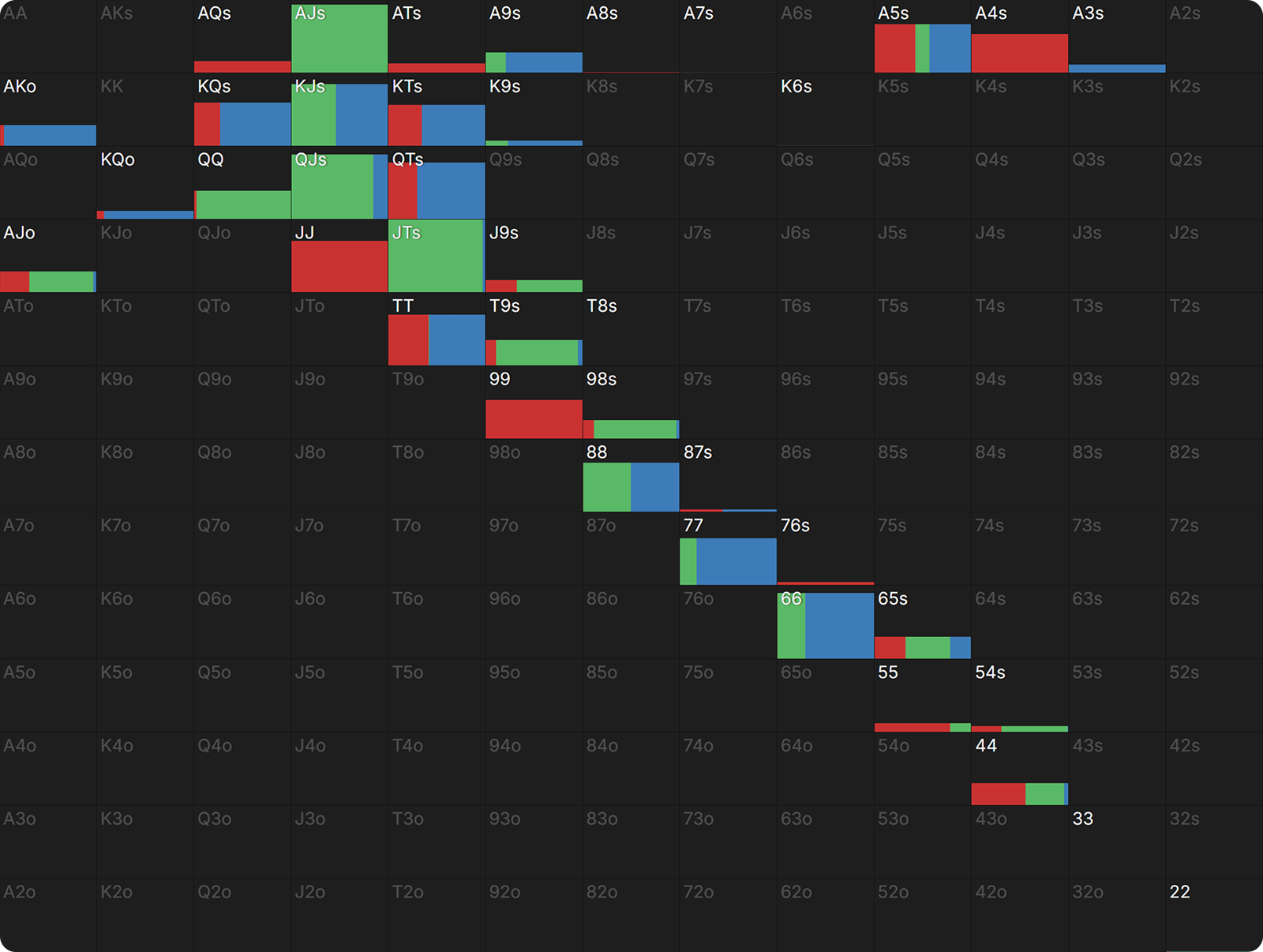
UTG bets 67% of the pot almost half the time. When they make that bet, this is how the HJ responds:
{{grid: 4fr 1fr}}

{{/grid}}
There is a healthy amount of raising all-in (64% pot) from the HJ. Hands as weak as two pair sometimes raise for value. Sets and straights always raise even though flushes are possible.
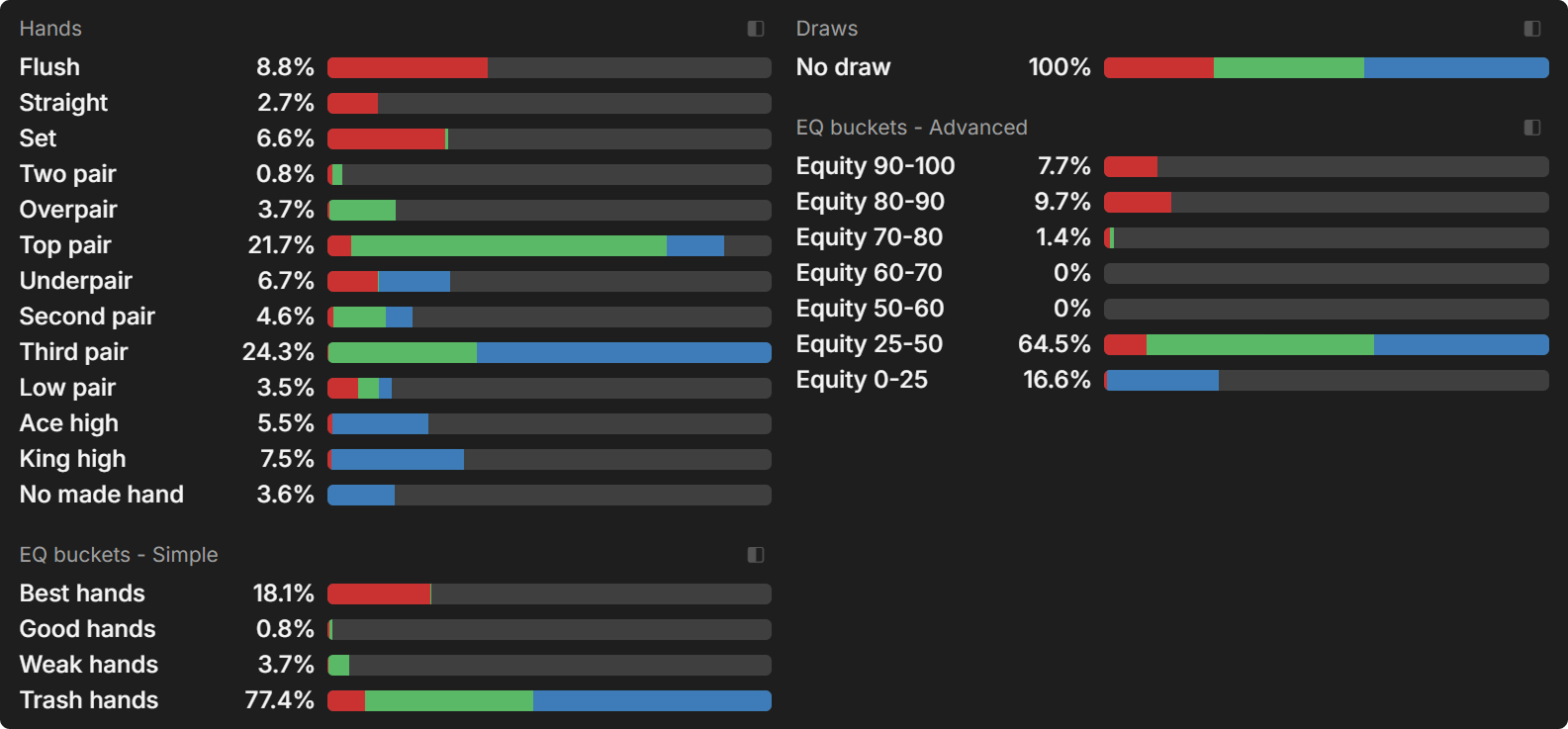
For many players, raising this thin for value feels counterintuitive. After all, it’s hard to imagine worse hands calling, but as the picture below shows, plenty of them do.
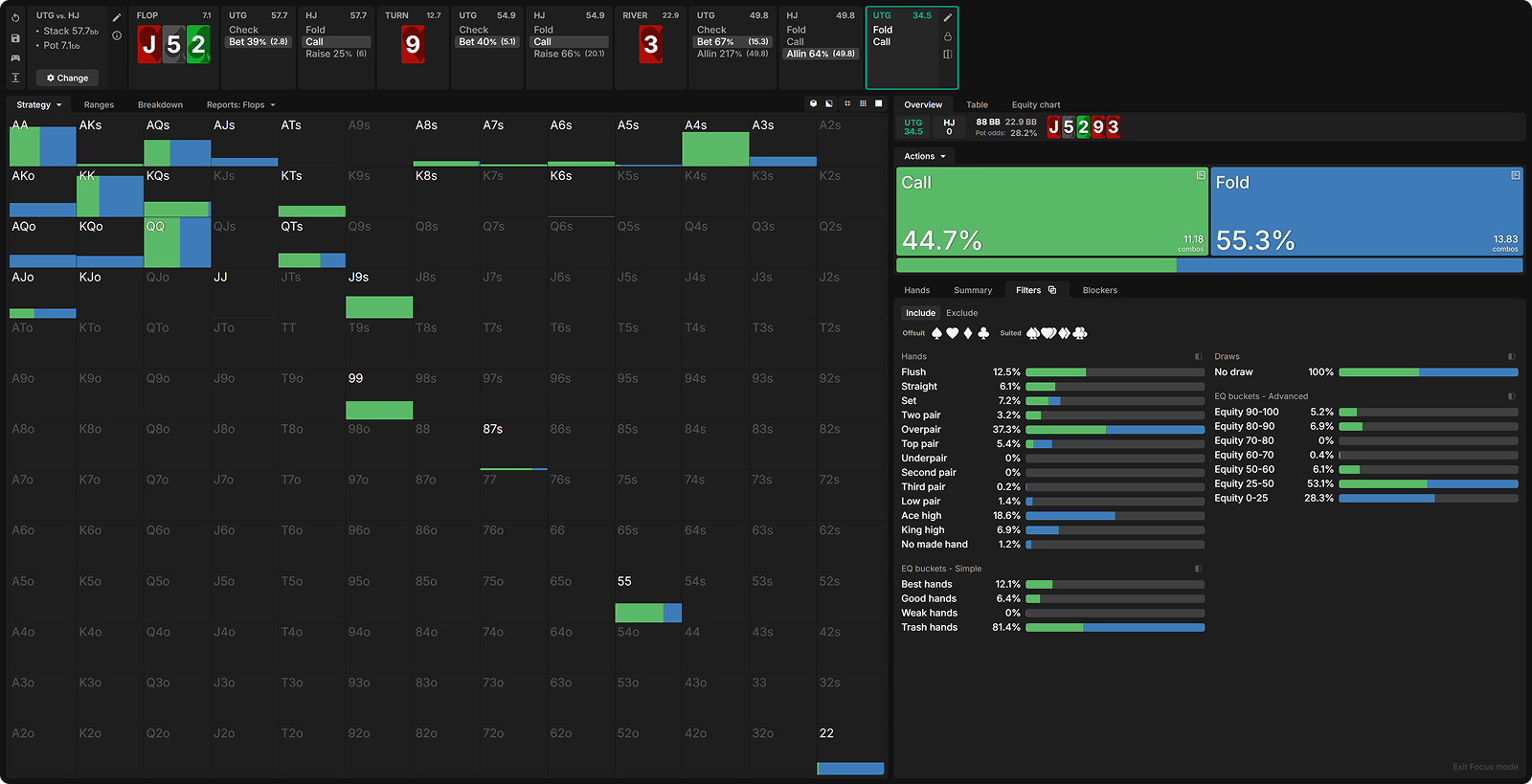
Some top and overpairs will call to prevent exploitation via over-bluffing. Two pair and above almost always call.
Let’s say you, as the HJ, have 99 for the middle set. At first, it might seem unlikely that many worse hands would call a shove. However, keep in mind that overpairs make up such a large portion of the opponent’s range when they barrel thrice, that they’ll be forced to call a shove with some of them. In fact, overpairs alone account for ~37% of the entire calling range in this spot. Throw in some two pair hands and a few one pair hero calls, and suddenly we have a profitable value-shove with a set.
1.1) How to Exploit Players Who Don’t Raise Their Sets
Now let’s nodelock that the HJ does not raise but only calls with sets or worse. This is the kind of player who believes that their opponent “won’t call with worse.”
This first example is a partial lock, meaning I have only locked the calls and let GTO Wizard AI adjust the rest of the range accordingly. So the HJ will still be bluff-raising the river when UTG bets.
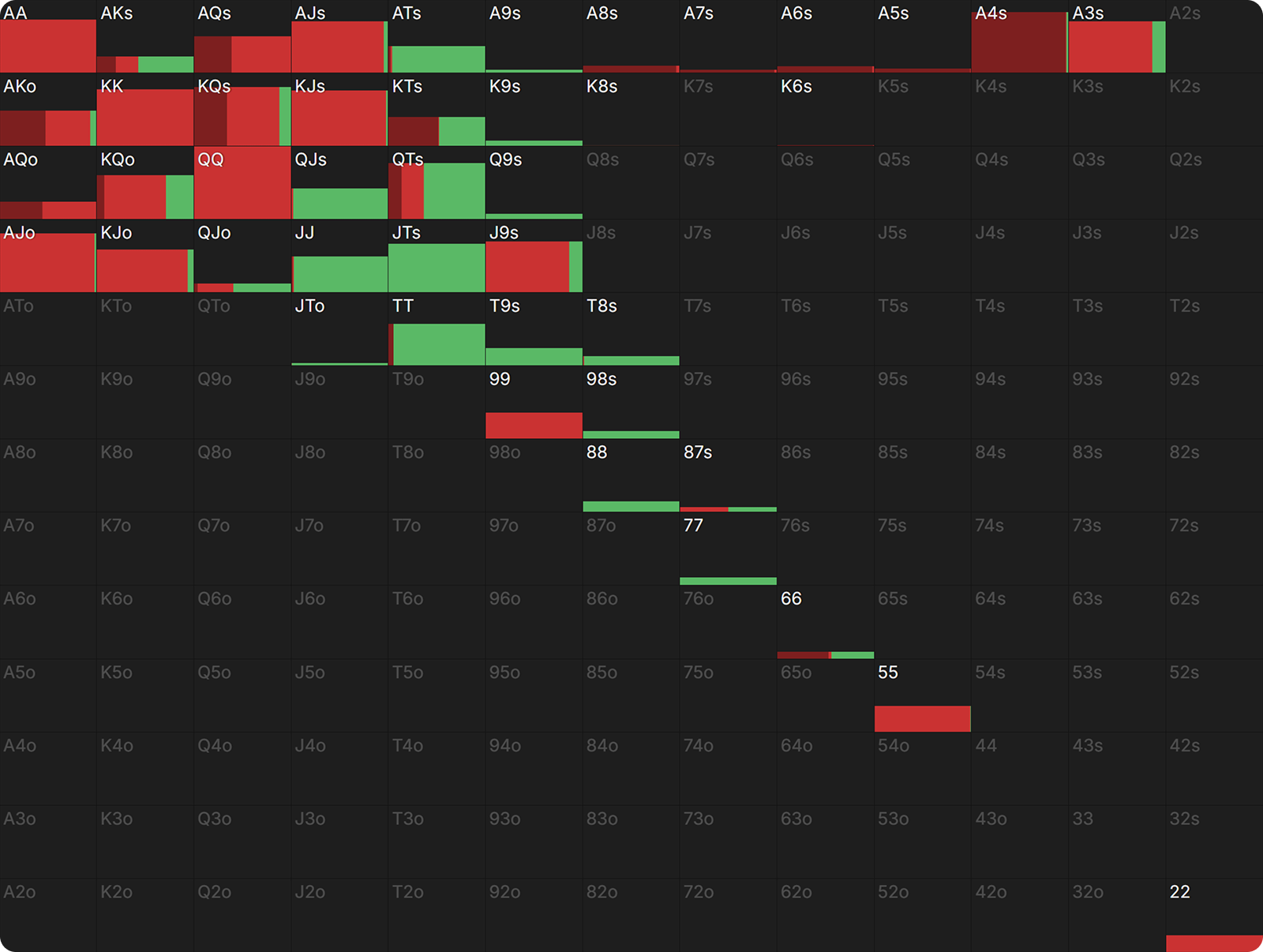
With this new information, this is UTG’s adjusted first river action:
{{grid: 3fr 1fr}}

{{/grid}}
There has been a dramatic increase in the betting frequency. UTG checked ~52% of the time in GTO world, but here they only check ~25%.
The shift towards more aggression is also noticeable in the emergence of bigger bet sizes. At equilibrium, there was no shoving, but here UTG shoves ~15% of the time. There has also been an increase in the relatively smaller lead size.
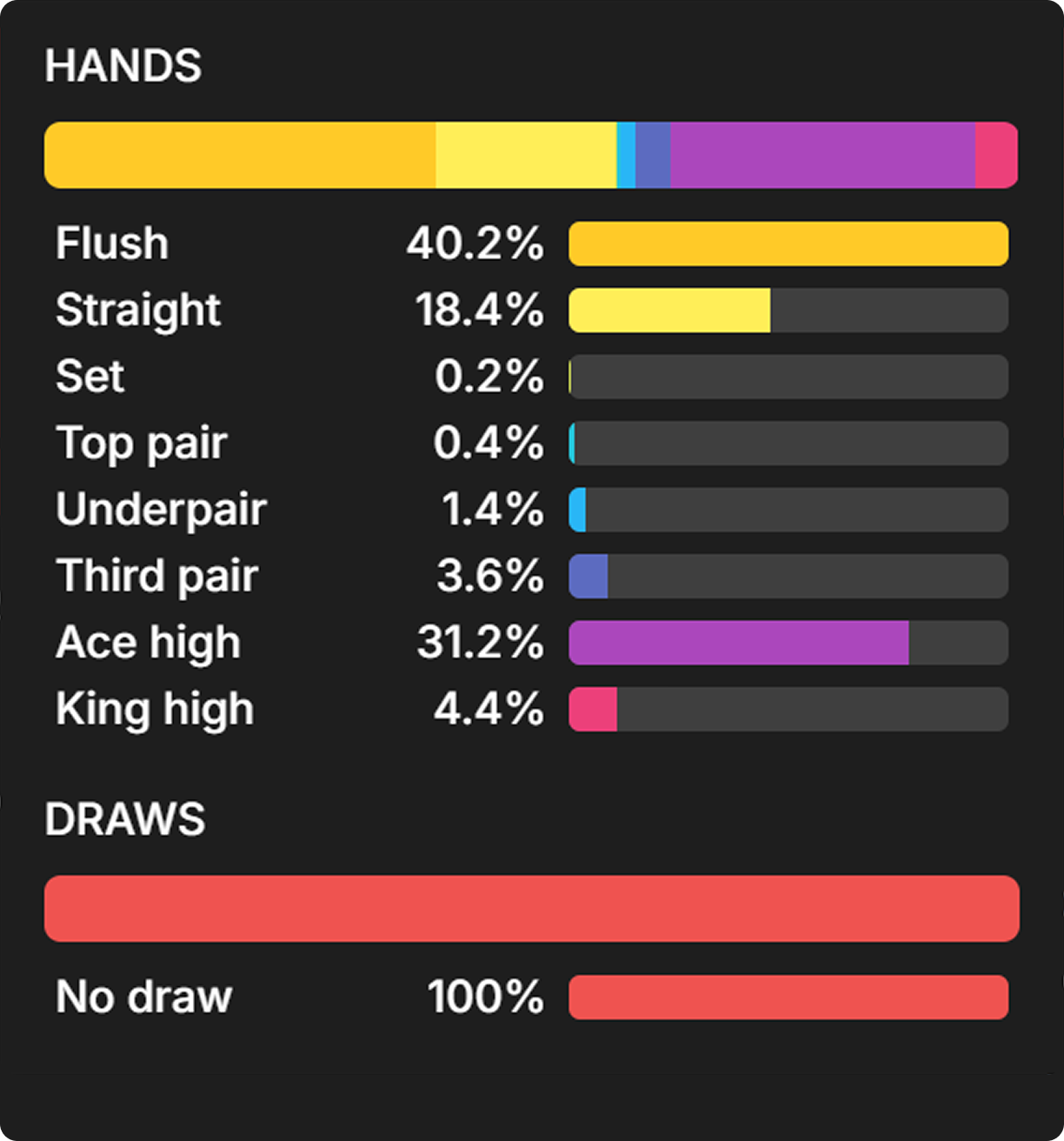
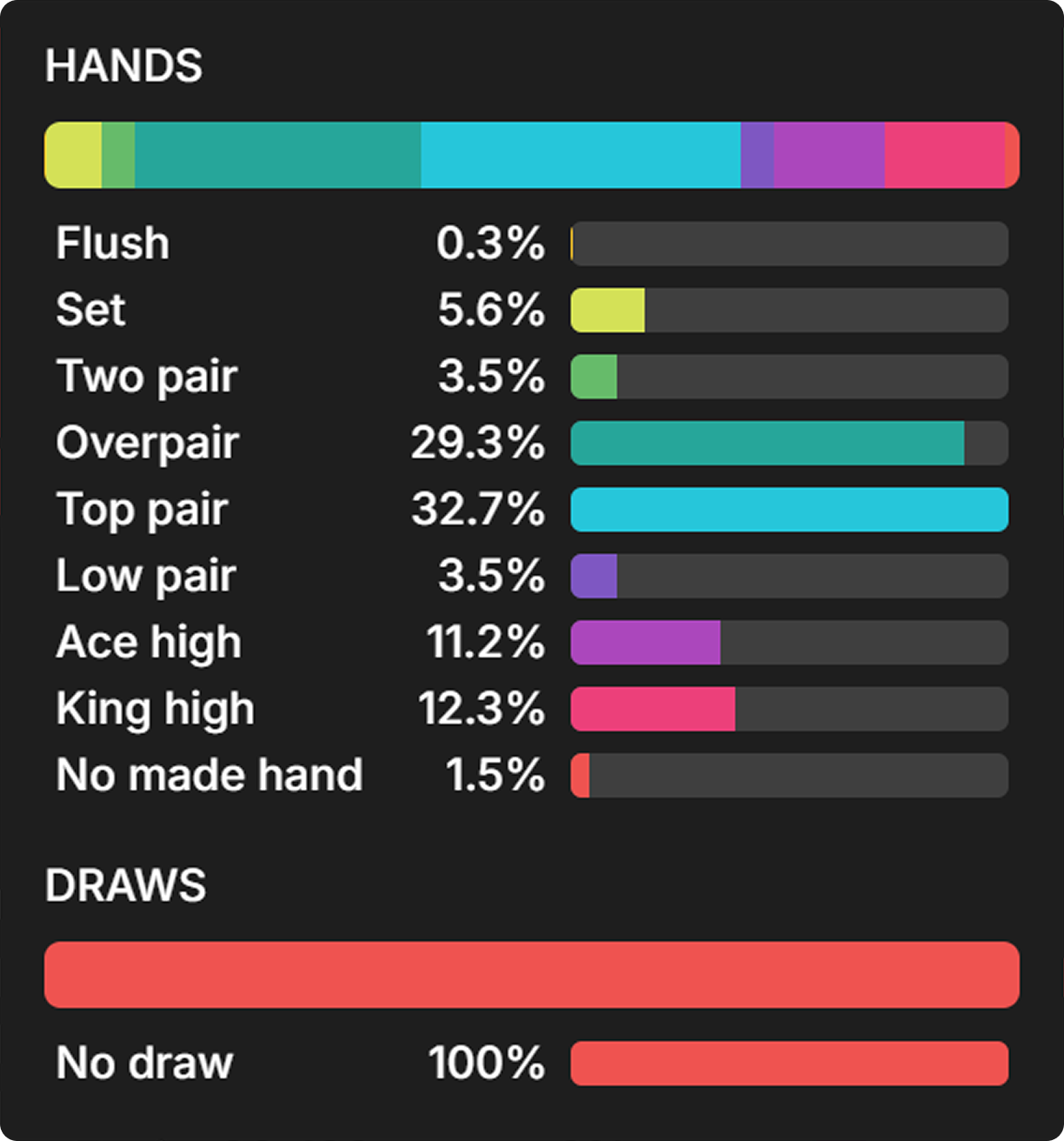
Below, you can view the range composition of UTG’s river bet sizes:
{{grid: 2}}
{{/grid}}
It seems that our very strong hands are the ones that shove. And our strong, but not nutted, value hands like top pair and overpairs prefer the smaller sizing.
One of the great lessons I have taken from solvers is that a lot of the strategy is dictated by how likely the opponent is to raise. In this example, the HJ is much less likely to raise than theory recommends.
Lead 67% pot
First of all, that means we can pursue value with our thinner hands more aggressively. In the GTO example, a lot of Jack-x checks here. Top pair does not want to get raised on a board like this, so it is played as a bluff catcher. In this nodelocked example, we are much less concerned about being raised, so we can push equity with these medium-strength hands.
Lead All-In (217% pot)
As for the shoves, this is because we cannot rely on the HJ raising when we have a very strong hand, such as a flush. The HJ should theoretically raise when they have a straight or set, which is great when we have a flush. When they don’t raise for value enough, we take matters into our own hands and bet much larger to compensate for this.
Here are two consistent themes I have identified by inspecting this leak across a number of board textures and scenarios:
- Betting frequencies increase overall because we are less concerned about getting raised.
- We overbet the nutted part of our range to get more value from players who are playing their value timidly.
1.2) When They Are a Mega Nit
Most players play their straights when a flush is possible as a raise, but I have seen some players really nit it up and only call them in these spots. So let’s nodelock even further, and say the HJ only raises a flush for value.
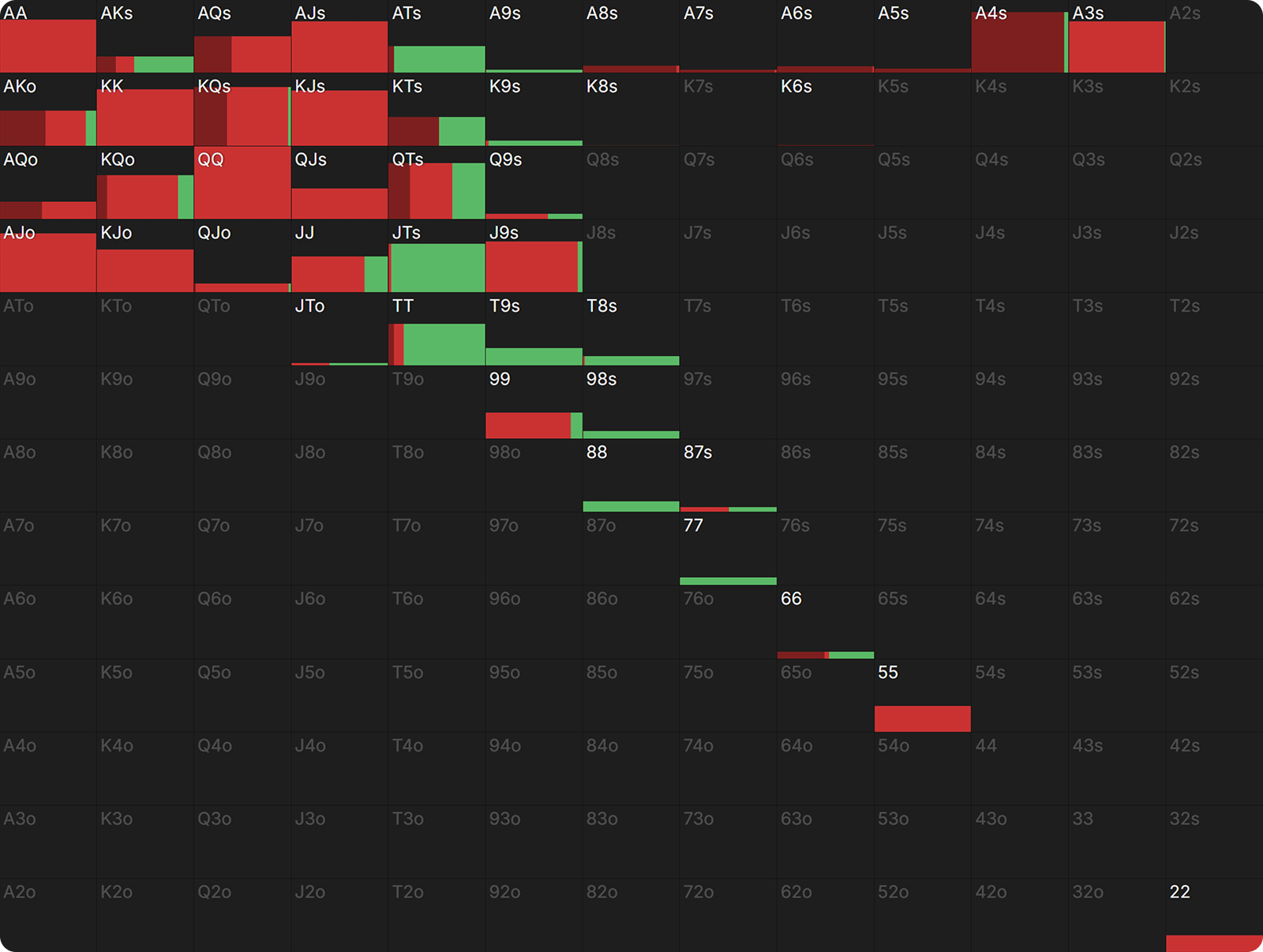
This is UTG’s adjusted first river action against the mega nit:
{{grid: 3fr 1fr}}

{{/grid}}
The betting frequency has increased yet again; we have gone from betting less than half the time in GTO world to betting ~82% of the time, in this exploitative example.
This is a recurring pattern when nodelocking for passivity. When an opponent is too conservative—as a nit or a calling station—we can simply bet more often. We can realize equity with more of our value. Once again, we have to shove to get the maximum with our nutted hands.
2) Raising When the Board Is Paired
The Hand
Another tournament hand with 60bb effective stacks. This time, the BTN has opened, and gets called by the BB.
- The flop is 7♥2♦2♣. BB checks, the BTN c-bets 25% pot, the BB calls.
- The turn is the 8♥. Check, check.
- The river is the 9♠.
In GTO World, the BB leads this river for a small size quite often:
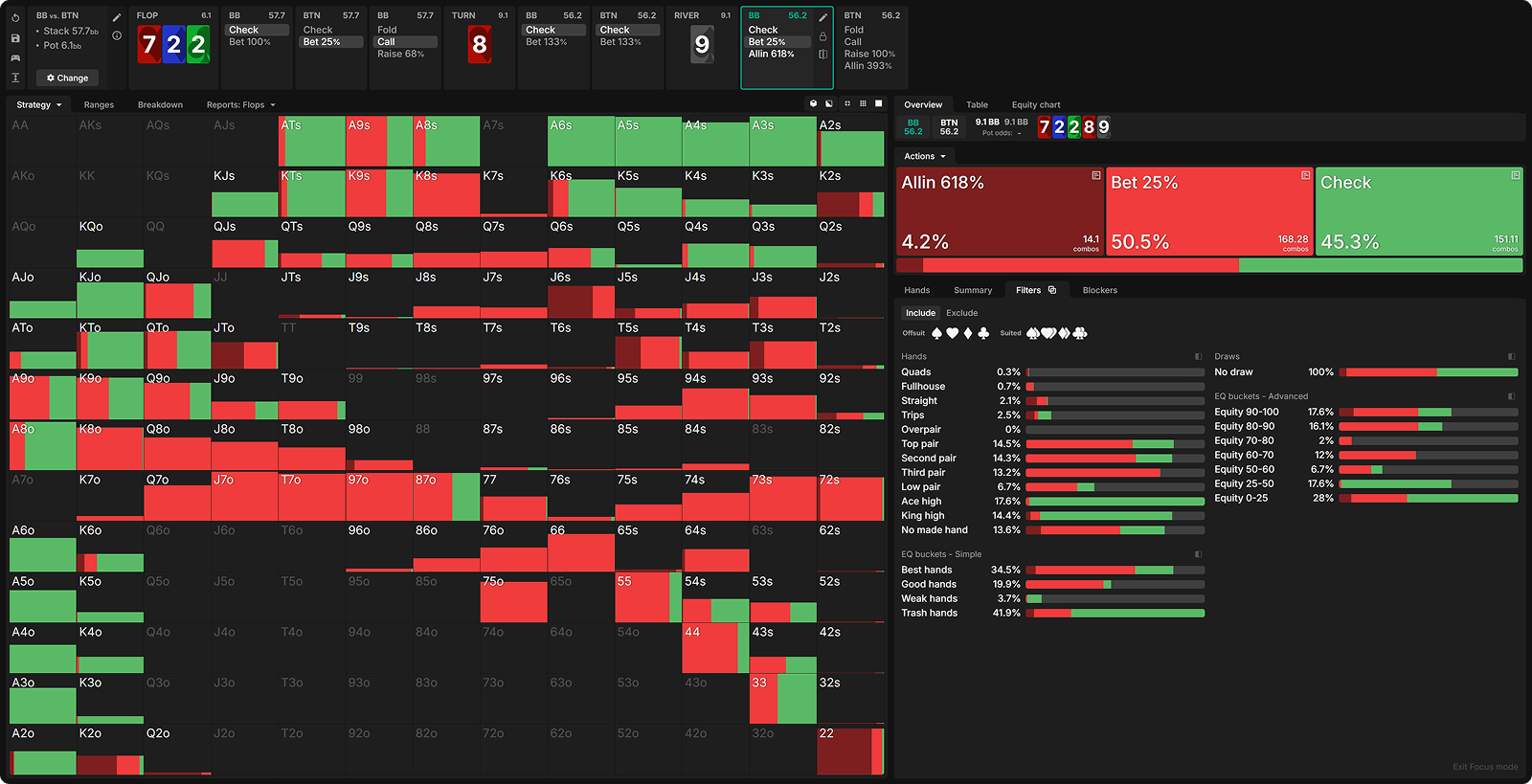
When they do, this is the GTO response from the BTN:
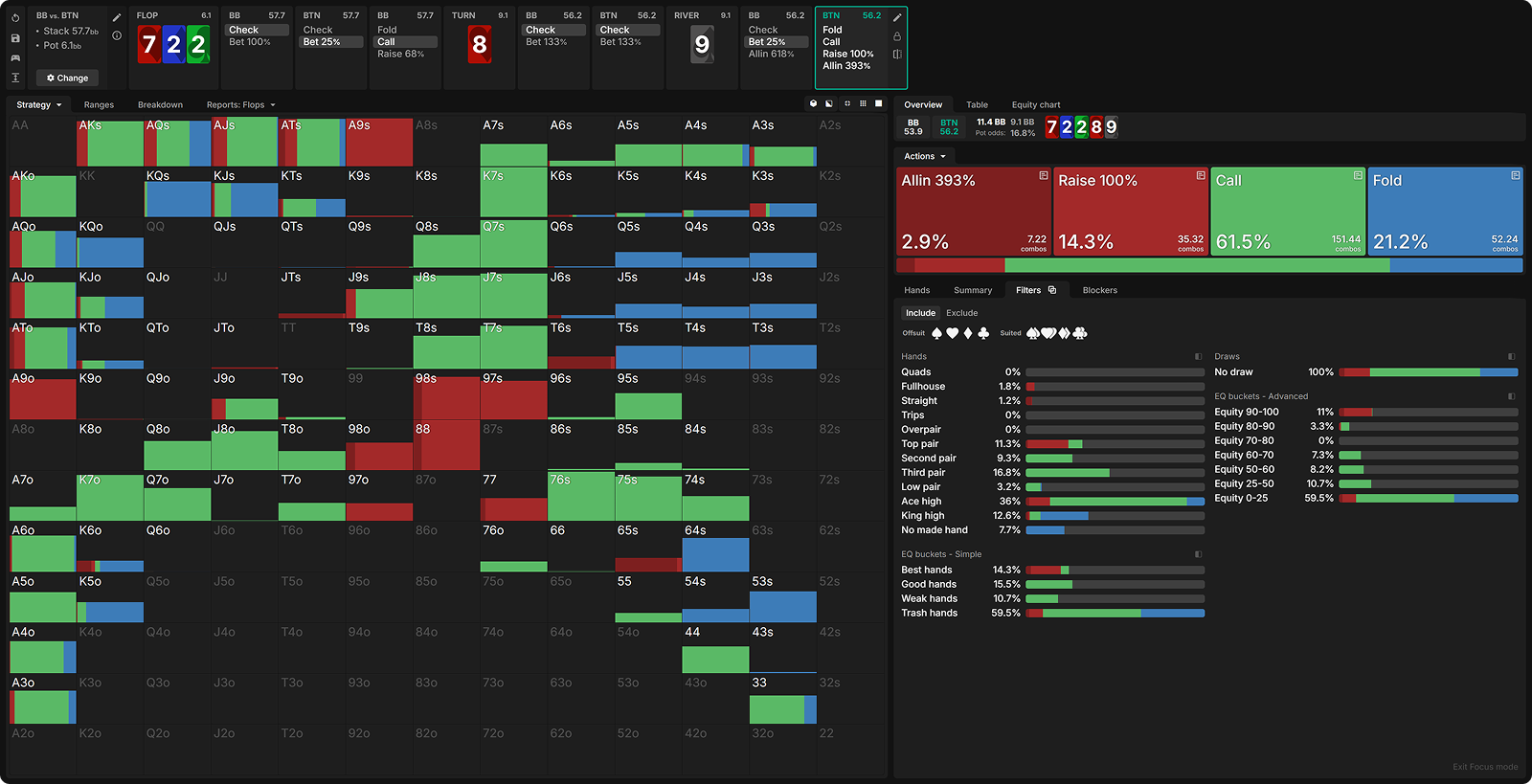
There is a lot of raising (over 17%). Top pair raises most of the time for value, and anything better raises all the time.
If you find the prospect of raising with something like K9 scary on this river, this is the GTO calling range of the SB:
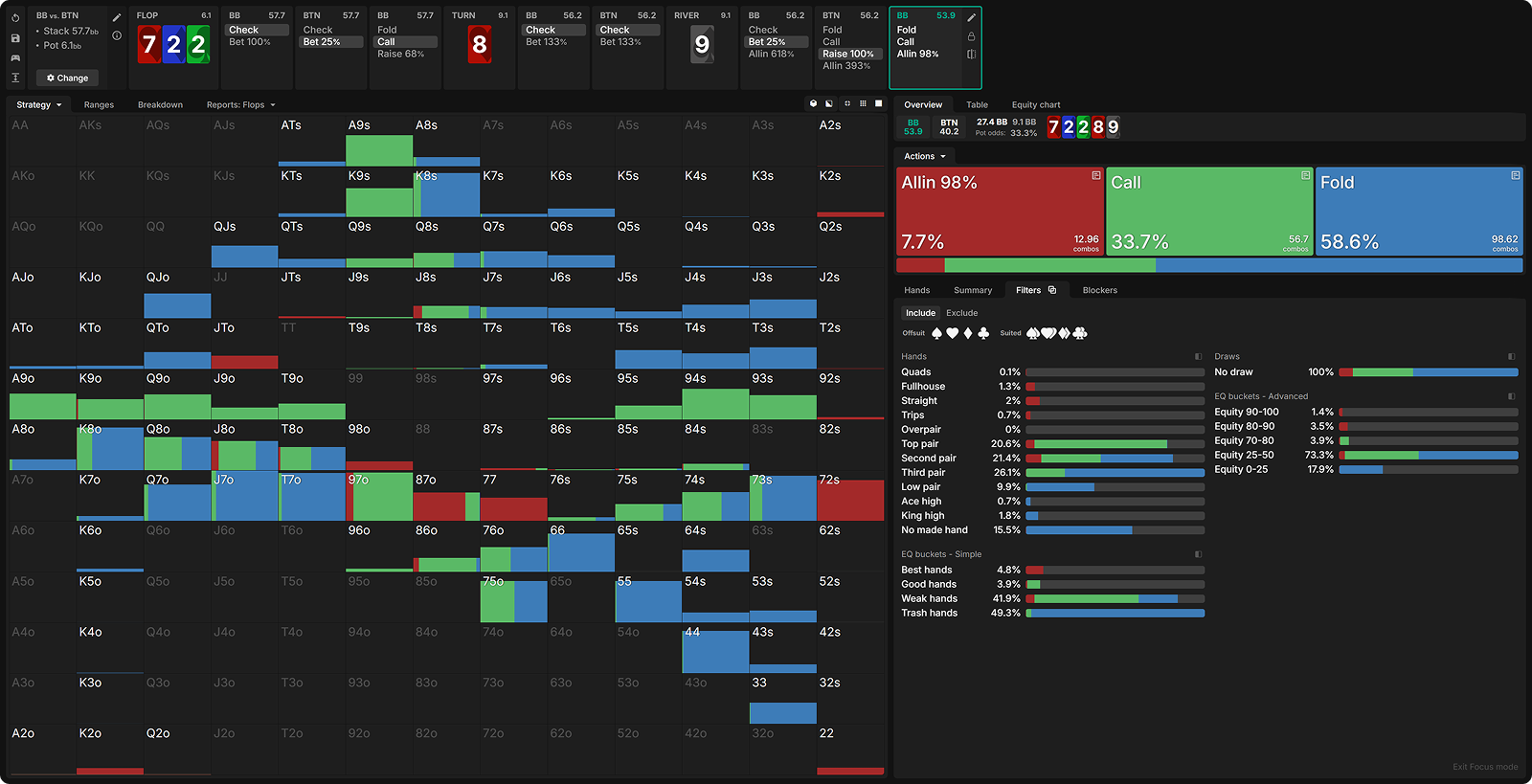
All top pairs, along with about half of the middle pairs and even some third pairs, should call the river raise to prevent exploitation via over-bluffing. And those are a much bigger part of the opponent’s range than straights and trips, which we may be subconsciously afraid of.
2.1) Exploiting the Fear of Full Houses
Once again, in the same 722 hand, let’s assume our BTN is a very timid player who will not raise with top pair or even with a straight, because they are scared of that paired board. This time, I have gone with a more comprehensive nodelock by reducing the bluffing range of the BTN too, which is likely more representative of a player with this leak. If they are too scared to value-raise a straight, they are probably not going to bluff-raise much either.
When that happens, this is the BB’s exploitative first river action:
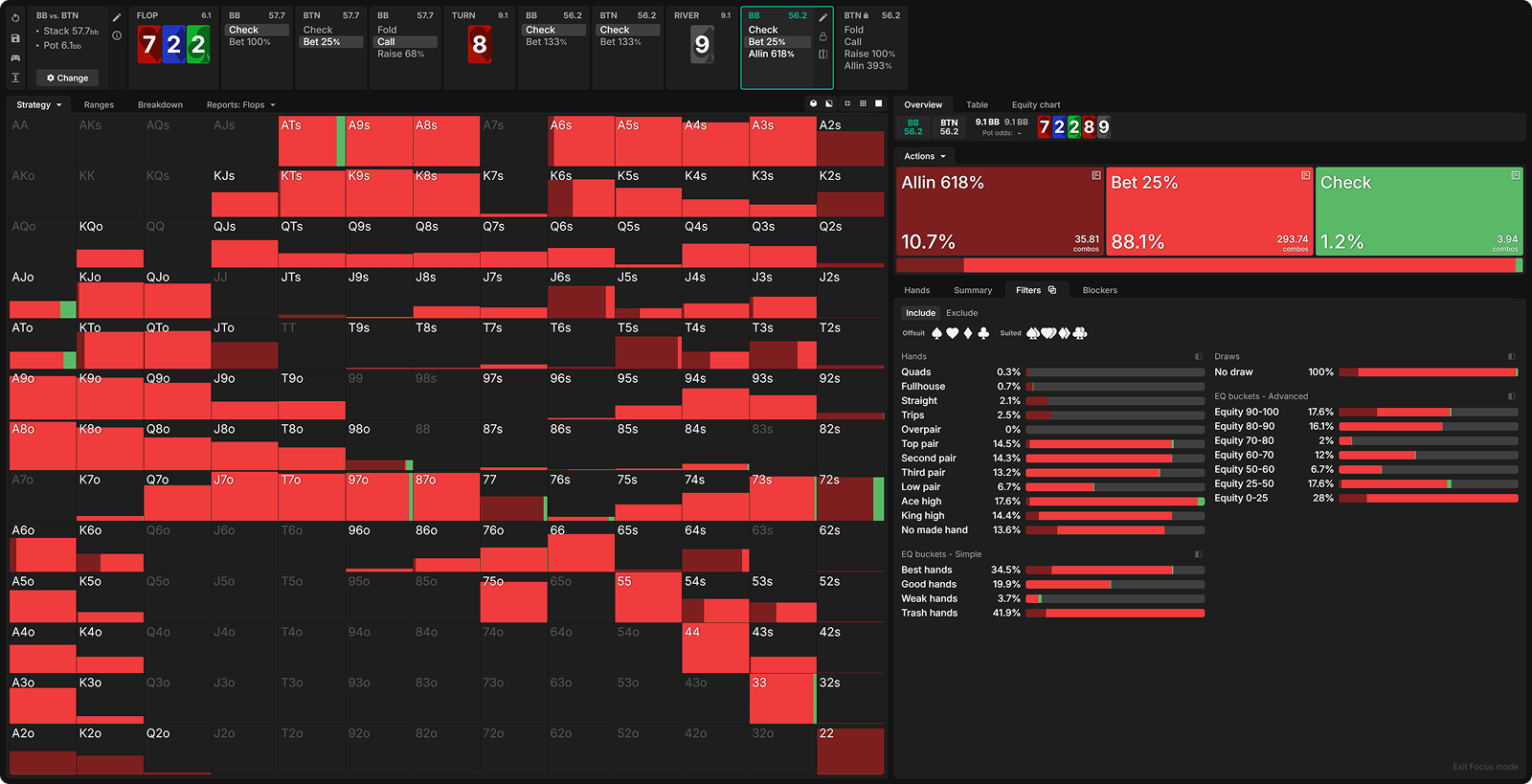
The BB has gone from leading 54% of the time to leading more than 99% of the time. This is a much more dramatic increase in betting frequency than the previous examples, no doubt because there is even less risk of being raised, as there are fewer bluff-raises this time around.
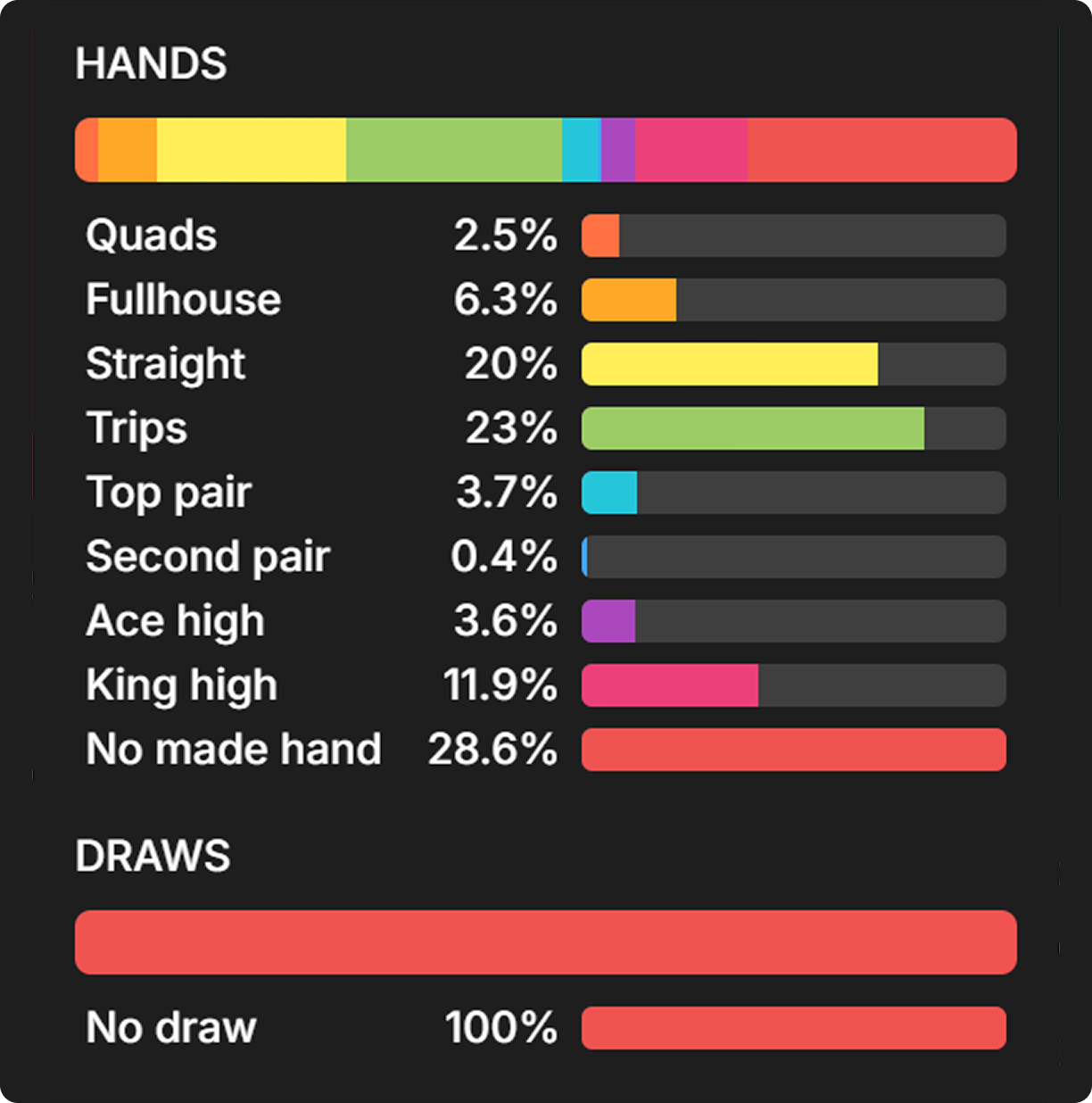
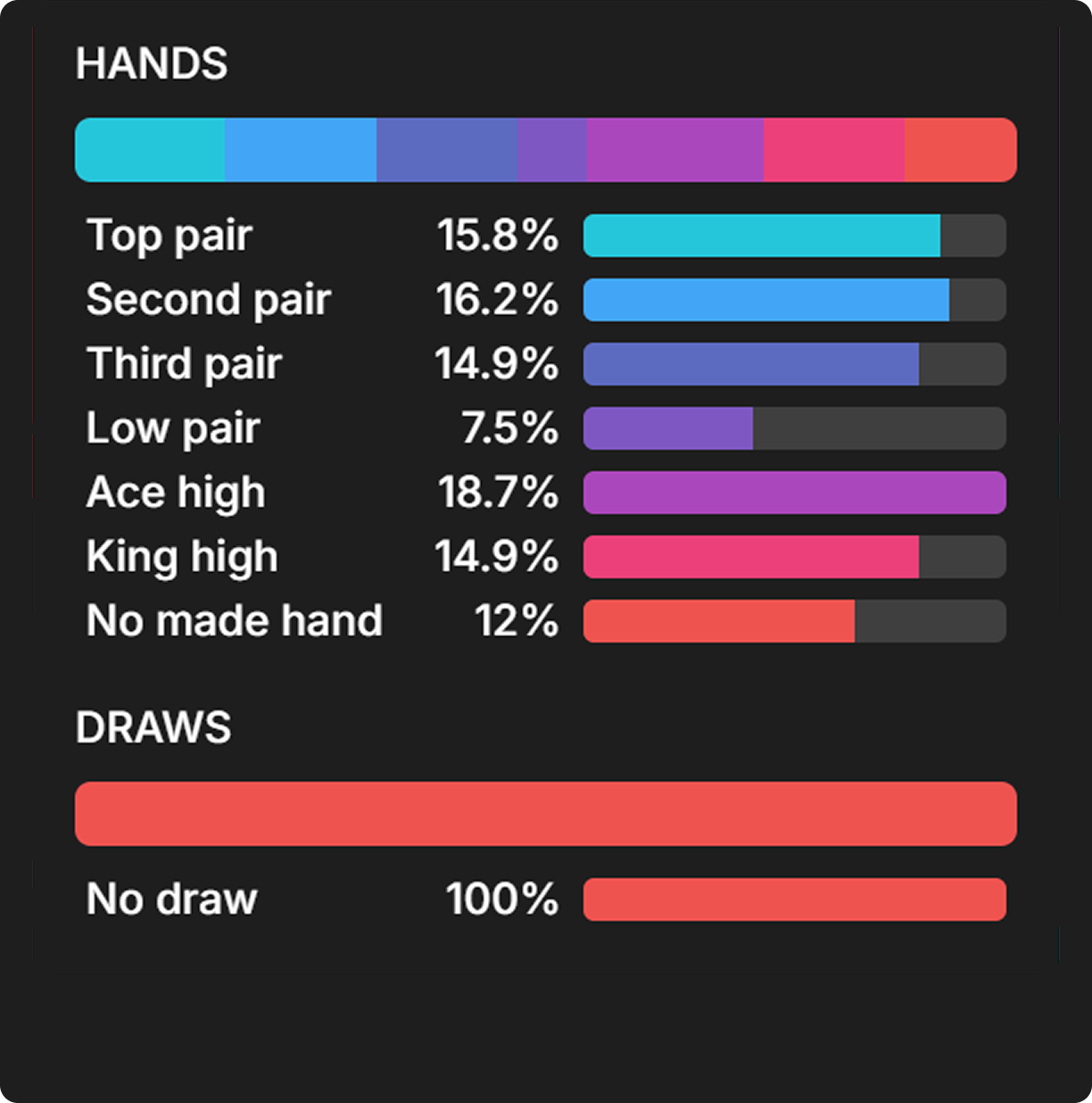
The leading strategy includes some shoves, which were not a big part of the river strategy in GTO world. And it now includes significantly more block betting with the very weakest hands.
{{grid: 2}}
{{/grid}}
Top and lower pair hands use the smaller bet size to pursue thin value, as they are no longer as fearful of raises. The very weakest hands can now profitably bluff, exploiting the opponent’s timidness. Meanwhile, the very strongest hands are now shoved.
Slow-playing no longer makes sense for them, because the BB cannot rely on the BTN to reraise with strong value that has been coolered.
Conclusion
I have replicated these findings across a great number of situations and board textures. The persistent exploitative pattern against players who do not raise enough for value on the river is:
- Value bet more thinly.
- Shove the nutted part of your range
(1) You can thin value bet—typically, with one pair type hands—more relentlessly because the threat of a raise is much lower. Otherwise, these hands would be better used, sometimes, as bluff catchers.
(2) We shove the nutted part of our range because we don’t expect the opponent to raise when they should, so we set our own price instead (i.e., the highest price possible).
A reminder that I am no expert on this, I am exploring how I can rid myself of this particular leak using GTO Wizard. If you have this leak, a few pointers from a recent recoveree:
- First of all, it’s human nature to prefer the safety of securing a smaller pot over the risk of losing a larger one. But that’s a mindset to overcome if the goal is to become a beast at cards.
- Every time you review a hand like this, count the combinations of hands that would have called had you been more aggressive on the river. You will find that, in addition to the monster hands that beat you, there are usually plenty of hands that you beat.
- Finally, if you truly do believe that your opponent would never call a worse hand than yours, this is an open door invite to bluff them more often. If you really do think they would fold two pair on boards with flushes and straights possible, it means you can print money with your bluffs.
We Are Hiring
We are looking for remarkable individuals to join us in our quest to build the next-generation poker training ecosystem. If you are passionate, dedicated, and driven to excel, we want to hear from you. Join us in redefining how poker is being studied.
Check out the available positions here.

Exploiting Profiles: Episode V – The LAG
LAG players are uncomfortable to play against. They barrel, they lead, they never seem to fold, and somehow they keep winning pots they have no business being in. In this article you'll learn how to perfectly exploit them so you start taking their money instead.
Exploiting Profiles: Episode IV – The TAG
They're not a fish. They're not a maniac. The TAG reg is the opponent you'll face most often, yet most players have no idea how to exploit them.

Exploiting Profiles: Episode III – The Maniac
There's a maniac at your table. They bet every street, call everything, and somehow keep winning pots they have no business being in. So what's the adjustment? Do you start blasting back?