How to Improve Your Heads-Up Game


Overview
30bb and Below (No Rake)
Knowing what and how to study in poker can be overwhelming. Learning heads-up (HU) poker, in particular, intimidates many players because of the wide ranges and the high variability in optimal strategies as stack depth changes. It’s common for players to find themselves jumping from one topic to another because they lack structure or an end goal to guide them.
Take for example our drill feature; it’s a great tool for players of all levels to build intuition for heads-up play, for any spot really. However, there’s a catch! To apply a tool effectively, a grand design is required. This article’s aim is to provide you with one for heads-up poker. It contains over 40 custom drills, ordered and grouped to make sure you logically progress from nailing preflop play to gaining more and more confidence in all of the most frequently occurring postflop spots.
Four Levels of Drills To Master HU Fundamentals
Level 1: Preflop Master
The importance of preflop can’t be understated—although it is often overlooked.
Newer players need to spend the majority of their learning time on preflop play. All other streets are affected by our preflop ranges, so truly mastering preflop play will already elevate you above much of your competition. Even experienced heads-up players benefit from regularly drilling preflop play because it keeps the bad habits away.
All drills in this article will use High RNG. It’s important to become familiar with using RNG on the trainer, as theoretically optimal heads-up play requires many decisions to be mixed between multiple options at certain frequencies.
Level 1 Drills:
🟩 1–5bb (All-in or Fold)
🟩 5.5–10bb
🟩 10.5–16bb
🟩 17–30bb
(Note: These drills are limited to preflop only. The stack depths are set to what’s effectively at risk.)
Level 2: Building Flop Fundamentals
A unique aspect of heads-up play is the relatively large volume of postflop hands you will play in a short amount of time. Developing a strong understanding of a GTO baseline for flop play will allow you to effectively make use of all of this information. Deviations in Villain’s game will be quicker and easier to notice.
Level 2 Drills:
Limped Pot
🟨 SB 5.5–10bb
🟨 SB 10.5–16bb
🟨 SB 17–30bb
Checked Back Pot
🟨 BB 5.5–10bb
🟨 BB 10.5–16bb
🟨 BB 17–30bb
Raised Pot
🟨 SB 10.5–16bb
🟨 SB 17–30bb
🟨 BB 10.5–16bb
🟨 BB 17–30bb
Iso Pot
🟨 SB 5.5–10bb
🟨 SB 10.5–16bb
🟨 SB 17–30bb
🟨 BB 5.5–10bb
🟨 BB 10.5–16bb
🟨 BB 17–30bb
(Note: The stack depths are set to what’s effectively at risk.)
Level 3: Navigating Skipped C-Bet Pots
A common trend among players is c-betting more than a solver would. Being proficient at level 2 will allow you to identify which flops Villains are likely to be c-betting too much on. Usually, this means less time spent studying skipped c-bet pots. A consequence of this is that competence in these lines will allow you to generate extra EV in an area of the game where most will be very uncomfortable. Think of these spots as containing lots of low-hanging fruit that you want to pick so it can fuel your win rate.
Level 3 Drills:
Limped Delay Opportunity
Limped Probe Opportunity
Raised Delay Opportunity
🟧 SB 14bb
🟧 SB 25bb
🟧 BB 14bb
🟧 BB 25bb
(Note: The stack depths are set to what’s effectively at risk.)
Level 4: Full Hand Completion
One way to progress further is to have turn-only and river-only actions as the next step to drill in isolation. An alternative route that I would advize to at least consider, after levels 1–3, is to start drilling full hands. This way, we keep consistently practicing the most frequently encountered levels (1–3) whilst we start developing a crucial ability: thinking ahead.
Level 4 Drills:
Limped Pot
🟥 SB 5.5–10bb
🟥 SB 10.5–16bb
🟥 SB 17–30bb
Checked Back Pot
🟥 BB 5.5–10bb
🟥 BB 10.5–16bb
🟥 BB 17–30bb
Raised Pot
Raised Pot (Call Pre)
Iso Pot
🟥 SB 5.5–10bb
🟥 SB 10.5–16bb
🟥 SB 17–30bb
🟥 BB 5.5–10bb
🟥 BB 10.5–16bb
🟥 BB 17–30bb
(Note: The stack depths are set to what’s effectively at risk.)
Stepping Into the (Poker) Arena
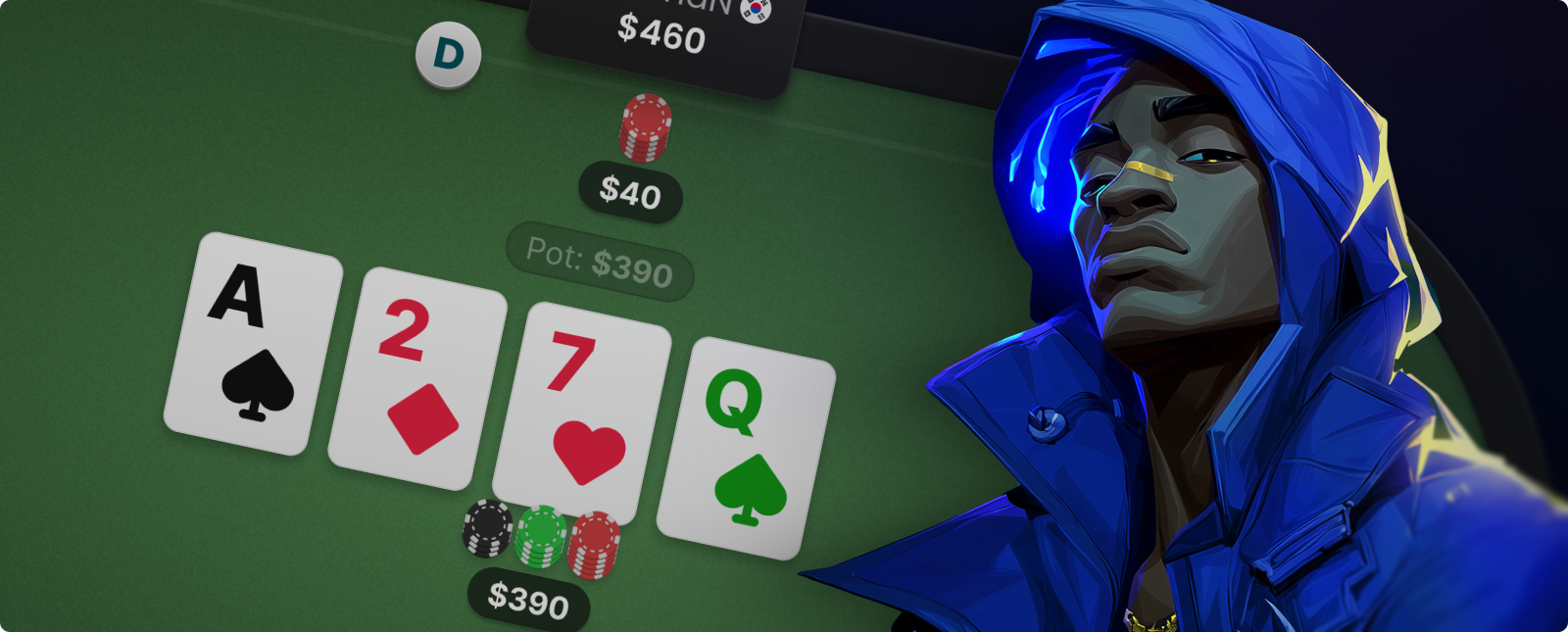
A fun, engaging way to test the skills you have acquired from the drills in this article is the PokerArena. Ranked heads-up gameplay against other real-life opponents can provide you with both entertainment and a risk-free assessment of your current skill level, whilst getting real-time feedback on your decisions.
Create Your Own Drills
Once you feel comfortable with all the drills provided for you in this article, start creating your own. Read this guide to help you get through the process.
I recommend to start studying specific board types as the next step. In particular, the most common board types that you feel the least confident on. This coaching video will help you identify which board types matter the most.
However, you are in charge of plotting the course for your learning journey from this point onwards. Just keep in mind that the most important thing is consistency. Studying with the goal of ending each session a little (or a lot!) wiser than the person you were at the start is the way to get and stay ahead of your competition. And I consider drilling with the Trainer as one of the most efficient ways to level up.
The Four-Point Checklist for Calling Turn Barrels
This article will provide a 4-point checklist of questions to ask yourself when facing a barrel, each one giving you an information point on whether our holding is a threshold hand or a clear decision one way or the other.

Small Blind, Big Problems: When to Size Up From OOP BvB
This article will give you a plan of action for establishing which types of boards prefer which sizing schemes and which types of hands fit into these schemes (both for value and for bluffs) when OOP BvB in Spin and Gos.

The Art of Value Bluffing From the Button
Playing “OK” from the Button in Spins often comes relatively naturally. Our relatively tight preflop range makes almost all boards favorable for us against the much wider range of the BB.