How to Prep Like a Pro for WSOP

Overview
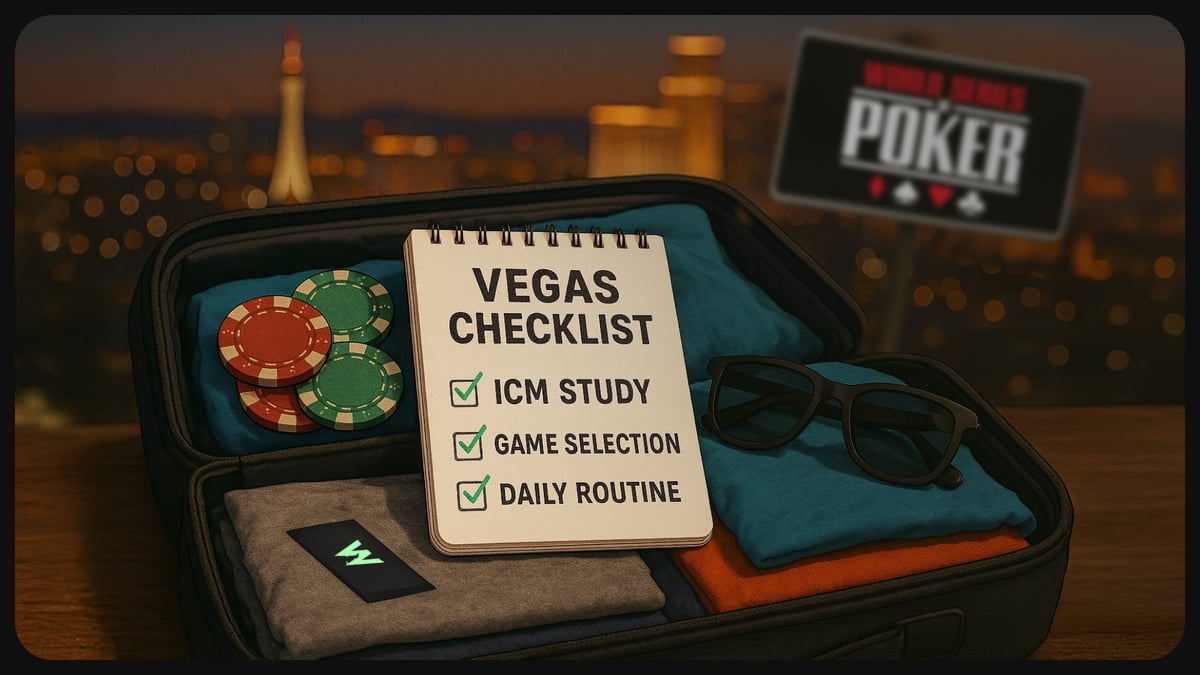
The World Series of Poker (WSOP) is one of the most recognized tournament series in the world, with even those unfamiliar with poker knowing the brand itself. Each year, tens of thousands of players come for events throughout the series, some attracting 20,000 or more participants.
For a poker player joining the WSOP for the first time, it can be exhilarating to play for potentially life-changing money on a daily basis. The challenge, however, can be knowing how to get the most out of your time and money spent in Las Vegas during the summer, both on and off the felt. What are the best approaches to studying prior to playing live? How do you know what events to play when there are so many to choose from? And finally, how do you get the most out of Sin City without breaking the bank?
The coaching team at the GTO Wizard HQ has put together a number of recommendations for those who are new to the WSOP or those who have attended a few times already but are looking for ways to get more value out of their stay in Las Vegas. In the sections below, our coaches cover:
- Preparation: What study tips would they recommend specifically for live WSOP prep
- Game selection: What are some of the recommended approaches for a new participant to know which events are right for them during the series?
- Experience: How can first-timers get max value out of their time in Las Vegas?
- Personal Notes: What are their best memories from previous WSOP series?
Preparation
{{grid: 1fr 4fr}}

– Mathias Maasberg
Long-time Online MTT Regular, Coach for Run It Once and GTO Wizard
{{/grid}}
{{grid: 1fr 4fr}}

– Uri Peleg
Head Coach Guerrilla Poker & Course Creator at Upswing Poker
{{/grid}}
{{grid: 1fr 4fr}}
– Matt Hunt
Coach at Poker Fluency and Solve For Why
{{/grid}}
{{grid: 1fr 4fr}}
– Dr. K
MTT Coach at the Poker Mix
{{/grid}}
{{grid: 1fr 4fr}}

– Donk Orleone
Professional Poker Player
{{/grid}}
{{grid: 1fr 4fr}}

- Occur frequently
- Have the highest potential impact on your win rate
- Make you feel uncomfortable or uncertain
For live games, this might include multiway pots, single-raised pots from out of position, or deep-stacked spots, especially if you’re planning to play cash games.
A powerful tool to prepare for live play is GTO Wizard AI, which allows you to nodelock your opponent’s strategy. This will massively help you to adjust to all the different player types you will encounter at the WSOP.
But preparation isn’t just about technical study. It also includes taking care of your body and mind. Establishing a healthy routine, prioritizing sleep, diet, and exercise, will help you maintain focus and stamina, especially if you’re playing longer sessions than usual.
– Vanja
Professional Poker Player
{{/grid}}
{{grid: 1fr 4fr}}
What works well for me when preparing for live events is to write down and visualize my perfect day at the series. What time should I wake up? What should I do to be in the best condition possible emotionally, mentally, and physically? What should I do once the chips are in the bag to get well-rested for the next day? How should I plan rest and recovery throughout the whole series? Setting up my mind the right way helps me execute better in all aspects: game selection, play, and recovery.
– Stoyan Obreshkov
MTT Player and Coach for GTO Wizard, CnC and Run It Once
{{/grid}}
There were three common themes across all the advice from our coaches on preparing for your time at the WSOP:
- Preflop Ranges and Nodelocking
When studying for the WSOP, always consider the fields you’ll be playing in and the number of recreational players you will find in the average WSOP event. Nodelocking will help you prepare specifically for the player types you anticipate encountering. Learning how to play against opponents who are excessively passive or overly aggressive, in comparison to GTO, will set you up for success against any opponent.Additionally, mistakes made preflop compound over the course of a hand. So having solid starting ranges, both in chip EV and ICM, will make it much easier to play postflop. - Physical and Mental Preparation
The WSOP can be a period that requires a lot from players, both physically and mentally. Putting together a game plan before you arrive in Las Vegas is a wise move. Stoyan suggested visualizing your ideal daily routine, while Vanja highlighted some of the foundational pieces: sleep, exercise and diet. - Start With Why
Dr. Kamikaze finds that one of the elementary things to get clarity on during your preparation for big live poker series is the main purpose for participating. If you are attending the WSOP to experience the spectacle of Las Vegas and large field events with huge guarantees, then you may focus on the marquee events that draw large crowds. However, if your goal is strictly to make the most money possible, you should focus on smaller field events that have the highest return on investment. This will also relate to item two in this list, as many of the choices you make in Las Vegas, be it in what you eat, or what you do in your free evenings can have a negative impact on how you play and feel at the tables.
Game Selection
{{grid: 1fr 4fr}}

{{/grid}}
The following quotes from Barry’s article The Art of Game Selection for MTTs: Finding Soft Fields & Extra Value provide a solid foundation for deciding what events to play while in Las Vegas:
{{grid: 1fr 4fr}}

“Some tournaments don’t overlay in the actual event, but they do overlay in the satellites…if you are a value hunter, pay attention to the satellites too—often they are the best-kept secret in the whole festival.”
{{/grid}}
{{grid: 1fr 4fr}}

{{/grid}}
{{grid: 1fr 4fr}}
{{/grid}}
{{grid: 1fr 4fr}}
Another important way to reduce live variance is selling pieces of the events you will play. My bankroll is mostly for online play, so the significantly larger buy-in size of live events can sometimes be too risky. As part of my (online) bankroll plan, I keep in mind a rough average buy-in size when I plan my sessions. Overall, the key metric I use currently is a session buy-in limit, which is the maximum amount of money I will risk per session. I never play a session above 2.5% of my bankroll, and often keep it to 2%. Since I have to use the same bankroll for live events, I take my own action on all entries below my session limit, and then I sell pieces to events that have an entry fee higher than my session limit to reduce my exposure to at or below my session limit. Selling pieces might be difficult for newer players, but as you make friends and connect with other players, tactics such as selling or swapping pieces can significantly help with reducing variance.
{{/grid}}
{{grid: 1fr 4fr}}

{{/grid}}
{{grid: 1fr 4fr}}

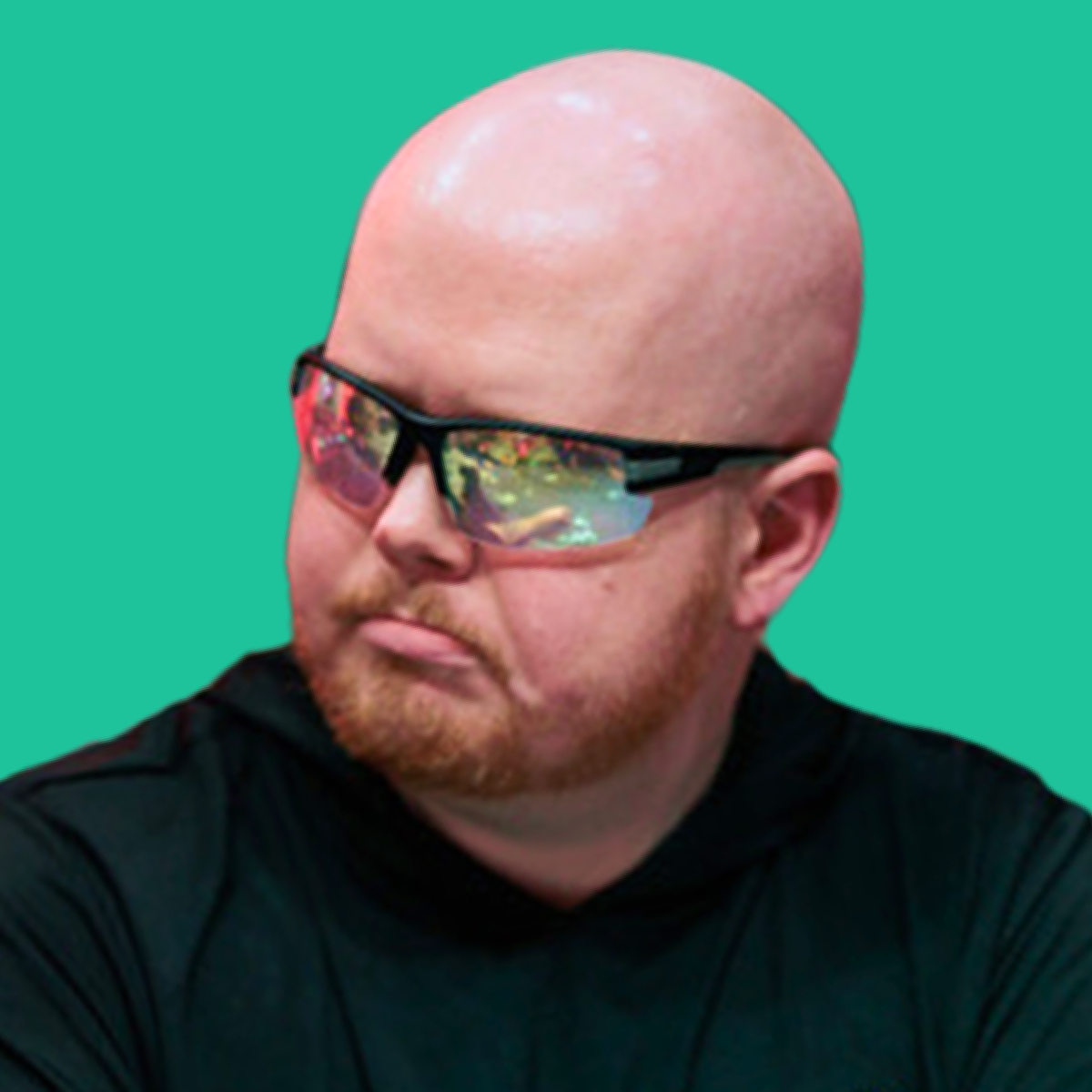
The fields during the WSOP, especially in low- and mid-stakes events, tend to be very soft. This opens up great opportunities for taking shots. Playing satellites into bigger events, increasing your average buy-in, or taking a few bullets for higher-stakes cash games might be a good idea during the WSOP.
That said, it’s crucial to stay within your bankroll. Don’t take risks that could put you in recovery mode for months if things go wrong. Your personal risk tolerance matters here: If you’re comfortable with aggressive bankroll management (BRM) and can handle the emotional swings, this could be a good time to take aggressive shots. When you can’t stomach large swings as well as the aggressive BRM type player, sticking to your average live buy-ins or games with a slightly smaller field to reduce variance might be the better approach. A lot of casinos offer smaller field events running at the same time as large WSOP events. Selecting a poker room you feel comfortable in is also a factor you shouldn’t underestimate. Spend some time early in your trip exploring different rooms.
{{/grid}}
{{grid: 1fr 4fr}}
{{/grid}}
These are the four main points I took away from our coaches’ opinions on game selection:
- Manage Variance
Our coaches identified a number of ways to make sure you don’t go overboard when deciding on your Vegas schedule.
These include:
- Make sure to set aside a strict bankroll for poker during the series and resolve to stick to it as closely as possible. Dr. K recommends staying within 2–2.5% of your total bankroll per session/day.
- Focus on smaller field events where you have the best chance of cashing.
- Find backers to sell action to prior to the series, and line up as much action as possible for events you’re planning to play. This is particularly relevant in larger field games where the variance is highest.
- Play Games You Can Beat
Donk Orleone, Mathias Maasberg, and Uri Peleg all point out that the best game is the one you can beat. This might mean avoiding satellites to games with a strong player pool or stepping down from your highest buy-ins to focus on events where you will have a higher return on investment (ROI). - Find the Value
Throughout the WSOP and related series, there will be chances to find overlay in events. Barry suggests looking at satellites in particular for this. Matt Hunt also pointed out that some events will have higher rake, such as the daily deepstacks, which significantly lowers your ROI in these events, so make sure you’re paying attention to how much of your buy-ins are going back to the house. - Reserve Time To Rest
One of the most important notes for first-timers is to make time for rest if you’re planning a longer stay. With the number of events happening around Las Vegas this summer, it will be easy to find a game at any buy-in every day of the week. Both Stoyan Obreshkov and Vanja point out that playing without breaks can seriously impact your physical and mental state over time. Make sure to focus on playing your best game in every event by giving your mind and body time to recover.
Experience
{{grid: 1fr 4fr}}

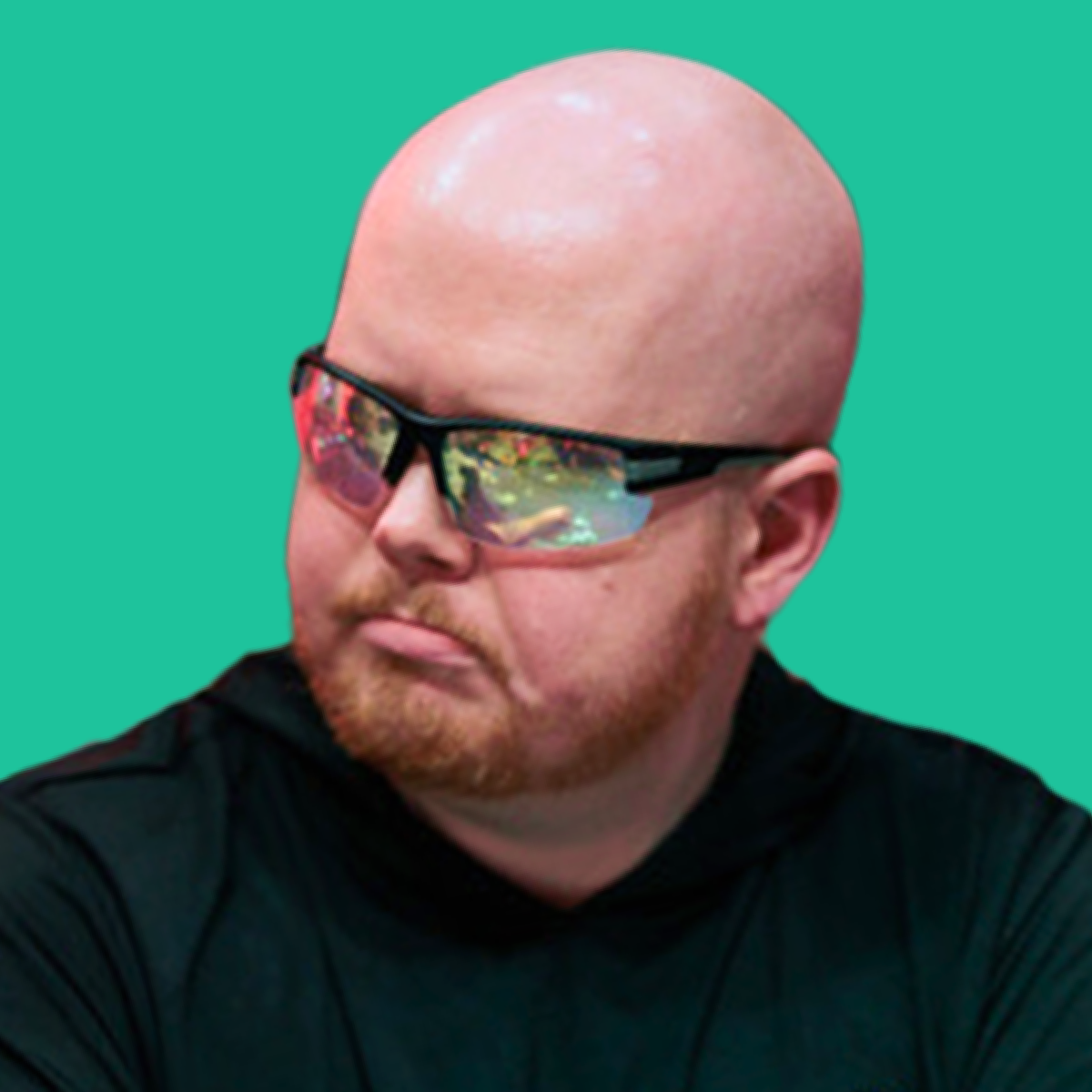
Also for a longer stay, I’d recommend implementing days off to do something other than poker. Watching a show on the strip, just chilling, or anything else. Otherwise, it becomes too much of a grind, and it is easy to get burned out in Vegas.
{{/grid}}
{{grid: 1fr 4fr}}

{{/grid}}
{{grid: 1fr 4fr}}
{{/grid}}
{{grid: 1fr 4fr}}

{{/grid}}
Vegas can be expensive, and turning a profit also means keeping your costs under control. That doesn’t mean cutting every corner; comfort matters. If you’re sacrificing your well-being to save a few hundred dollars, it’s probably not worth it.
Here are some practical tips:
- Compare hotels and Airbnbs to find a balance between comfort and cost.
- Don’t stay too far from the strip; transportation costs will add up. Ride-sharing with friends is a great way to save.
- Save on food when possible. Cooking your own meals or prepping food in advance can make a huge difference. If you’re eating in casinos, use comps or find cheaper spots nearby.
Sticking to a Healthy Routine
Sleep, exercise, and proper nutrition are essential if you want to keep playing your A-game. Start by building a daily routine that supports you, which includes taking breaks and allowing yourself days off to recharge.
Here’s a routine that works for me:
- Wake up at a consistent time
- Stretch, exercise, get some sunlight, eat a proper breakfast, and prep meals for later
- Keep mental space for breaks, reflection, and non-poker activities
This helps me stay sharp and energized throughout the day.
Mental Game & Endurance
The WSOP is a marathon. Tournaments often last 10–12 hours a day, and staying mentally strong late into day one or two is where edges start to grow exponentially.
Take breaks seriously by getting fresh air and resetting your mind between levels. You will face bad beats and cold decks, so accepting that variance is part of the game is key.
Tools like meditation, breathing exercises, or simply listening to music during downtime can help maintain mental clarity and prevent tilt. I’ve made the mistake of trying to “force” a good result, seeing the trip as a make-or-break situation. That mindset just adds pressure. Focus on what you can control, and let go of what you can’t.
Bankroll Management
There’s no shortage of action in Vegas, and after a deep run or a cash, the danger of overextending is especially high. You can avoid this trap by defining your bankroll before the trip and creating a plan for how you’ll spend it.
Mix in satellites and smaller daily events to stay in action while managing risk. A disciplined approach, both on and off the felt, will ensure you’re still playing at the end of the series, not just the beginning.
{{grid: 1fr 4fr}}
{{/grid}}
Our coaches shared some great recommendations for making the most out of your WSOP experience. Here’s a quick summary:
Manage Costs
One of the biggest challenges while in Vegas is keeping your daily costs of living reasonable, particularly when you’re spending most days at a casino on the strip. Mathias, Vanja, and Stoyan all recommend booking somewhere close to the strip, if possible with Airbnb. At a minimum, Uri points out that some hotels will offer a discount to series players, so if you do stay on the strip, make sure to shop around. If you can book a suite or something similar where you have kitchen access, consider preparing meals yourself, as dining out every day will eat into your profits from the trip fast. Matt Hunt pointed out that in the end, Vegas is an expensive place to be, so don’t sacrifice your overall experience just to save a few dollars.
Don’t Feel Intimidated at the Tables
Uri made the point that many players attending the WSOP will be of a lower caliber than you’d expect at a given buy-in. This will change depending on the format of the game and buy-in level, but in general, trust your instincts and observations when determining the strength of players at your table.
Maintain a Healthy Lifestyle
As we pointed out in the Game Selection section, leaving time for breaks is essential, but staying healthy during long stays in Vegas goes beyond just having time off. Vanja lays out the key daily habits that will keep you healthy, including:
- Waking up at a consistent time every day, even after long sessions the previous night.
- Stretching, exercising, and getting sunlight (within reason, considering the summer heat in the desert).
- Eating properly can be ensured by meal prepping for example. Also keeping mental space during breaks for reflection and non-poker activities.
Personal Notes
{{grid: 1fr 4fr}}

{{/grid}}
{{grid: 1fr 4fr}}
{{/grid}}
{{grid: 1fr 4fr}}
{{/grid}}
{{grid: 1fr 4fr}}

Most players go through this phase, and it’s a valuable learning experience. But if you can skip that part and learn from others’ mistakes instead of your own, it’ll save you time, money, and frustration.
Las Vegas is a unique place. Taking a day off, seeing a show, or sharing a fun night out with friends can make your trip more memorable. Chasing results with tunnel vision can backfire. Plus, don’t forget that your overall experience matters just as much as your win rate.
{{/grid}}
{{grid: 1fr 4fr}}
I remember back in 2017, I got to the last day of the Monster stack 1/20 in chips, playing for 1.1 M$ on top, which at the time was about 10 times my bankroll. Some unfavorable card distribution got me to a middle stack with 11 left when I got it in AK vs AJ for a big pot and lost. I remember my knees feeling weak the moment I stood up from the table, but I wasted no time going straight to the cashier to register another tournament, chasing that dopamine high. As a result, I lost 20–30k in the next few days and became extremely exhausted in the last weeks. I don’t remember much from that summer, jumping from one tournament to another with no days off, and I think it could have gone better if I had a better plan.
{{/grid}}
From my own experience, I’d add in the following advice that has helped me from the first time attending WSOP eight years ago to today:
- Don’t Be Afraid To Be a Fan – The first time I attended a WSOP event, I kept thinking to myself, “act like you’ve been there” and “play it cool” instead of talking to the players I admired. The reality is no one really cares if you want to get an autograph from Phil Helmuth or a selfie with Daniel Negreanu (when it’s appropriate), so make sure to make the most of your time as a fan of the game.
- Don’t Overexert Yourself – I remember from my first WSOP, I was staying at the Cosmopolitan and decided to walk to the Rio. Needless to say, walking 1.3 miles in 43-degree Celsius heat didn’t go well. It’s important to be reasonable about how much time you spend in the sun during the day, particularly on the off days when you might be tempted to spend more time outdoors.
- Make Time for Friends – The best way to destress during and after an event is to find friends or acquaintances at the series and make it a point to spend time together. Talking through hands on breaks, spending time socializing when you’re not playing, and just having a sense of community off the table goes a long way to keeping your motivation up over the long WSOP grind.
Are you attending WSOP for the first time, or perhaps planning a longer trip for the series this year? Do you have any tips from your own experience to share? Feel free to share in the comments!

How to Use Range Builder in GTO Wizard To Improve Your Game
In this article, we will look at another key feature: “Range Builder.” The Range Builder has you construct your entire strategy for any (preflop or postflop) spot. Your strategy will be graded based on how well it matches the GTO solution. This tool forces you to think globally about how you approac

Top GTO Wizard Features the Pros Prioritize (and What They Leave Out)
In this roundtable series, I have been asking GTO Wizard content creators about some of the software’s best and most surprising features. In an attempt to see what world-class coaches prioritise and to find hidden gems that provide us with more bang for our buck when we study.

Roundtable: Aha! Moments in GTO Wizard
Understanding solver technology is very challenging. You not only have to grapple with the technology itself, which does not come naturally to a lot of people, but you also have to determine why the solver takes lines you could not even conceive of.