Why You’re Bluffing the River Wrong With Bricked Flush Draws in Cash Games

Overview
It’s exciting to flop a flush draw; when you do, you have a fairly high chance of holding a strong hand by the river. It’s a lot less exciting, however, when the river arrives without your flush and you’re left with air or a weak pair, especially when you’ve invested a lot of chips on previous streets.
In these situations, it can be tempting to bluff often, trying to steal a sizeable pot from a better hand. The impulse to bluff might even be amplified by feeling entitled to win the chips in the middle: “if only my flush had come in.”
But studied players know that you’ll want to give up your flush draws often when they miss by the river. The reason is simple: When you have a missed flush draw, it’s significantly less likely that your opponent does as well, and so the amount of air in their range that will automatically fold to a bluff is reduced.
This is a useful heuristic that helps us resist the psychological pressure to bluff in these spots, but there are times when it doesn’t apply. Understanding when to break the rules is a critical part of a crusher’s game.
I’ve found two spots where bluffing missed flush draws is correct. Let’s take a look at these and design new heuristics for when to fire them on the river when they miss.
Scenario 1) The Turn Checkback
Our first example is UTG vs BB in a single-raised pot (SRP) with stacks being 100bb deep. On a two-tone flop of A♠J♥5♠, UTG is meant to bet almost always, with almost any available size being playable. In our example, UTG bets approximately ¾ pot, and the BB calls.
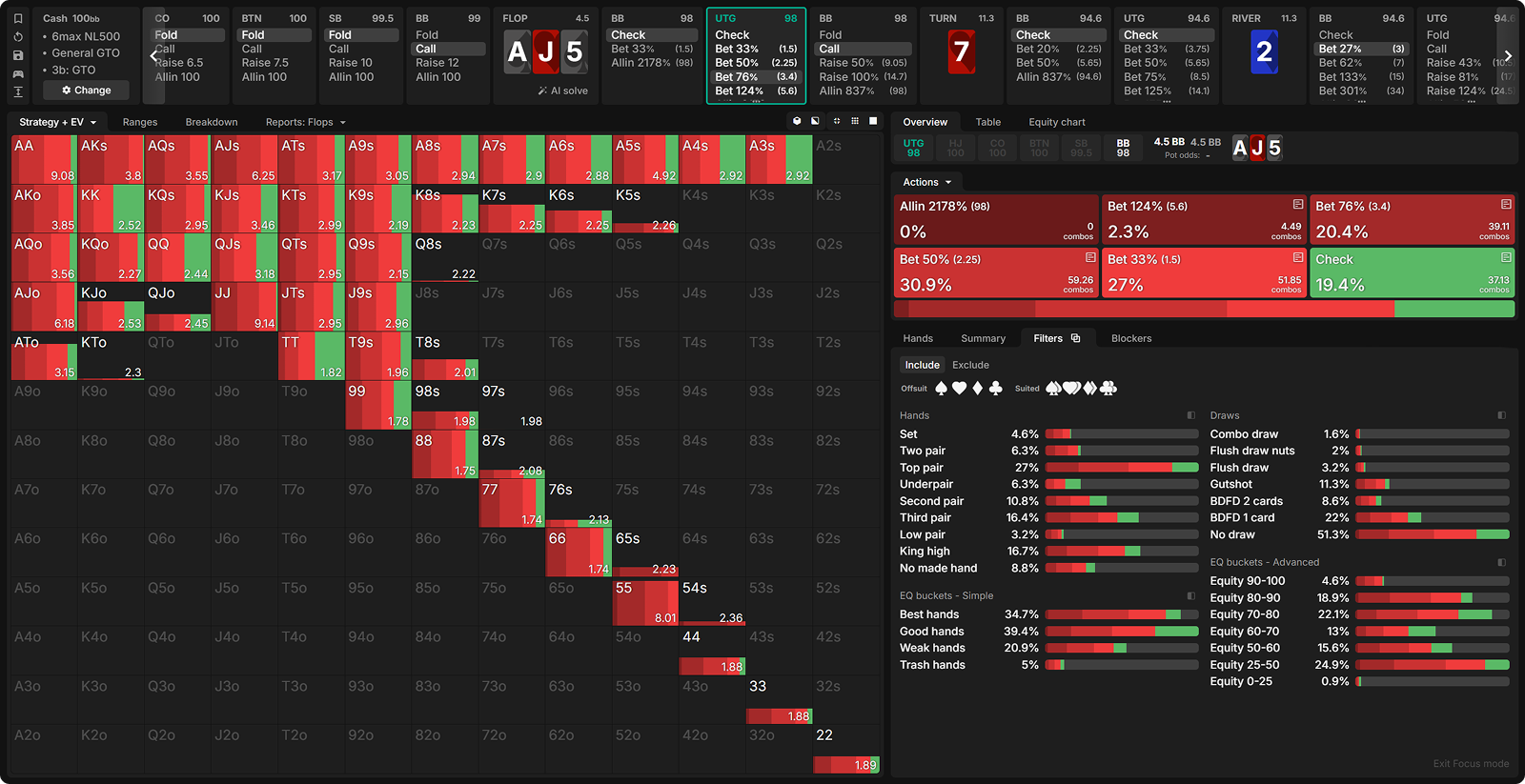
The turn is the 7♥, bringing in the backdoor flush draw. On this turn, UTG’s preferred sizing is to overbet, which it does at a pretty high frequency with almost all of their nutted hands. Since there’s a lot of value hands for UTG to use here, a lot of bluffs make it into the overbetting range as well. However, when UTG checks back this turn…
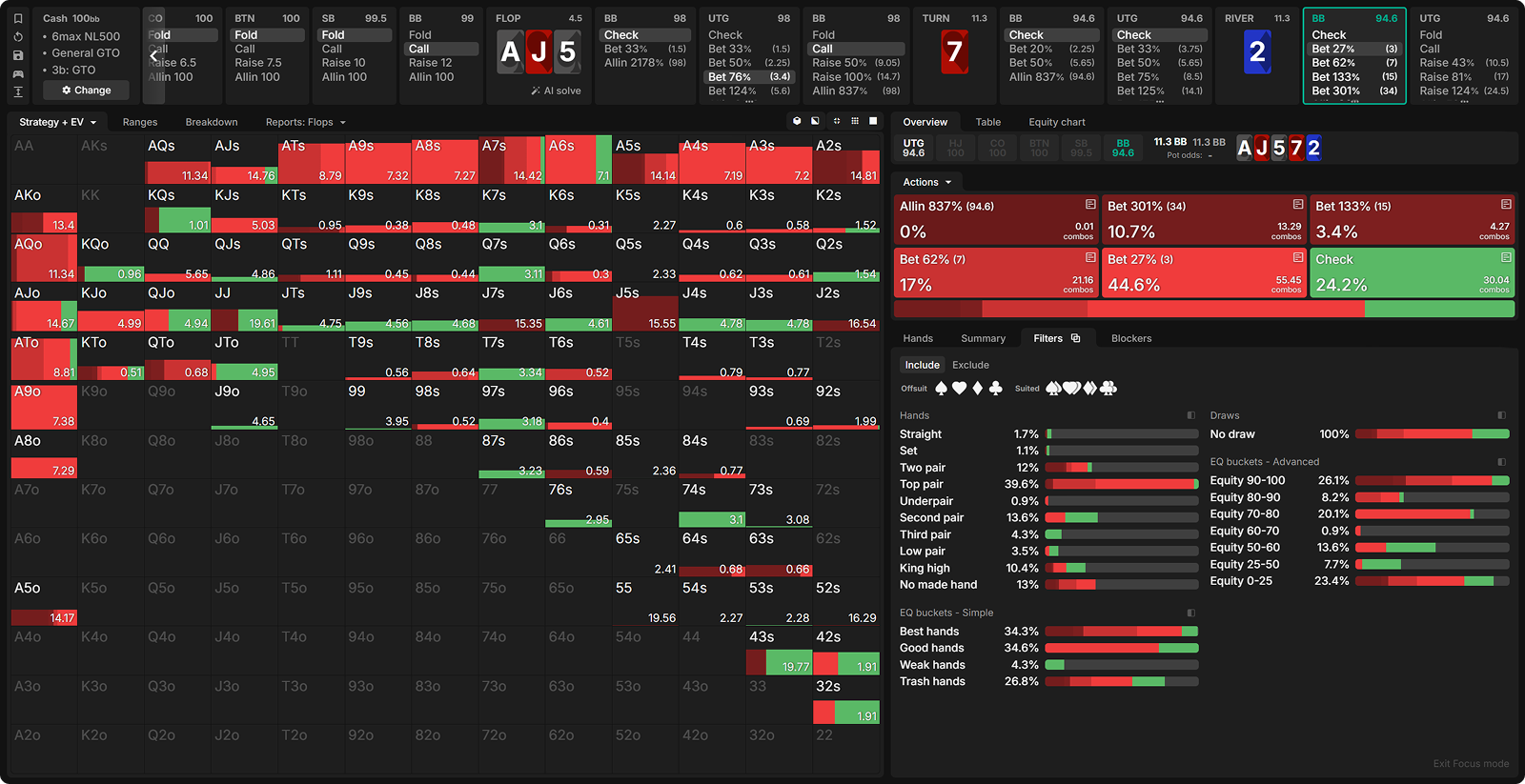
We find that on the river 2♦, which bricks out all draws, BB leads a large portion of their range. Most of the betting range leads for about ¼ pot—any top pair now wants to get value on this river, and even some strong second pair combos take this sizing for value.
{{question-mark}}
But if we filter for hands with less than 25% equity, we quickly find that almost every bluff for this size on the river is a missed flush draw. Why is this?
{{/question-mark}}
The answer lies in the composition of OOP’s air hands! Due to the larger bet on the flop, BB had to discard a large portion of their trashy hands. The worst hands that actually called the 75% pot flop bet were gutshot straight draws that included a backdoor flush draw, with the exception of KQs, which called no matter which suits it wore.
This means that when BB calls with no pair on the flop, they’re almost always holding at least one spade, and more often hold two for a frontdoor flush draw that has missed by the river. Notably, spades are still bad blockers; the only held ♠ that substantially helps BB is the 2♠, which blocks rivered sets from IP.
However, the fact that these are bad blockers is overridden by the fact that there are very few other bluffing candidates to choose from, and BB has a lot of value combos when betting small on the river. Additionally, the few non-♠ hands prefer to take an overbet sizing to support hands that want to attack IP’s capped checkback range that has arrived from the turn.
This example immediately yields a good heuristic:
This will most often occur when defending against a large flop bet, and the effect is more pronounced the larger the sizing. Imagine that the flop is changed to A♠K♥5♠, and IP uses an overbet sizing. If OOP calls this bet, and the turn checks through, OOP can lead almost 100% of their range on the river because their range has been significantly filtered due to the flop overbet.
Scenario 2) OOP Aggressor on the River
In this scenario, we’ll take a look at a spot where a missed flush draw is supposed to go big on the river.
For this one, we have a BTN vs BB, SRP, 200bb deep. On a Q♠T♣3♣ flop, BTN c-bets and BB check-raises, which the BTN calls. On a turned 2♠, BB’s preferred sizing is an overbet. Remember that this hand started 200bb deep, so there is a strong incentive for BB to polarize when taking this aggressive line. BB’s range on this turn is very intuitive; value is centered around two pair and better, while bluffs vary between various draws and hands like K3s, which block the strongest hands in BTN’s range.
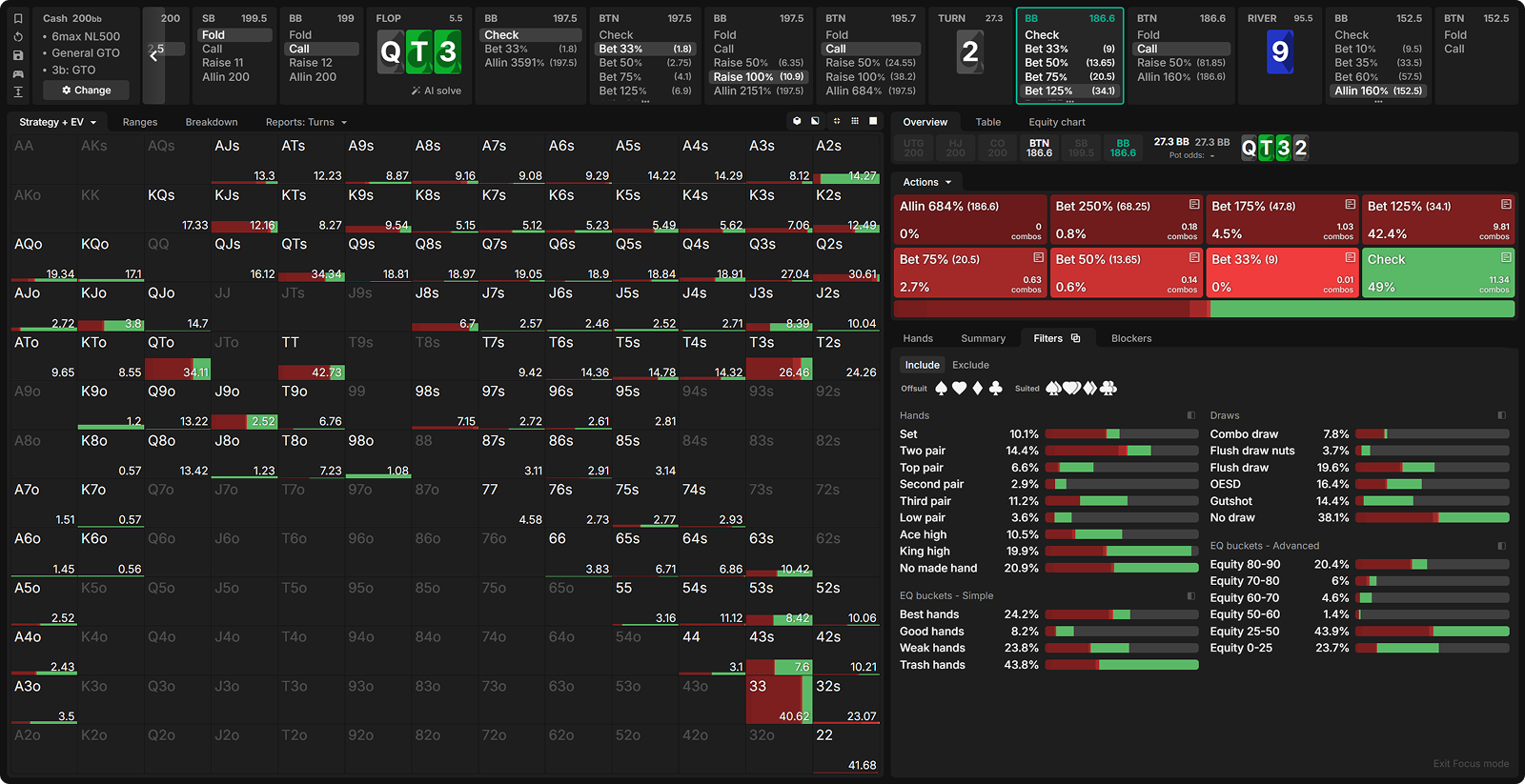
The river carries the 9♦, and BB now primarily uses an overbet jam when betting. By filtering for hands with 25% equity or less, it becomes clear that missed flush draws make up a very large portion of the bluffs.
{{question-mark}}
Compared to the first example, something should stand out to you. Previously, flush draws preferred to take a smaller sizing, and non-flush-draw air hands were the hands that were used for the large sizing. What gives?
{{/question-mark}}
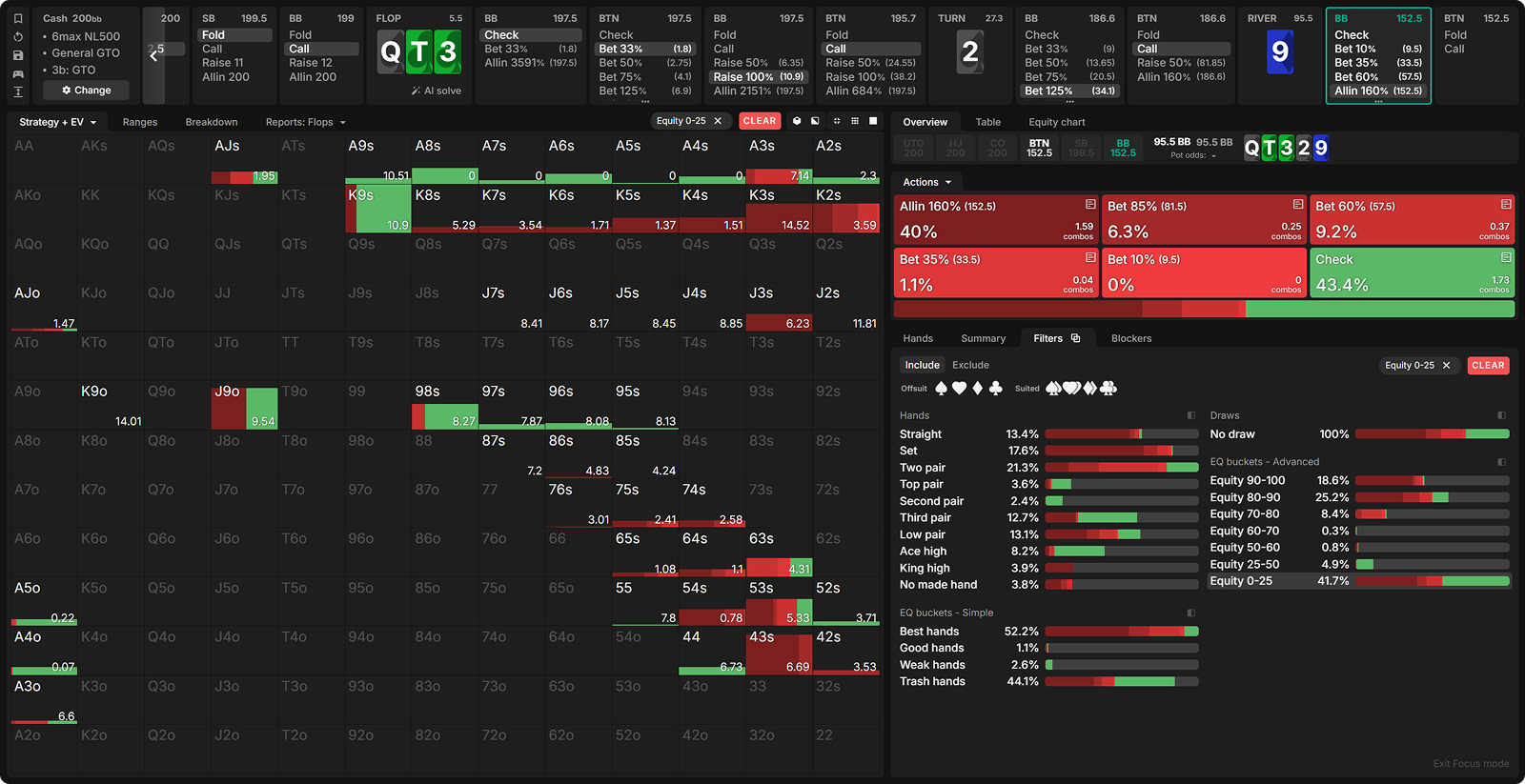
The answer lies in which of BB’s flush draws want to jam, and analyzing the range that BTN calls the turn overbet with. Sharp-eyed readers may have noticed that while King-high flush draws want to jam this river (with the exception of K9s, having rivered some small showdown value), BB’s Ace-high flush draws are all checking. This is because, on the turn, BTN has folded all of their non-nut flush draws to the overbet from BB, significantly decreasing the amount of flush draw combinations that BB blocks when they bluff with a King-high flush draw. Bluffing with the Ace-high flush draw, on the other hand, blocks all of BTN’s remaining missed frontdoor flush draws.
Another notable aspect is that KJ, a significant part of both players’ turn ranges, has made the nuts on the river. This adds two extra factors for why BB must bluff these missed flush draws on the river.
- Their range has picked up a significant amount of value (by converting some air into nuts). This means that, as in the first example, they must reach deeper in their range for air to bluff with.
- Additionally, the K♣ now blocks a large portion of BTN’s calling range—far more than it blocks their folding range. Thus, the missed King-high flush draws become a profitable bluff.
The heuristics we can take away from this example are that:
Conclusions
- Bluffing with missed flush draws happens most often when your range begins to run out of other air to choose from.
- Blocker effects are relative; sometimes, a positive factor will outweigh a negative one. Always select the best blockers that are available in the given situation.
- Larger bets on earlier streets will often create the conditions necessary to bluff a missed flush draw.
Is Limping Preflop Viable in Mississippi Straddle Games?
In this article, we’ll delve into both the theory and the practice of open limping. Why does it make so much more sense in Mississippi Straddle games than in traditional, two-blind Hold‘em? How should you respond to limpers when you have position on them?

Navigating BvB OOP After Check-Calling the Flop
Today, we’ll be discussing a scenario that presents itself incredibly often for online cash grinders, one that incorporates all three of these complications: playing the XC-X-? line as the OOP preflop raiser from the SB vs BB in SRPs.
How to Exploit Human Mistakes After a Flop Overbet
The most important thing to understand, when it comes to playing the later streets, is the range dynamics created by your flop overbet. What did your overbet tell your opponent about your range? And what did their call tell you about theirs?