Is Limping Preflop Viable in Mississippi Straddle Games?

Overview
When I first wrote about opening strategy in Mississippi Straddle games, I speculated that, “The best way for BB to take advantage of their “discount” is by calling, which will cost them half as much as any other player (excl. the SB)! Unfortunately, calling is not part of the game tree in our simulations, so we can’t say for certain whether it would be part of BB’s equilibrium strategy. I strongly suspect it would be, however.”
With the advent of multiway preflop solving, we can now answer this question with certainty. And the answer is… yes! In fact, in the equilibrium strategy for unraked games, open limping is more common than open raising from most seats at the table.
In this article, we’ll delve into both the theory and the practice of open limping. Why does it make so much more sense in Mississippi Straddle games than in traditional, two-blind Hold ‘em? How should you respond to limpers when you have position on them?
The Theory of Limping
To lay out the intuition behind limping, I’ll quote a bit more from that earlier article:
“You probably aren’t accustomed to open-limping in traditional cash games, but then, you aren’t accustomed to getting 3.5:1 odds for doing so, either (except in the SB, where it often does make sense to limp). The appeal of limping for BB is that it enables them to stay in the pot cheaply with hands that could not profitably raise. Some of these hands will end up folding to a raise, but that’s ok. You don’t know for certain that someone will raise, and when you’re getting such good odds, it’s essential to distinguish between “someone will probably raise” and “someone will definitely raise.”
{{width: 50%}}
{{/width}}
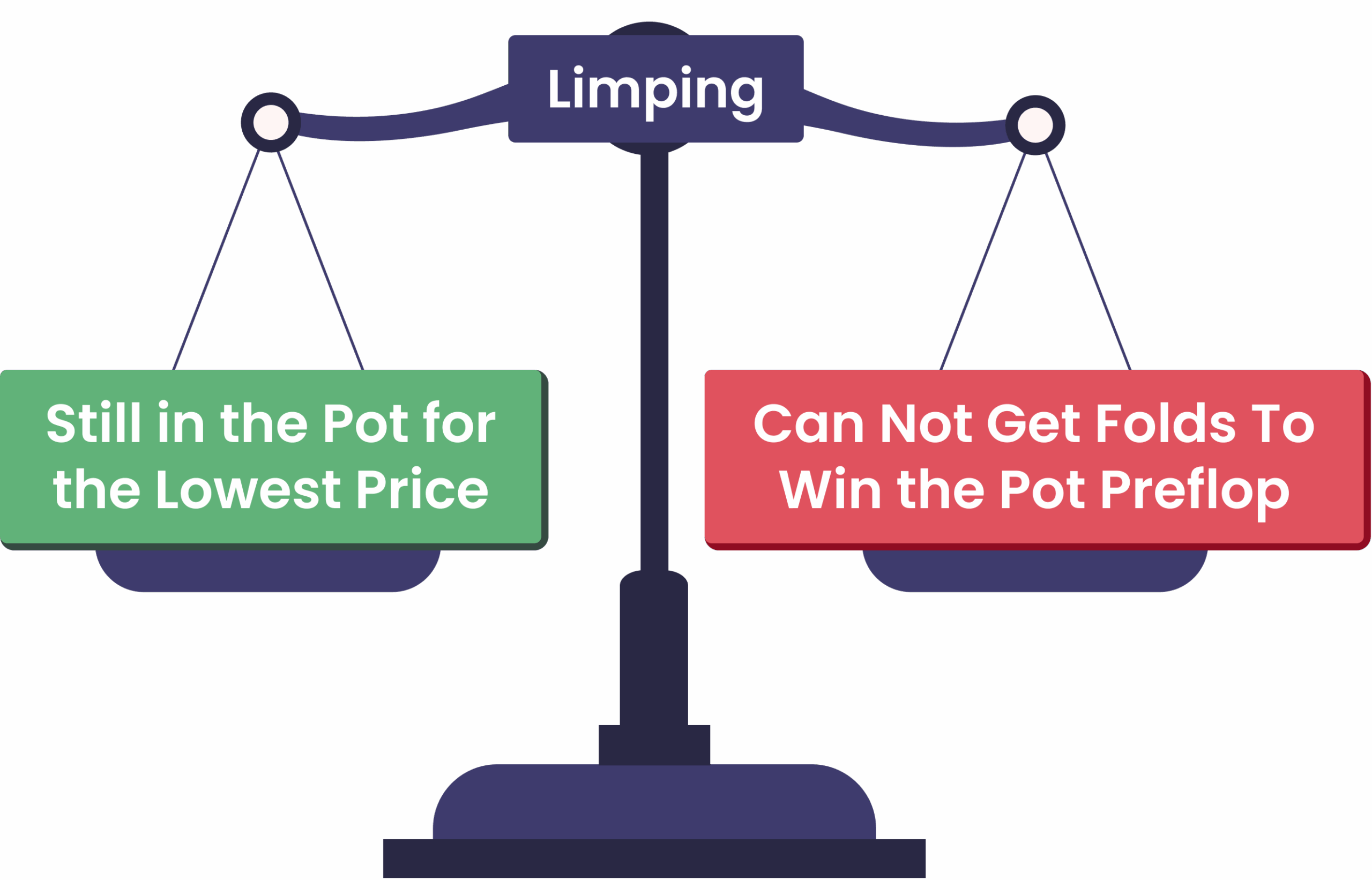
Part of the appeal of limping is that you get to see who raises, how much they raise, whether anyone else calls or 3-bets, etc., before committing much to your hand. You may limp hands that will call or even 3-bet raises from later-position players, especially the BTN straddler, but fold to raises from earlier-position players. Because you are limping many hands that are not strong enough to raise, you can also limp strong hands, hoping to induce raises. You can even limp and then 3-bet as a bluff to represent that you limped with a strong hand!
The major disadvantage of limping is that it eliminates most of the possibility of winning the pot preflop unless someone re-opens the action. This makes it more appealing in unraked games or against opponents who refuse to fold to a raise preflop.
The thing is, it’s quite rare to get a small raise through in a Mississippi straddle game. Even if the action folds all the way to the BTN, they should fold less than a ¼ of the time when getting a great price to call in position. So, you probably aren’t going to take the pot down with a raise anyway. Alternatively, limping limits your exposure the most while still being in the hand and being able to wait and see what other players do.”
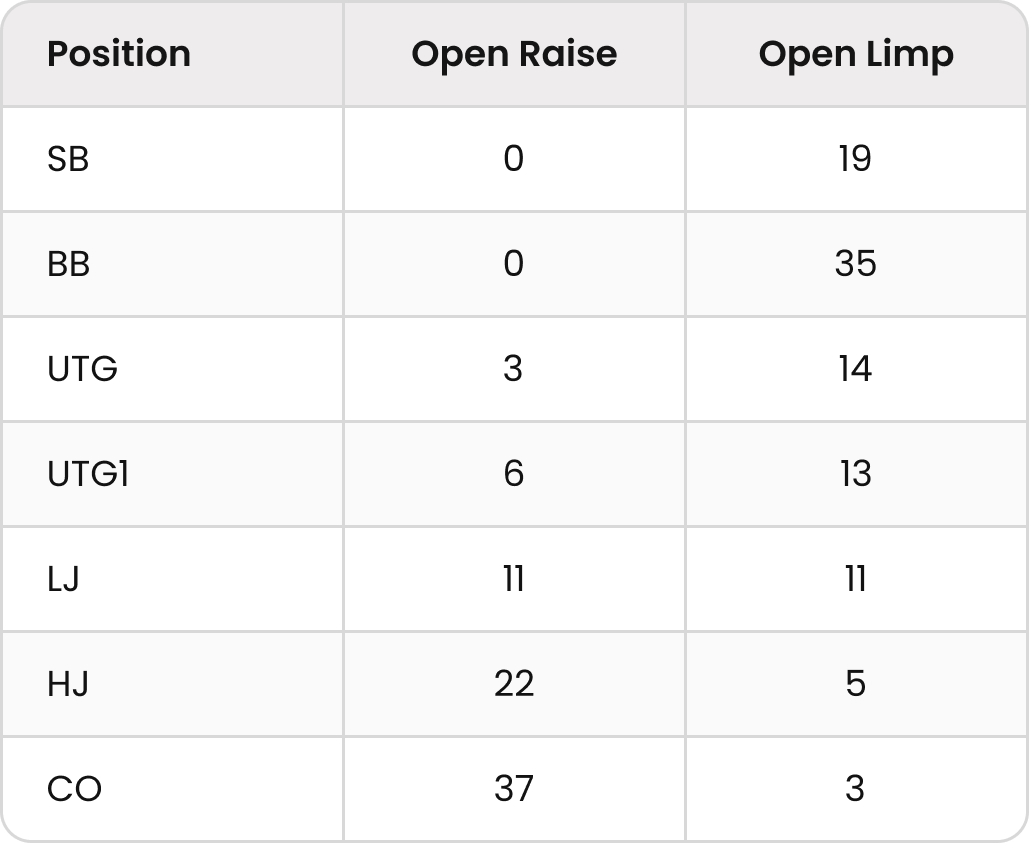
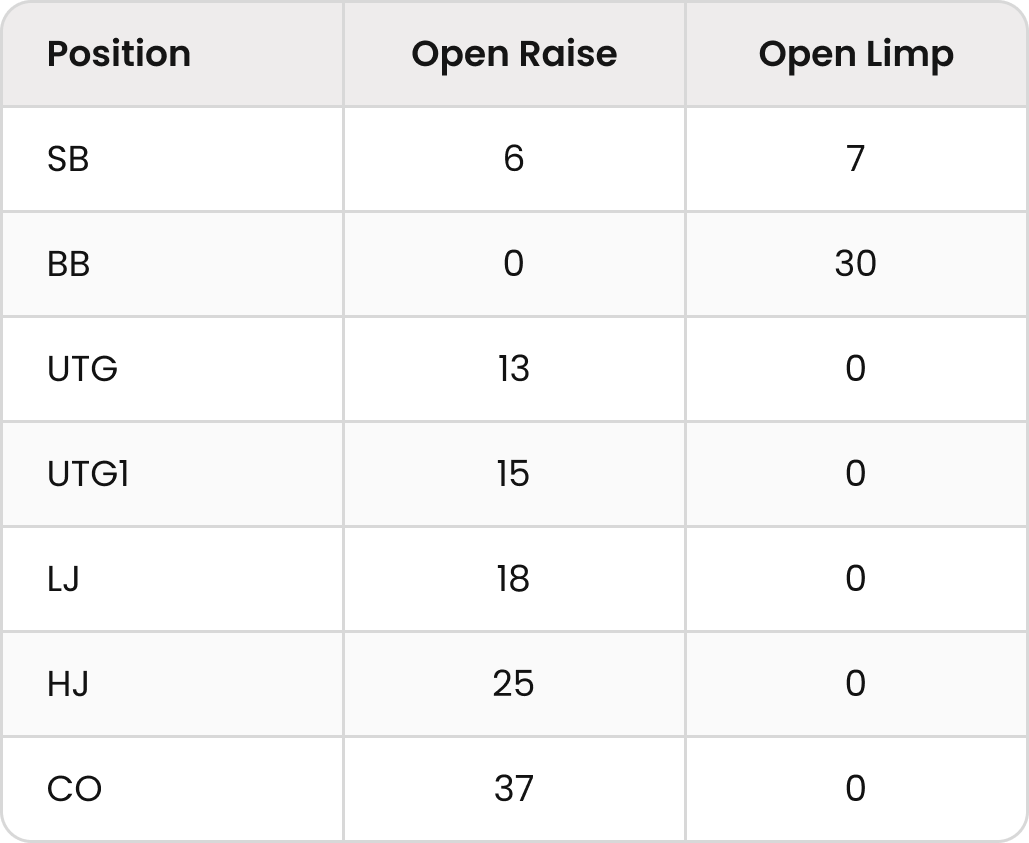
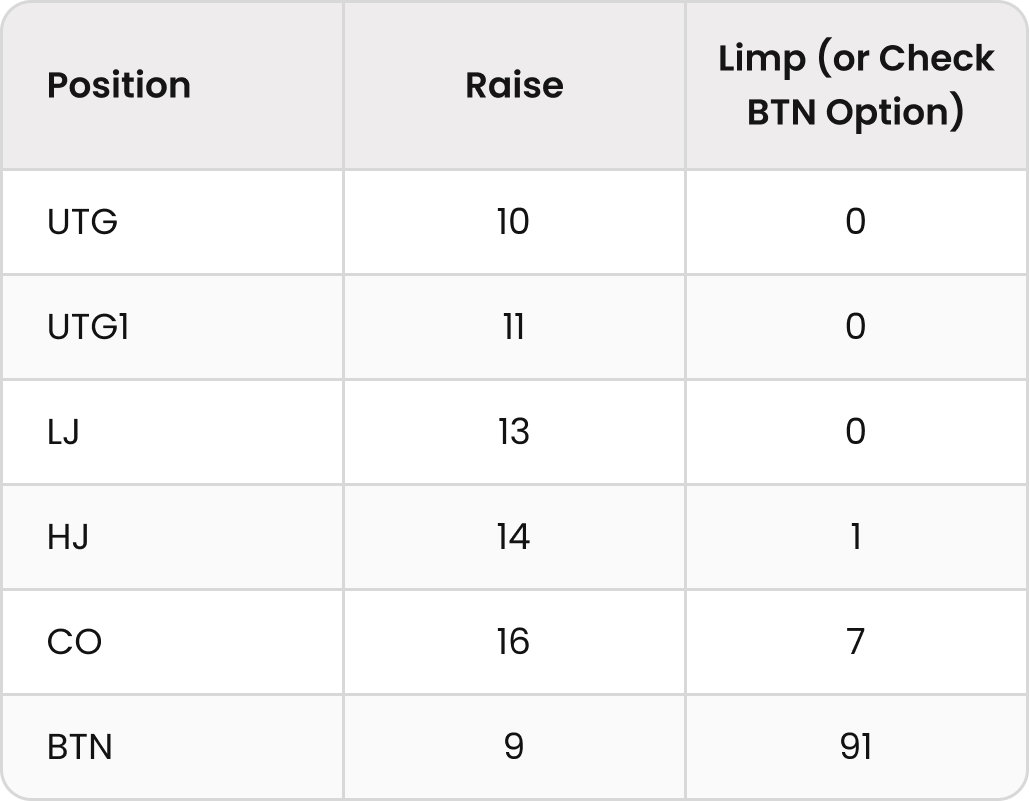
The above was written with the BB in mind, but most of it applies to other seats as well. In unraked pots (such as live games where players pay for seats by the half-hour), SB and BB never open raise at equilibrium, and UTG mostly limps when they are first into the pot as well. As a player’s position improves, they become more likely to raise than to call.
This is consistent with the theory that limping is primarily about hedging. Even players who do not get discounted calls as the blinds do still benefit from finding out whether other players will contest the pot before committing more than a single straddle themselves. The more players remaining to act behind you, the more valuable it is to hedge in this way.
The strong hands that limp also benefit from having more players remaining to act, as this makes it more likely they will get the raise they would like to induce. In the “worst case scenario” where no one raises, they often end up playing heads up against the BTN, which is what probably would have happened had they raised anyway, albeit with a somewhat larger pot. (These sims do permit overlimping, but except in the case of BB limping behind SB, it is not a frequently used option.)
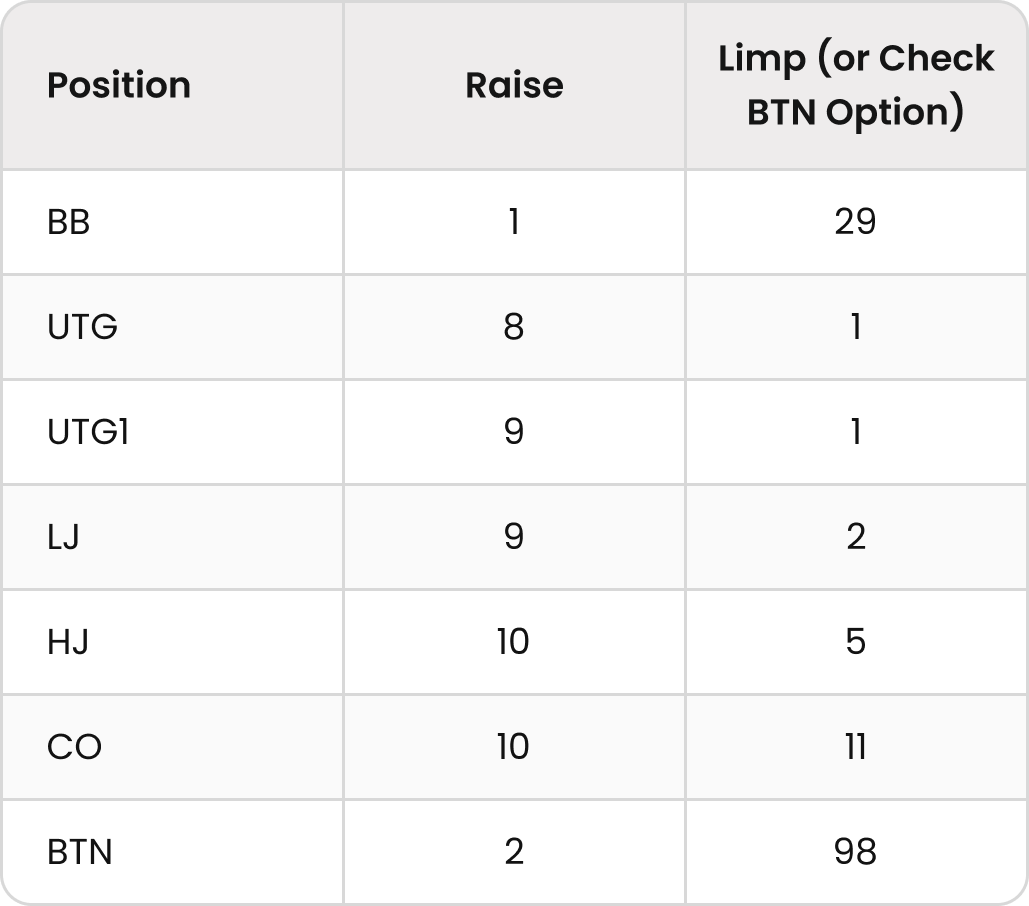
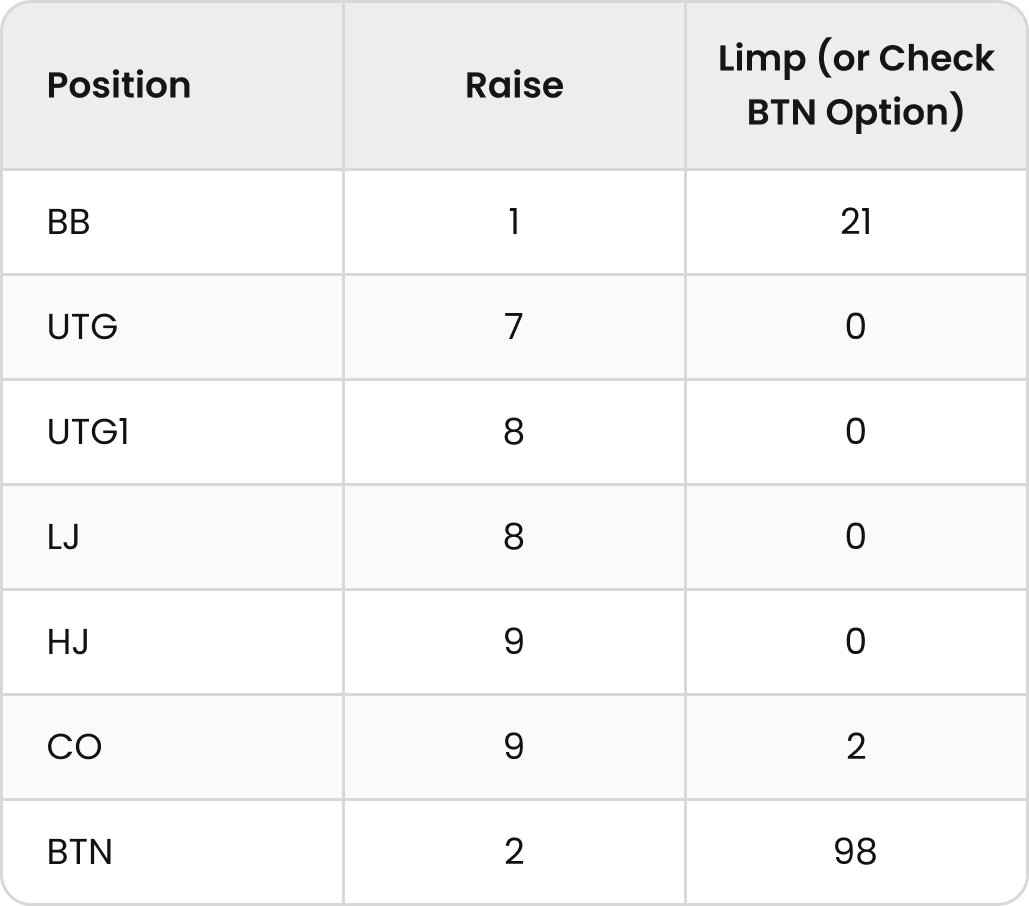
This chart shows how often the solver chooses to open raise vs open limp from each position in an unraked Button Straddle game.
{{width: 50%}}
{{/width}}
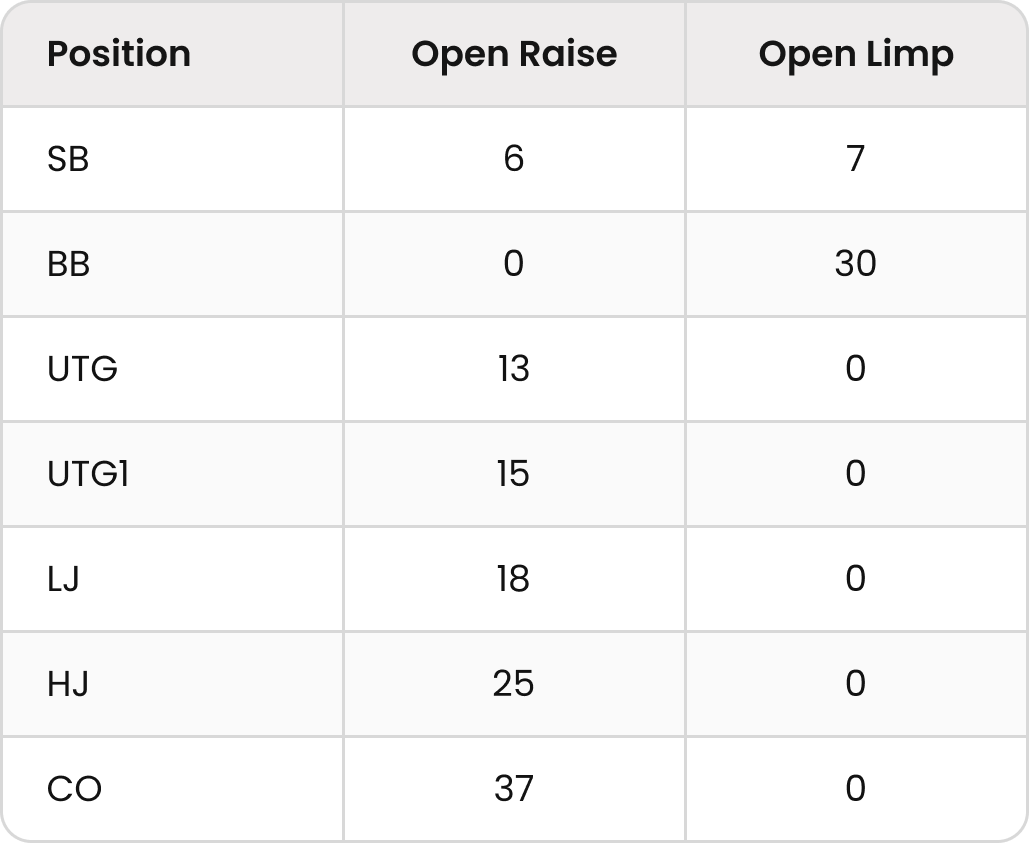
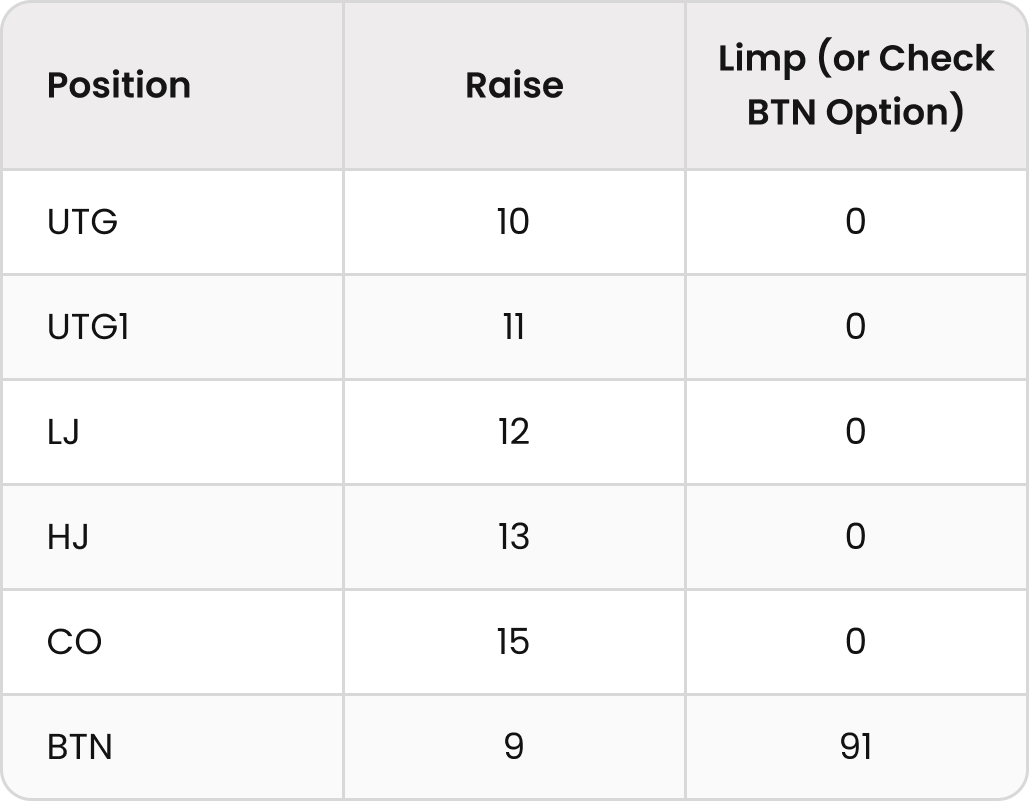
This next chart shows the solver strategy for a raked Button Straddle game. The introduction of rake (10%, with a cap of 1bb and no flop, no drop) dramatically reduces the appeal of limping. BB is the only player who strictly prefers open limping. SB mixes limps and raises, while everyone else plays an open raise or fold strategy.
{{width: 50%}}
{{/width}}
Limping From the SB
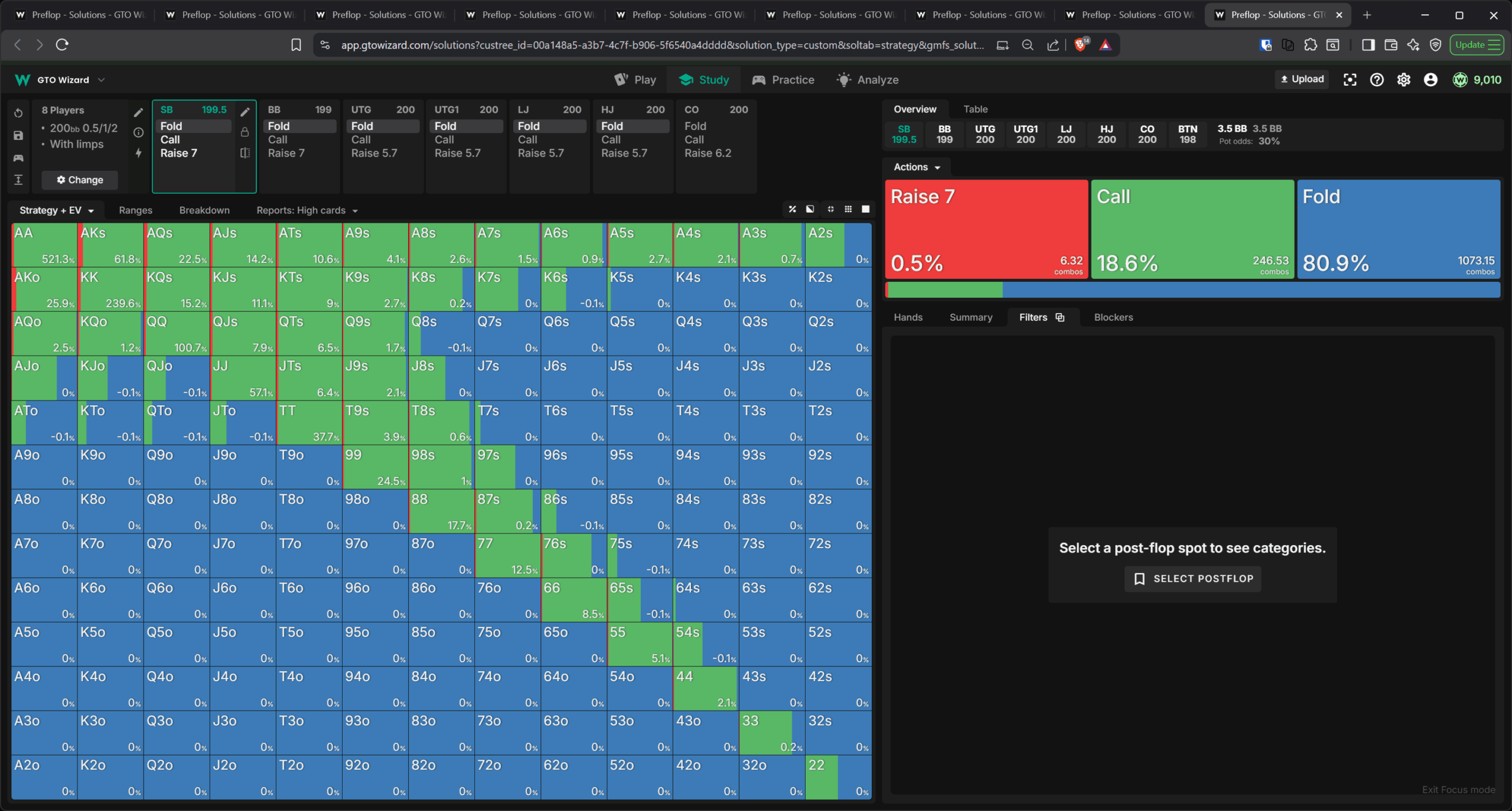
Even in an unraked game, SB’s limping range is quite strong, comparable to an early position range in a traditional game. Because the best case scenario for your weakest limps is a three-way pot with BB and BTN, however, SB favors pocket pairs and suited connectors over the offsuit Broadways that typically fill out the bottom of a raising range:
In a raked game, SB is tighter yet, folding not just those offsuit Broadways but also many of the pocket pairs and suited connectors that could limp if there were no rake:
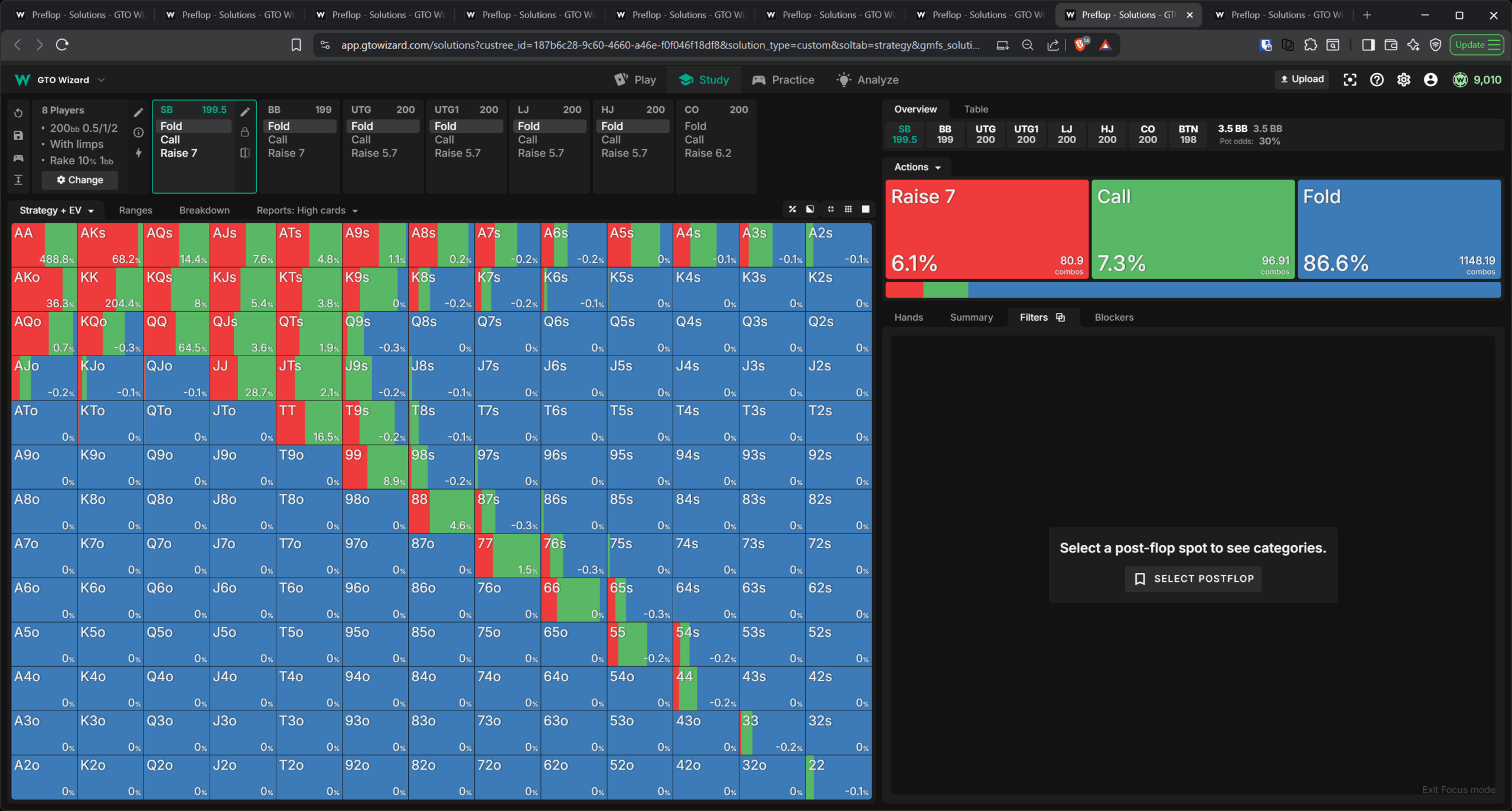
None of these hands strictly favor one option over the other, but the trend is towards raising the big unpaired hands, which will dominate even a strong calling range and, in the case of the offsuit ones, will not perform well in a multiway limped pot.
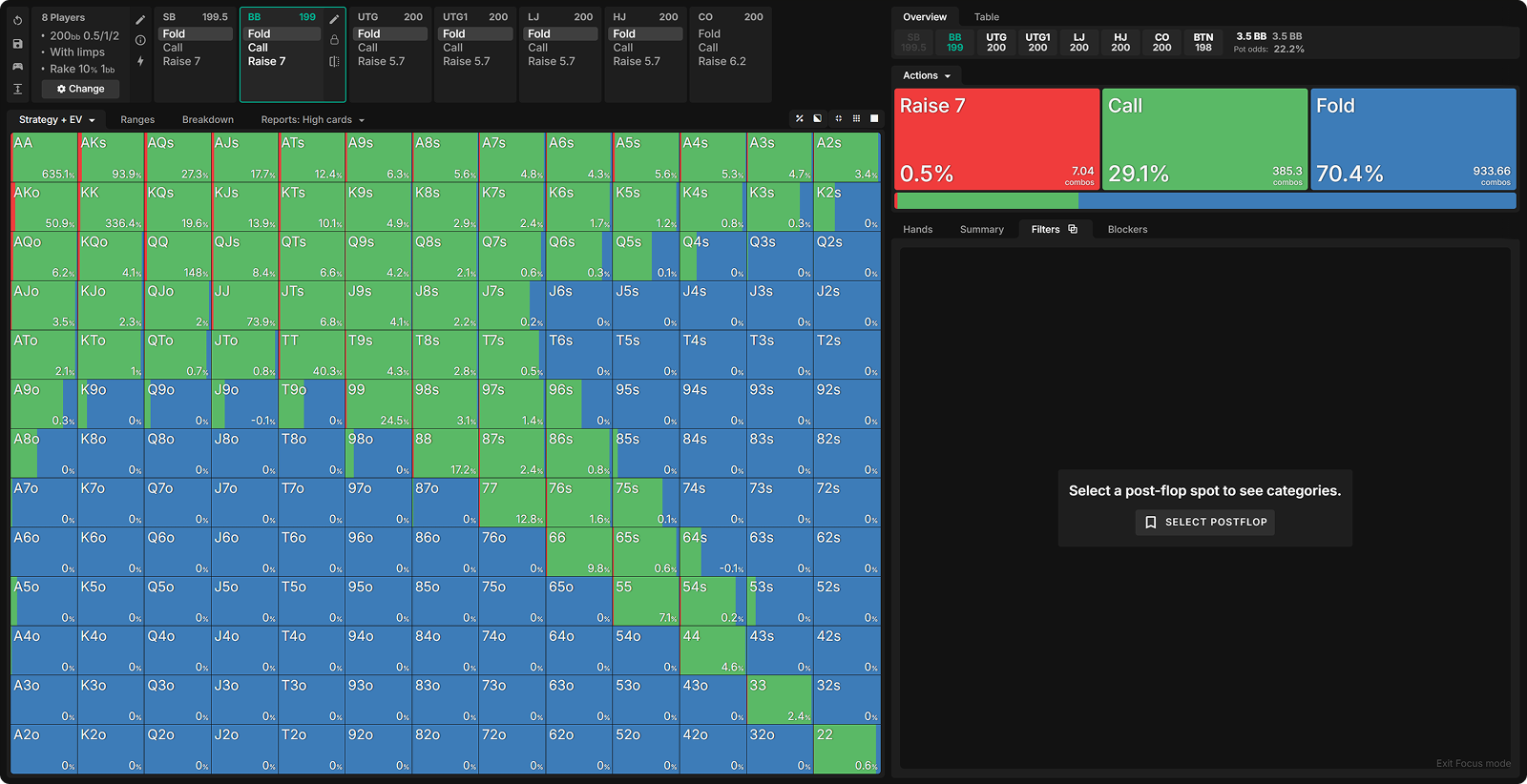
Limping From the BB
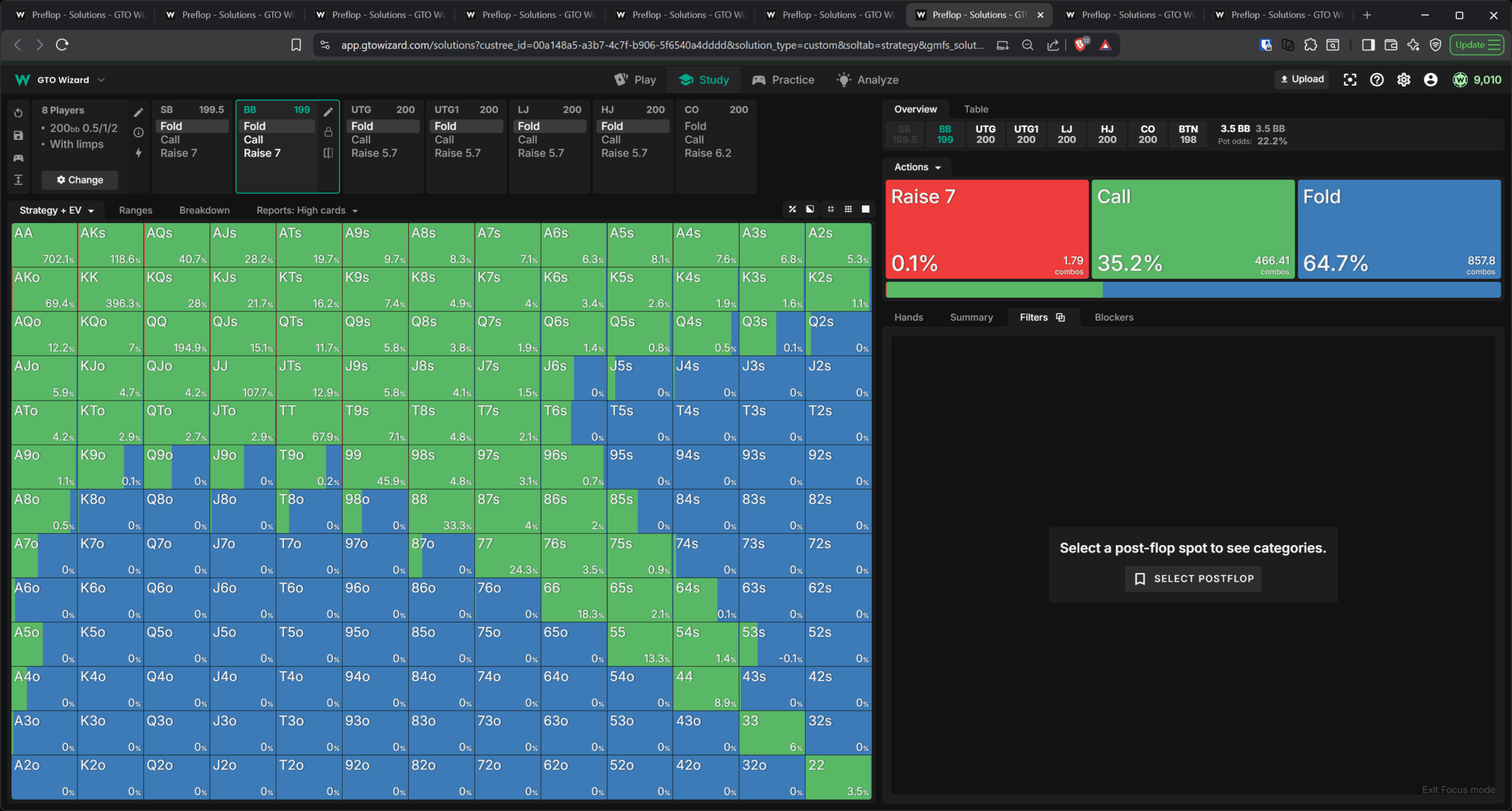
If SB folds, BB limps a good deal wider, including with many more offsuit hands. This is partly because of their better odds but also because they are much less likely than SB to find themselves contesting a three-way limped pot:
In a raked game, they play a bit tighter, especially where offsuit hands are concerned:
Limping From Other Positions
If the Blinds fold, UTG also plays mostly limps in an unraked game. Their limping range looks much like SB’s in the raked game, with an emphasis on pocket pairs and suited connectors over offsuit Broadways. As with SB, most of their raises come when they hold two big unpaired cards:
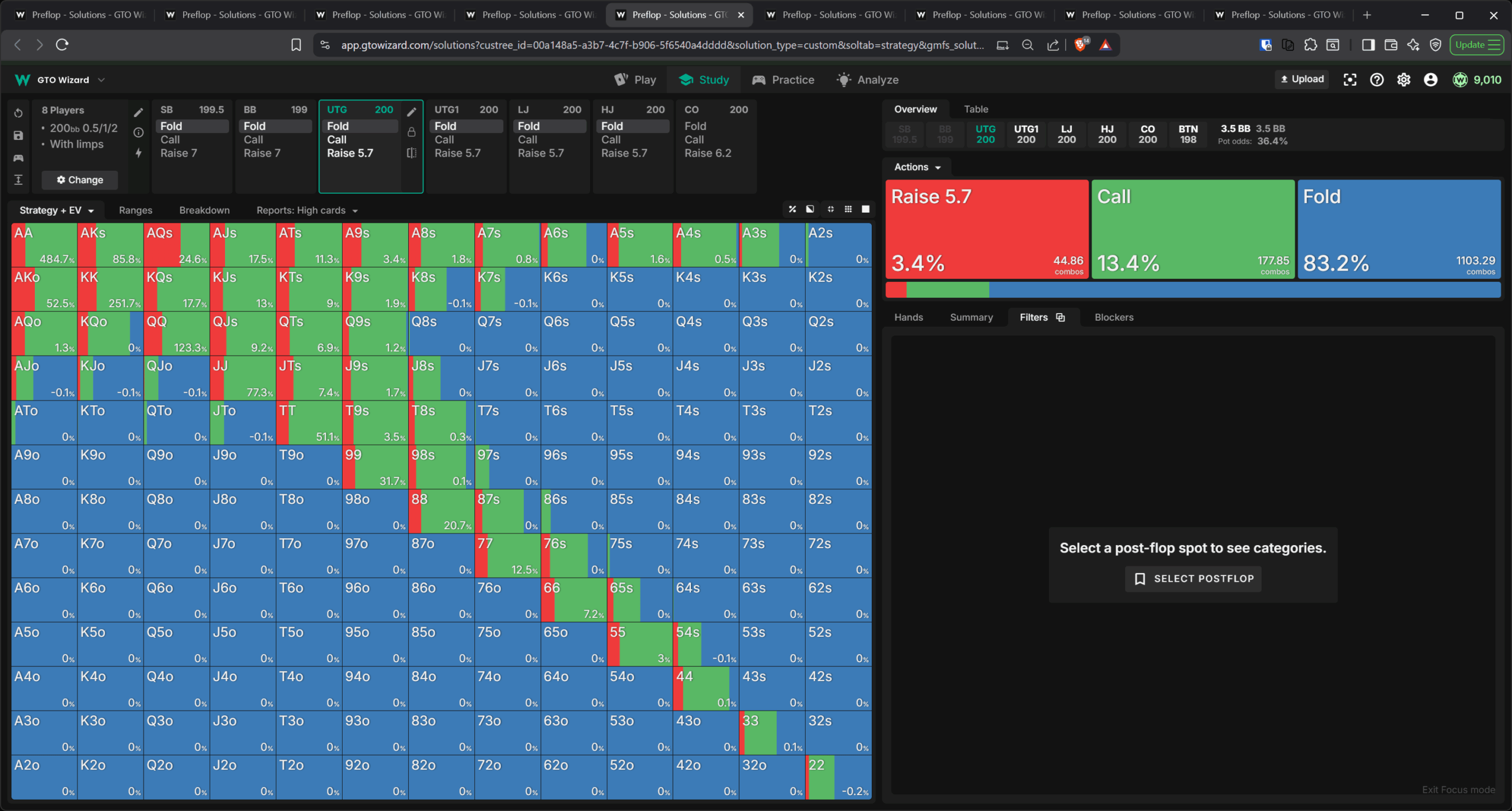
These patterns continue with UTG1 and LJ:
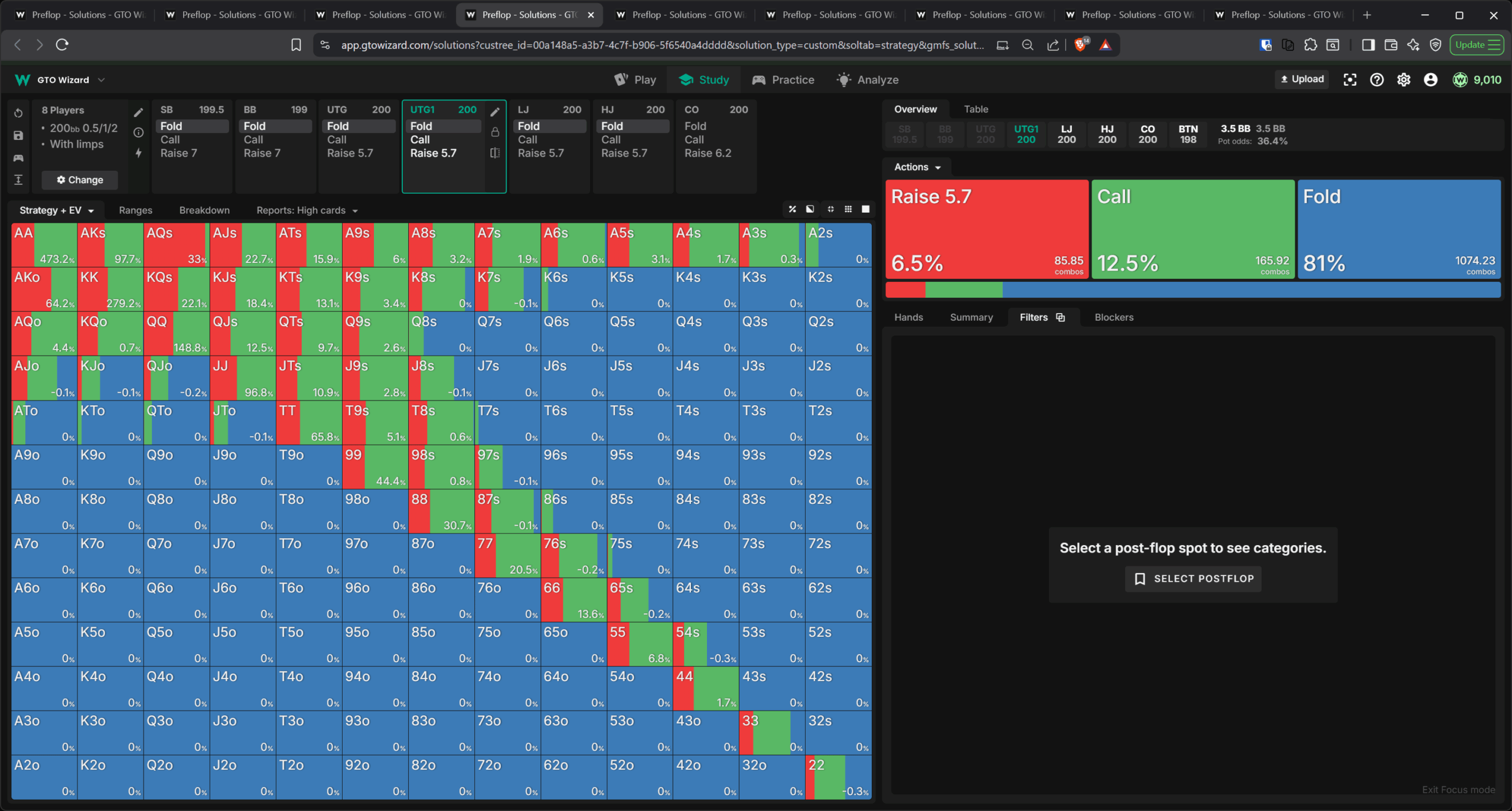
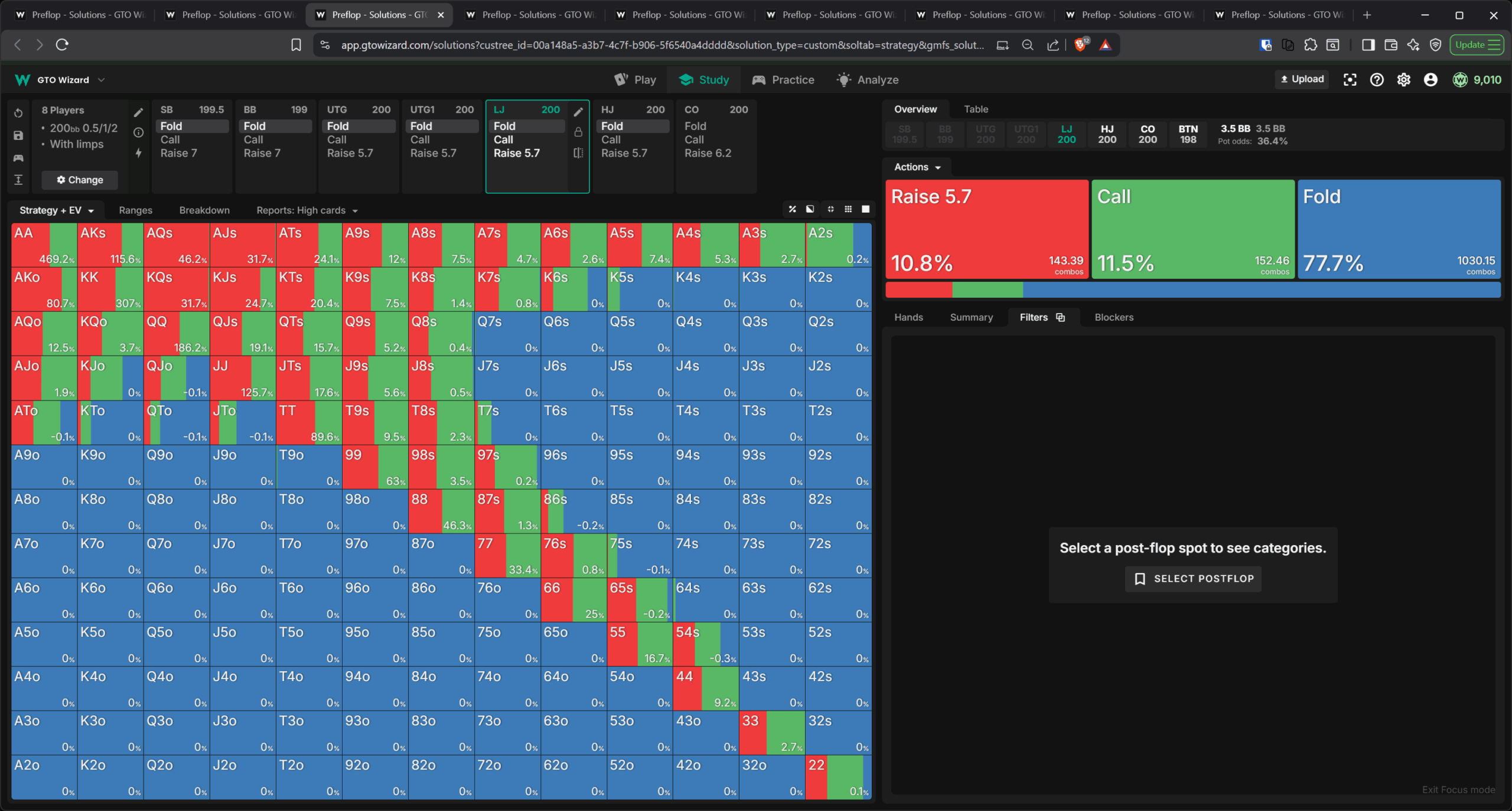
By the time we get around to HJ, limping looks like mostly an excuse to slip into the pot with a few more small pairs and suited hands:
Responding to SB Limps
Before reading on to see the solver strategies, take a moment to consider how you would respond to a SB limp in a Button Straddle game. How aggressively would you raise from each position? Would you ever limp behind? What if you were the straddle and everyone else folded? Formulating your own hypothesis first will help you retain the lessons from the solver solution.
{{grid: 2}}
{{/grid}}
SB’s limping range is quite strong. BB virtually never raises it, even in a no flop, no drop rake structure where they are incentivized to end the action before the flop. Despite the better pot odds, they tighten their own limping range, from 30% to 21% in the raked game and from 35% to 29% in the unraked game. When SB is in there with a strong range, BB is much less likely to win the pot and so folds many of the offsuit hands they would have limped had SB folded. These are hands that would not call a raise and which play especially poorly in a multiway limped pot, which is the only scenario where they’d see a flop.
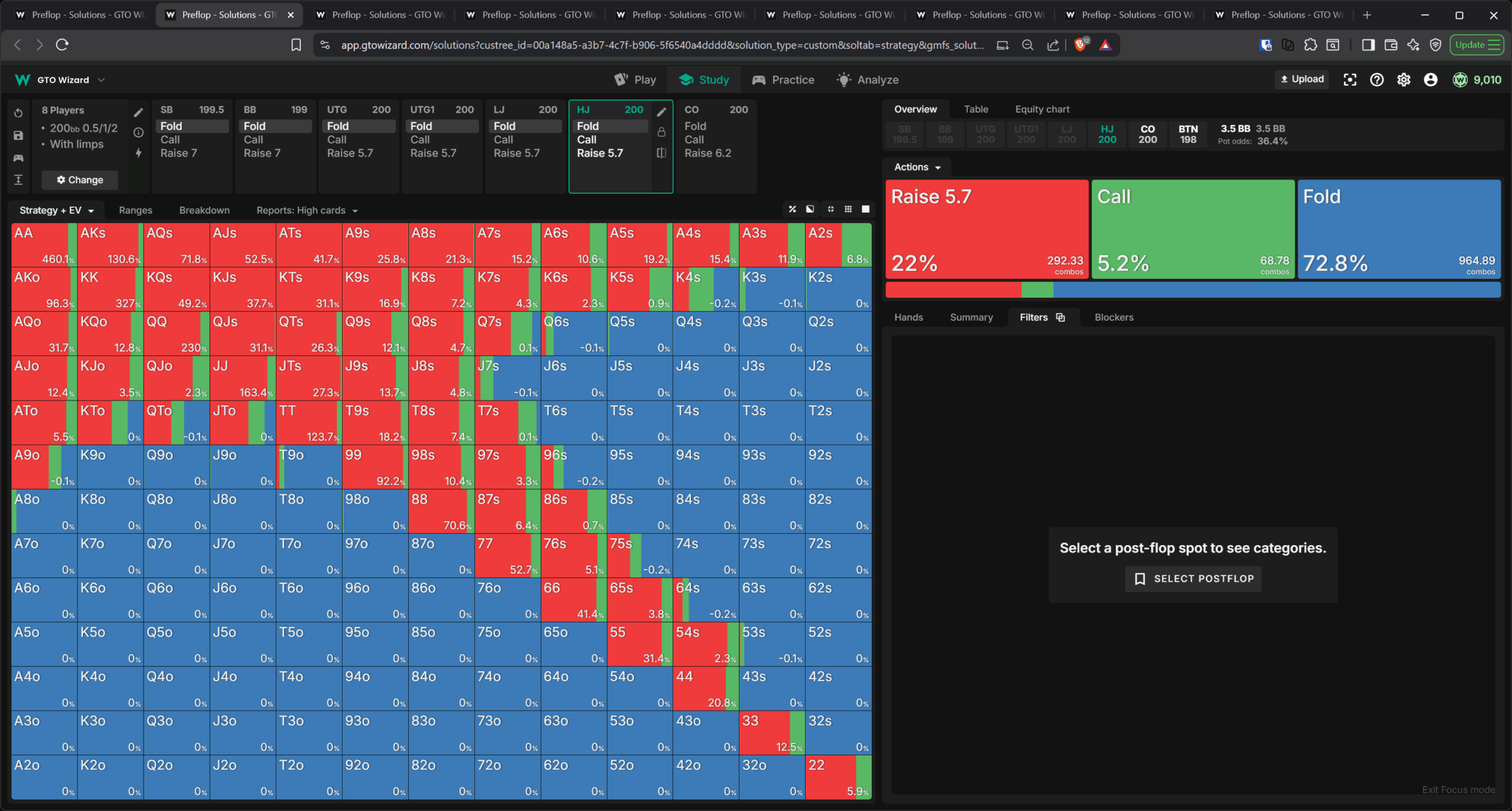
For other players, the situation is even more dire. UTG VPIPs just 7% of hands vs a SB limp in a raked game, mixing folds with hands as strong as AQo, 99, and QJs. Although these hands are equity favorites vs SB’s limping range, they are not big enough favorites to risk exposing themselves to three-bets not just from the players still to act but from SB, whose limp-raising range makes UTG indifferent to continuing with QQ and AKo!
Even later positions in the unraked game do not raise much more than 7% of hands, though limping behind starts to become a more viable strategy for them. Unlike when they are first into the pot, players are actually more likely to limp behind as their position improves. The strength of SB’s range protects them from raises from anything but strong hands, and as their position improves, the odds of anyone behind them holding a strong hand diminishes. Not even CO needs to bother with limping traps; SB has plenty to discourage BTN from raising.
CO Response to SB Limp (Unraked)
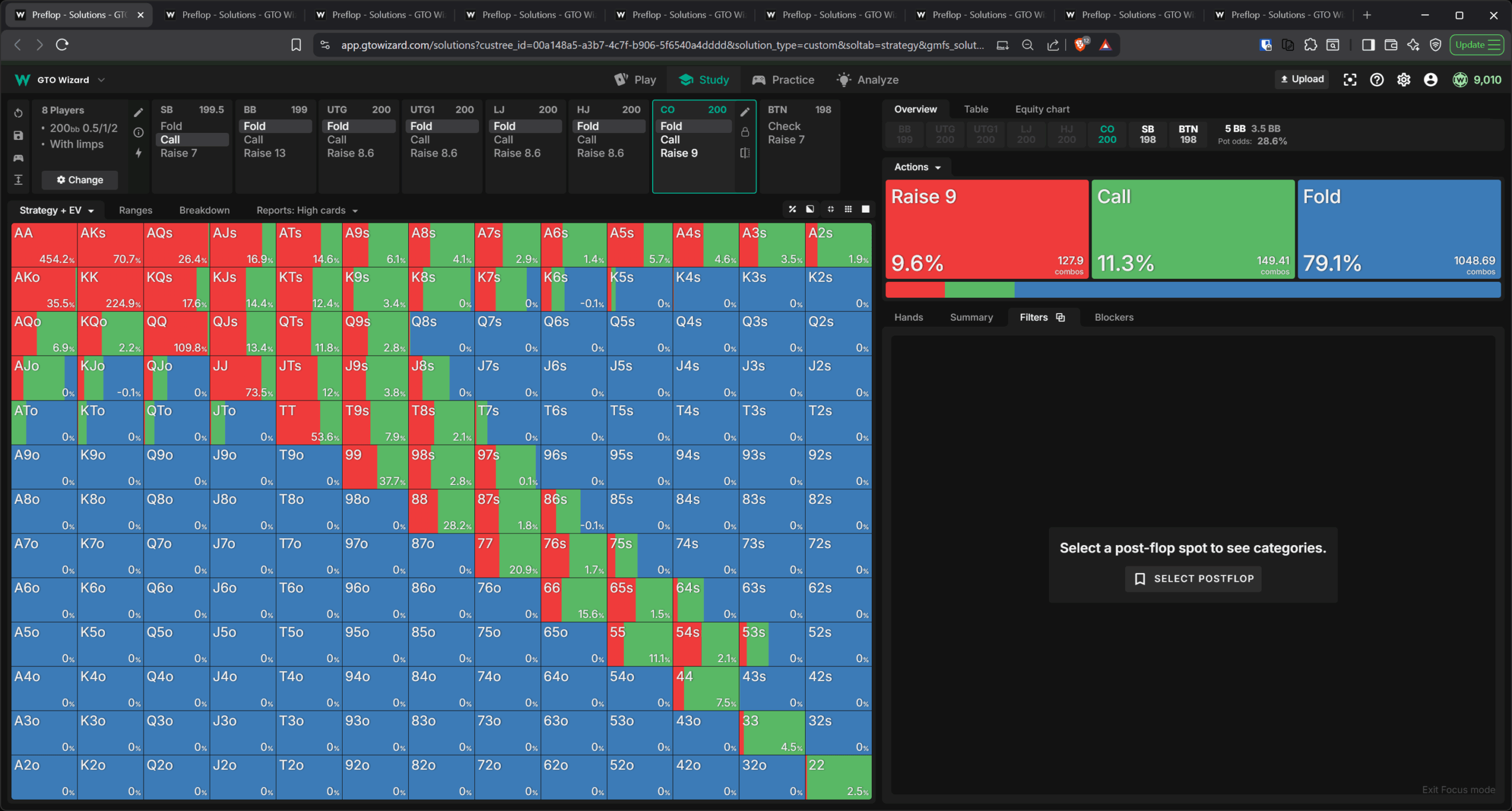
We can see how unappealing it is to re-open the betting vs SB’s limp by looking at BTN’s strategy when everyone else folds. Presented with the opportunity to see a free flop, they almost always take it – even when they have Aces! SB’s limp-raising range is so heavy on Ax that raising Aces isn’t all that likely to generate further action, and other hands don’t fare all that well in a raised pot.
If BTN were to raise KK or QQ, SB would fold many hands they dominate and continue with hands that are drawing very live against them: suited Aces, suited connectors, and pocket pairs. That would make an unimproved overpair tough to play after the flop, as SB would often end up having or representing a strong hand and turning the overpair into a bluff-catcher. Not to mention the risk of getting re-raised by a range that’s heavy on pocket Aces and suited Aces against which even Kings are just a sigh-call
Responding to BB Limps
BB’s limping range is not as strong as SB’s, but everyone still must play quite tightly against it, even in the unraked game. UTG mixes folds with AQo and 88. Only the latest position players flirt with limping behind, mostly when there is no rake. BTN raises a bit wider but still mostly checks QQ and AKo.
{{grid: 2}}
{{/grid}}
Conclusion
These simulations demonstrate how much the profitability of open raising in a traditional, two-blind Hold ‘em game hinges on the possibility of either stealing the blinds or playing heads up against BB’s weak and capped range. When the BTN straddles, neither of these outcomes is likely, and that greatly diminishes everyone’s interest in raising. The blinds and even some early position players are strong incentivized to open limp, and their limping ranges are strong enough that everyone else responds quite tightly when they do, sometimes even limping behind themselves.
Real-life opponents may not play this tight, in which case you can expand your ranges a bit, especially from late position, but two lessons should stick with you:
- You should be limping from the blinds.
- You should respond cautiously when someone else does so.
Navigating BvB OOP After Check-Calling the Flop
Today, we’ll be discussing a scenario that presents itself incredibly often for online cash grinders, one that incorporates all three of these complications: playing the XC-X-? line as the OOP preflop raiser from the SB vs BB in SRPs.
Why You’re Bluffing the River Wrong With Bricked Flush Draws in Cash Games
It’s exciting to flop a flush draw; when you do, you have a fairly high chance of having a strong hand by the river. It’s a lot less exciting, however, when the river arrives without your flush and you’re left with air or a weak pair, especially when you’ve invested a lot of chips on previous street

How to Exploit Human Mistakes After a Flop Overbet
The most important thing to understand, when it comes to playing the later streets, is the range dynamics created by your flop overbet. What did your overbet tell your opponent about your range? And what did their call tell you about theirs?