Exploiting Profiles: Episode IV – The TAG

Overview
Unlike some of the other Player Profiles, the TAG Reg does not make especially large mistakes. They have slightly increased incentive to check and to fold and slightly decreased incentive to call. Interestingly, the disincentive to call ends up making them quite aggressive, because raises look a bit better by comparison. So, this profile ends up being both tight and aggressive, just as the name implies.
In some ways, playing against them looks like playing against a less severe Nit. Like the Nit, the TAG checks too much and folds too much. But their frequent check-raises put an interesting twist on how to adapt to them.
In this article, we will focus on a BTN v BB SRP scenario from a 100bb Cash game. We will investigate how BTN’s c-betting strategy differs when playing a GTO BB and when playing against the TAG Reg Player Profile. Among other things, this will enable a head-to-head comparison with how BTN adapts to a Nit in the same configuration.
We can safely leave the TAG’s preflop calling range unchanged from the GTO baseline. Unlike some other player types, the TAG Reg is a fairly capable and studied opponent who is probably approximating a GTO strategy for common preflop spots.
Aggregate Continuation Betting Strategy
BTN’s strategy for c-betting into a TAG BB looks virtually identical to how they’d play against a GTO opponent.
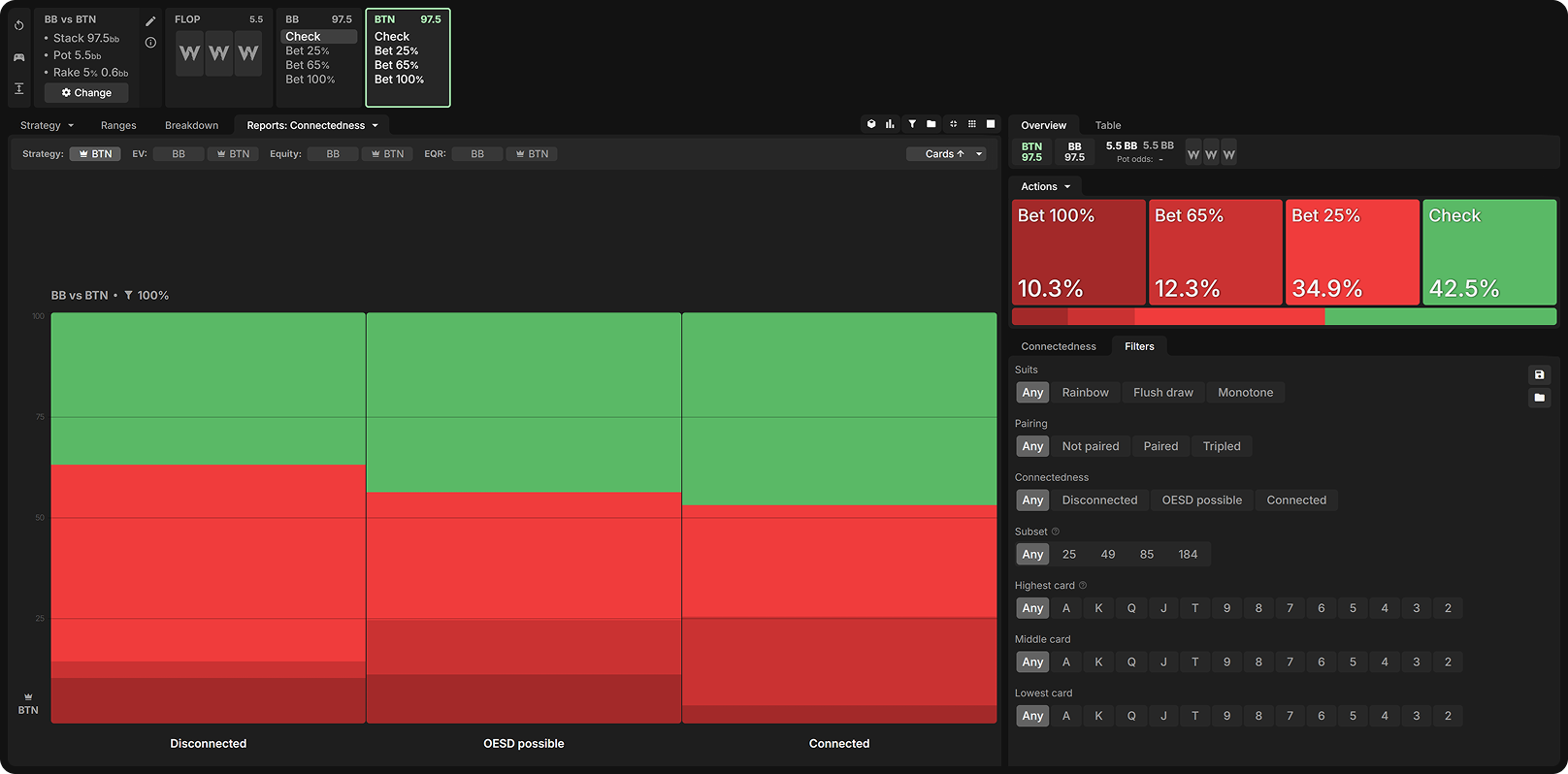
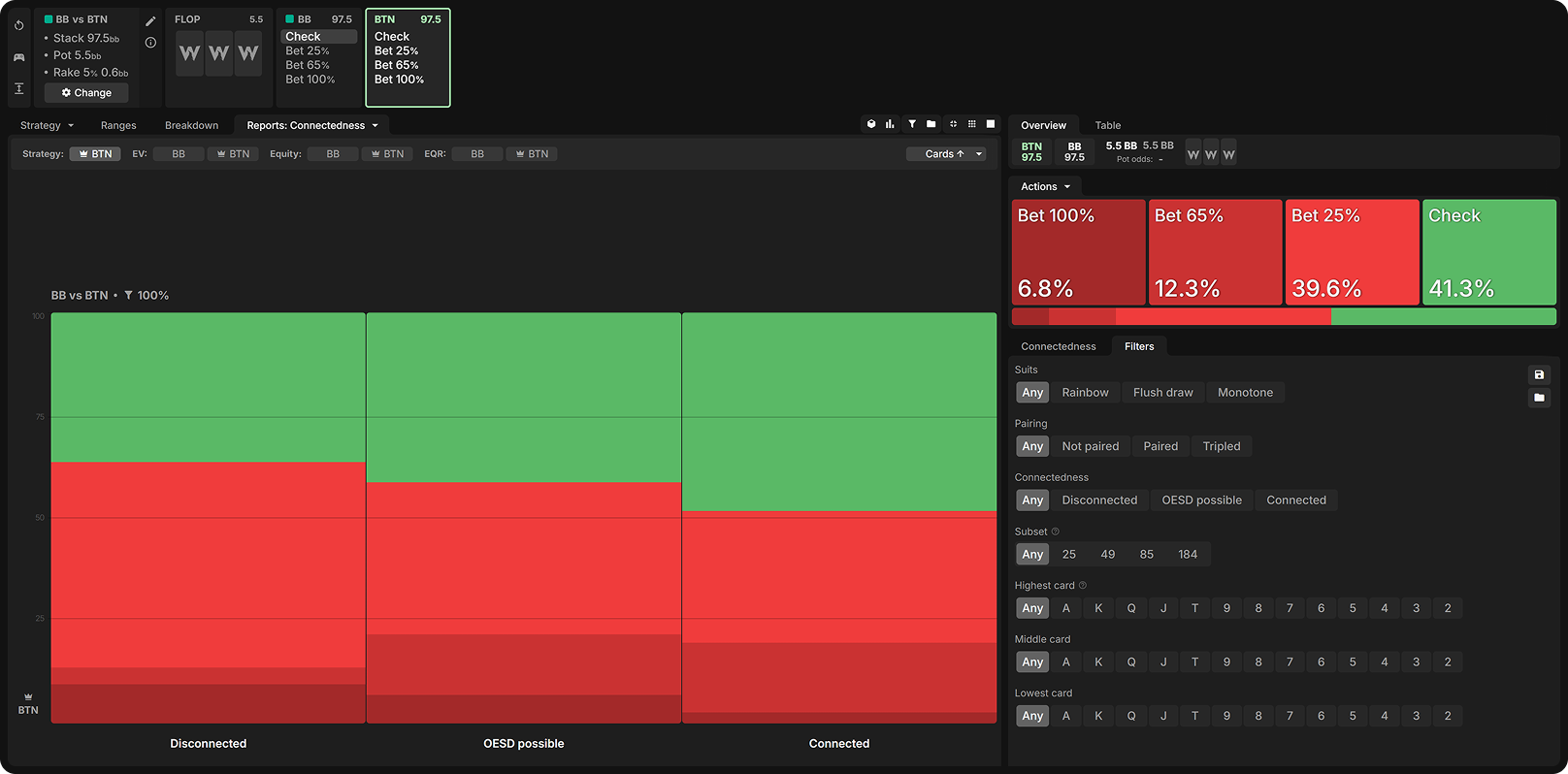
One thing you might notice, however, is a stronger preference for smaller bets against the TAG. These small bets benefit the most from the TAG’s excessive folding. Also, when there’s a greater risk of getting check-raised, you’d like to lose less with hands you’ll fold and face a smaller raise when you’re on the fence about continuing to the raise.
You might also notice that BTN’s preference for betting disconnected boards is more pronounced against the TAG. This, too, reflects a concern with getting raised. Because these are tougher flops to raise and flops where you’re less likely to forfeit significant equity when you fold to a raise, they are more appealing to c-bet into an aggressive BB. Or, more accurately, they are less unappealing to bet.
BTN’s concern is warranted. The TAG BB makes a small raise more than four times as often as the GTO BB, and uses the larger raises slightly more often as well!


Despite the TAG’s much more aggressive raising strategy, BTN folds just barely less to them than to a GTO opponent. This seems odd: if the TAG’s check-raising strategy is dramatically different from GTO, why isn’t BTN’s defense strategy different as well?
To answer this question, let’s look at how these strategies play out on a specific flop.
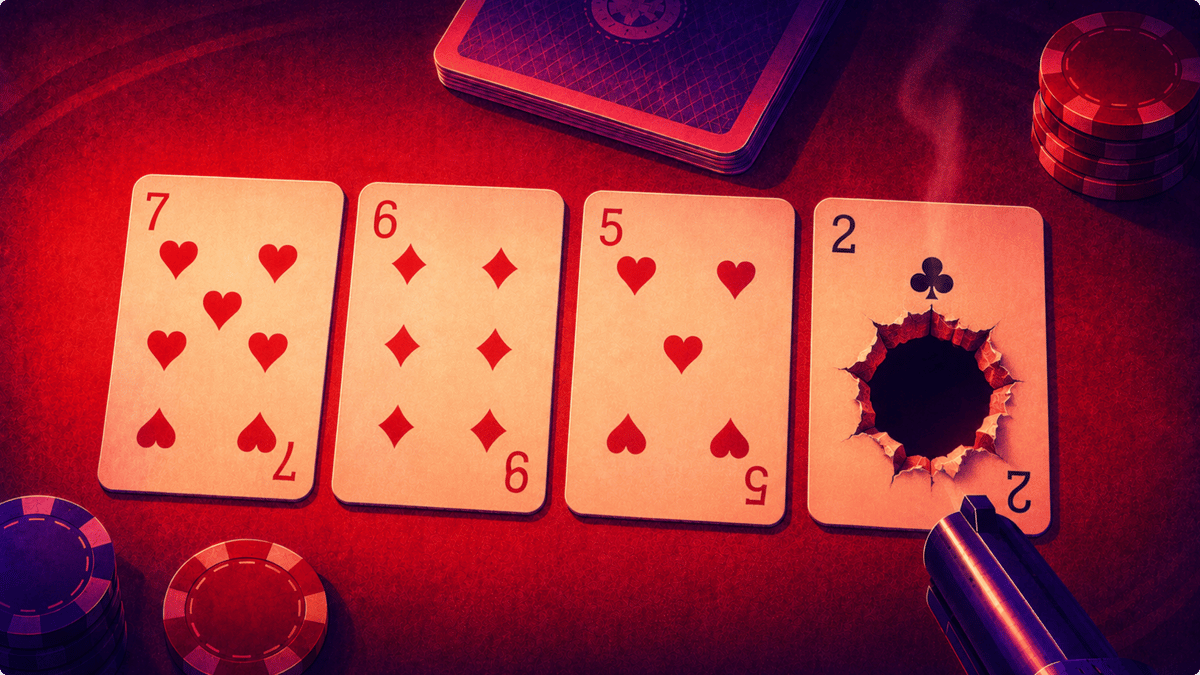
Case Study: 7h6d5h
7h6d5h is a good example of a flop where BTN plays roughly the same c-betting frequency vs the TAG and the GTO opponent but sizes down their bets vs the TAG.


This reduction in betting volume is in part a response to the TAG’s excessive check-raising, but it is also a response to their excessive flop checking. This is a flop where the GTO opponent leads 20% of their range, including disproportionately many strong hands, but the TAG never leads. So, the TAG’s checking range contains more equity, which reduces BTN’s incentive to put money in the pot.
The fact that the TAG check-raises too often does not mean they are check-raising too weak. The GTO opponent mixes checks with all their strongest hands, including sets and straights. When we increase the TAG’s incentive to raise, they check-raise these at a higher frequency to balance the weaker hands. This means the TAG’s raising range maintains roughly the same proportion of strong to weak hands we would see at equilibrium, which is why BTN does not respond much differently.
Barreling the Turn
BB’s excessive check-raising does create an exploitable imbalance, though. It just isn’t on the check-raise branch of the game tree. Take a look at what happens when BB just calls the flop bet and checks a 2c turn:


Because the TAG has too few slowplays on the flop, they are vulnerable on blank turns. BTN exploits them with a much higher betting volume, thanks to a higher barreling frequency and more large bets.
The difference is not so dramatic on a 2h turn. In fact, the betting volume is roughly the same, with BTN preferring a higher frequency of smaller bets vs the TAG


Remember that the TAG makes two mistakes on the flop. They raise too often, but they also fold too often. So far, we’ve focused mostly on the implications of the excessive raising, which leaves them capped and vulnerable on blank turns.
Their excessive flop folding means they have fewer weak hands after check-calling the flop than the GTO opponent would. On blank turns, that doesn’t do a lot for them because BTN can barrel big with impunity and turn all their marginal hands into bluff-catchers. But on turns where BTN’s nut advantage is less pronounced, BTN does not bet as often because BB does not have as many weak hands to attack.
Conclusion
It’s interesting to remember that the TAG Reg Player Profile does not have any explicit incentive to raise. Rather, it is their incentive to check hands that a GTO player would donk bet and their disincentive to call that combine to give them an aggressive check-raising strategy. That’s not just an artifact of how the Player Profile works; it’s a fair description of how many human TAGs play.
This excessive check-raising, in turn, warps BTN’s incentives. They bet smaller on the flop in anticipation of raises, especially on the more coordinated flops where the TAG’s missed donk bets put more nutty hands in their checking range.
Although BTN does not directly exploit these check-raises, they do create an exploitable opportunity elsewhere on the game tree. The knowledge that BB would have check-raised their strong hands on the flop enables them to barrel blank turns more aggressively.

Exploiting Profiles: Episode V – The LAG
LAG players are uncomfortable to play against. They barrel, they lead, they never seem to fold, and somehow they keep winning pots they have no business being in. In this article you'll learn how to perfectly exploit them so you start taking their money instead.

Exploiting Profiles: Episode III – The Maniac
There's a maniac at your table. They bet every street, call everything, and somehow keep winning pots they have no business being in. So what's the adjustment? Do you start blasting back?
3-Way: How to Exploit a Calling Station?
Andrew Brokos explores the key adjustments to the BTN’s raising range construction strategy when the BB is a calling station.