Exploiting Profiles: Episode V – The LAG


Overview
Loose-aggressive (LAG) opponents can be scary to play against, because although they make mistakes relative to GTO strategy, their reluctance to give up on pots creates a lot of variance. With the right adjustments, you can beat them in the long run, but expect some big losses and uncomfortable decisions along the way.
The LAG Reg Player Profile is -3% to Fold and +3% to Bet and Raise. This creates, essentially, a double incentive for them to raise hands that might otherwise fold. So, responding stubbornly to their aggression is important. Hence the big losses and uncomfortable decisions!
As we will see, however, it is at least as important to attack on the nodes of the game tree where they have not aggressed.
Aggregate Continuation Betting Strategy
The following images compare the optimal c-betting strategies in a 100bb BTN v BB SRP against a GTO BB and a LAG BB. In other words, they show how often the BTN chooses each bet size after the BB checks.
Why do you think BTN bets more often vs the LAG BB?
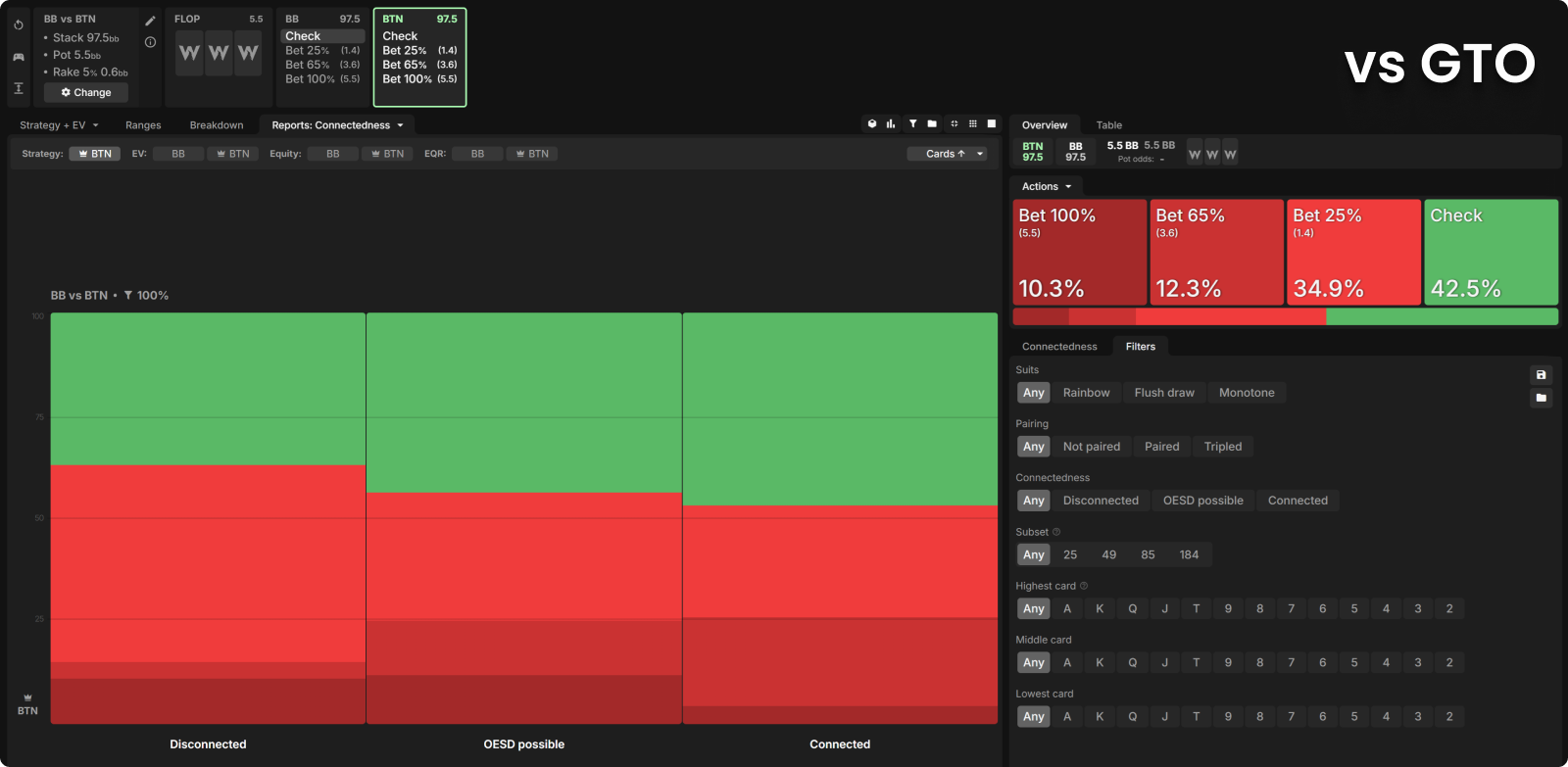
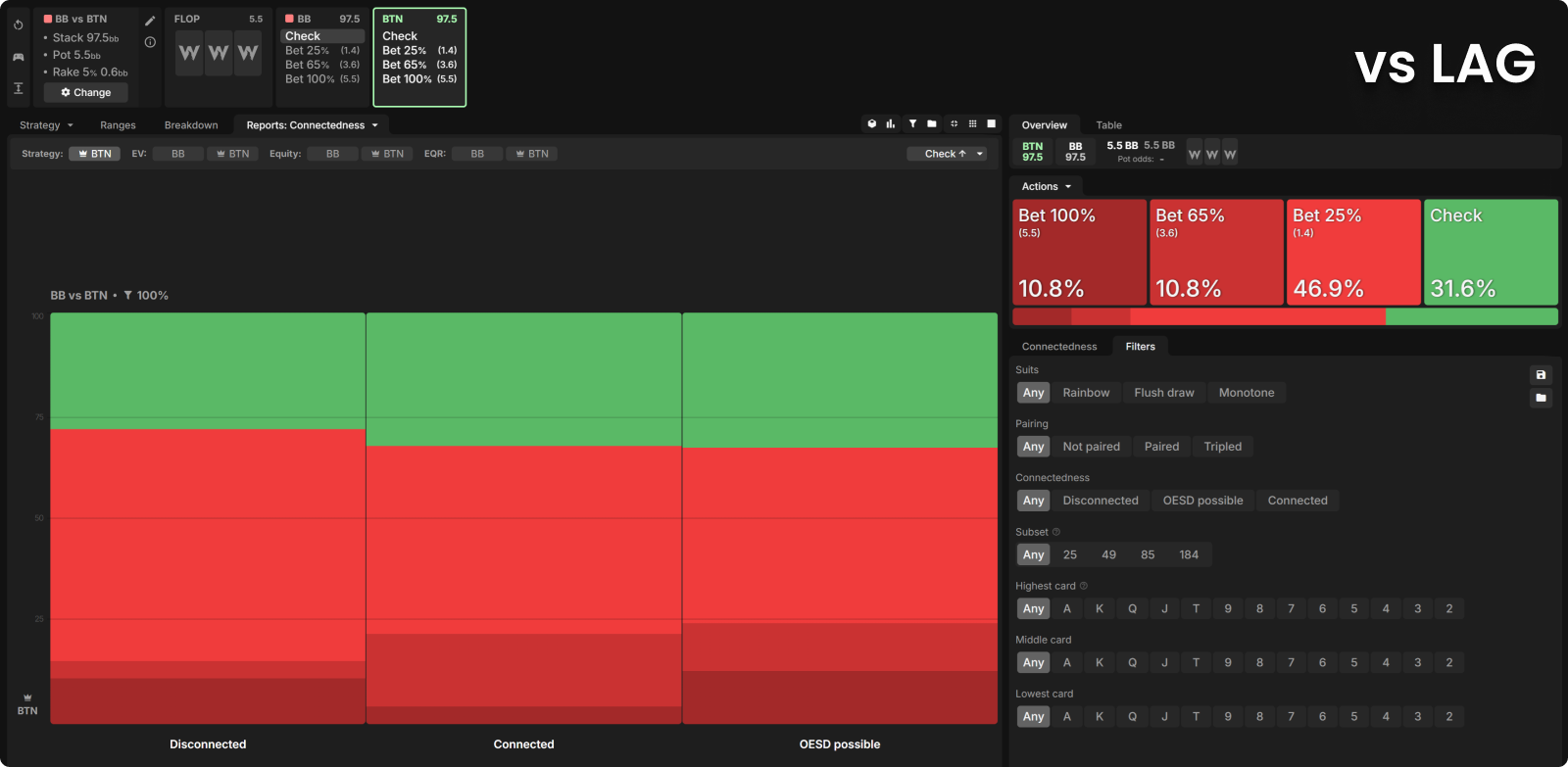
The LAG has extra incentive to check-raise the flop, which makes c-betting less appealing. However, they also have extra incentive to bet the flop, which means they are less likely than the GTO opponent to have a strong hand after checking. This makes betting into them safer and more appealing despite the risk of a raise. Among other things, continuing against a raise is easier when it is less likely to be the nuts!
Donk Betting
The biggest difference between the LAG and the GTO player is not how they respond to c-bets but how often they lead out (donk bet) on the flop instead of checking to the preflop aggressor.
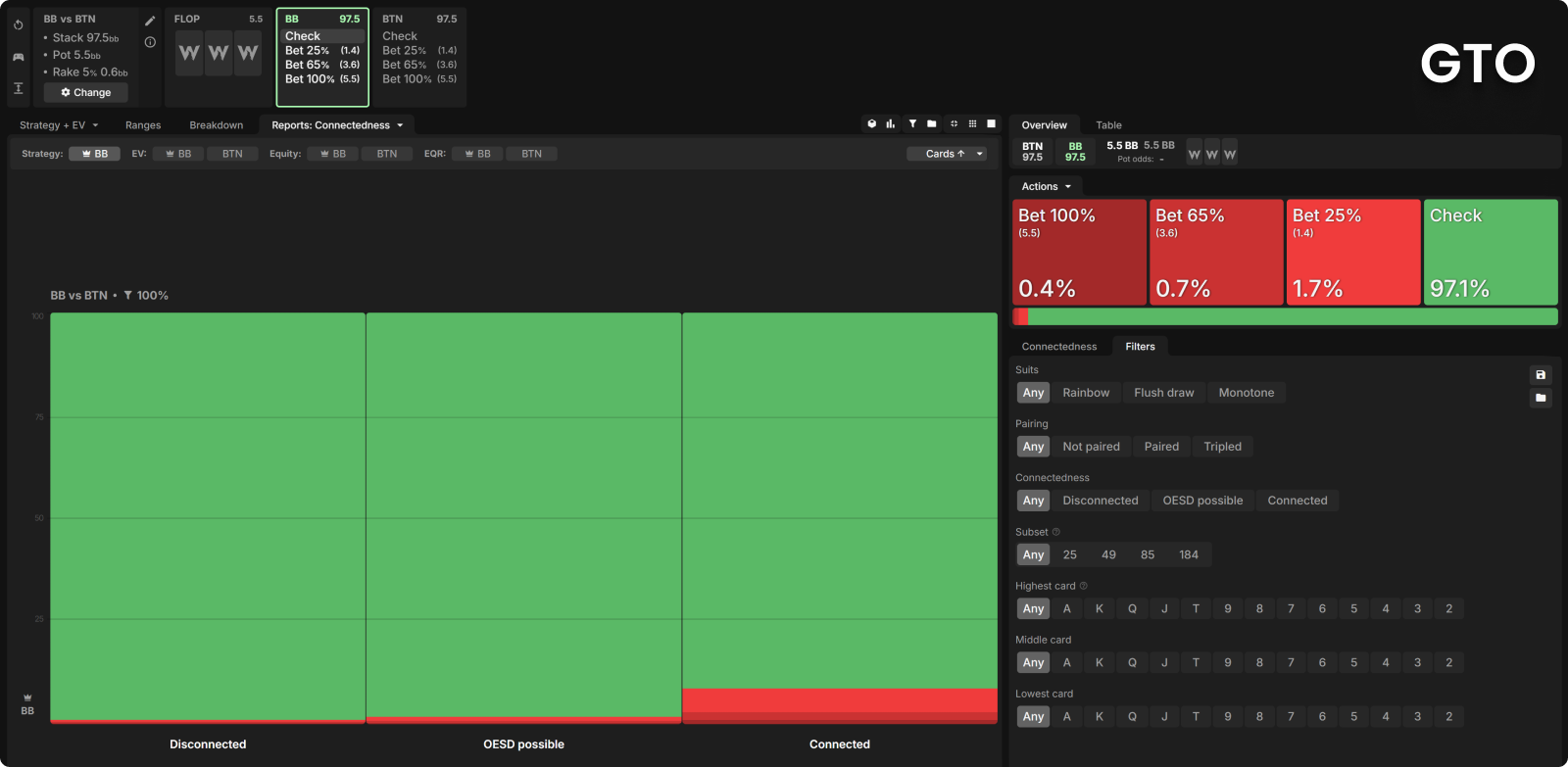
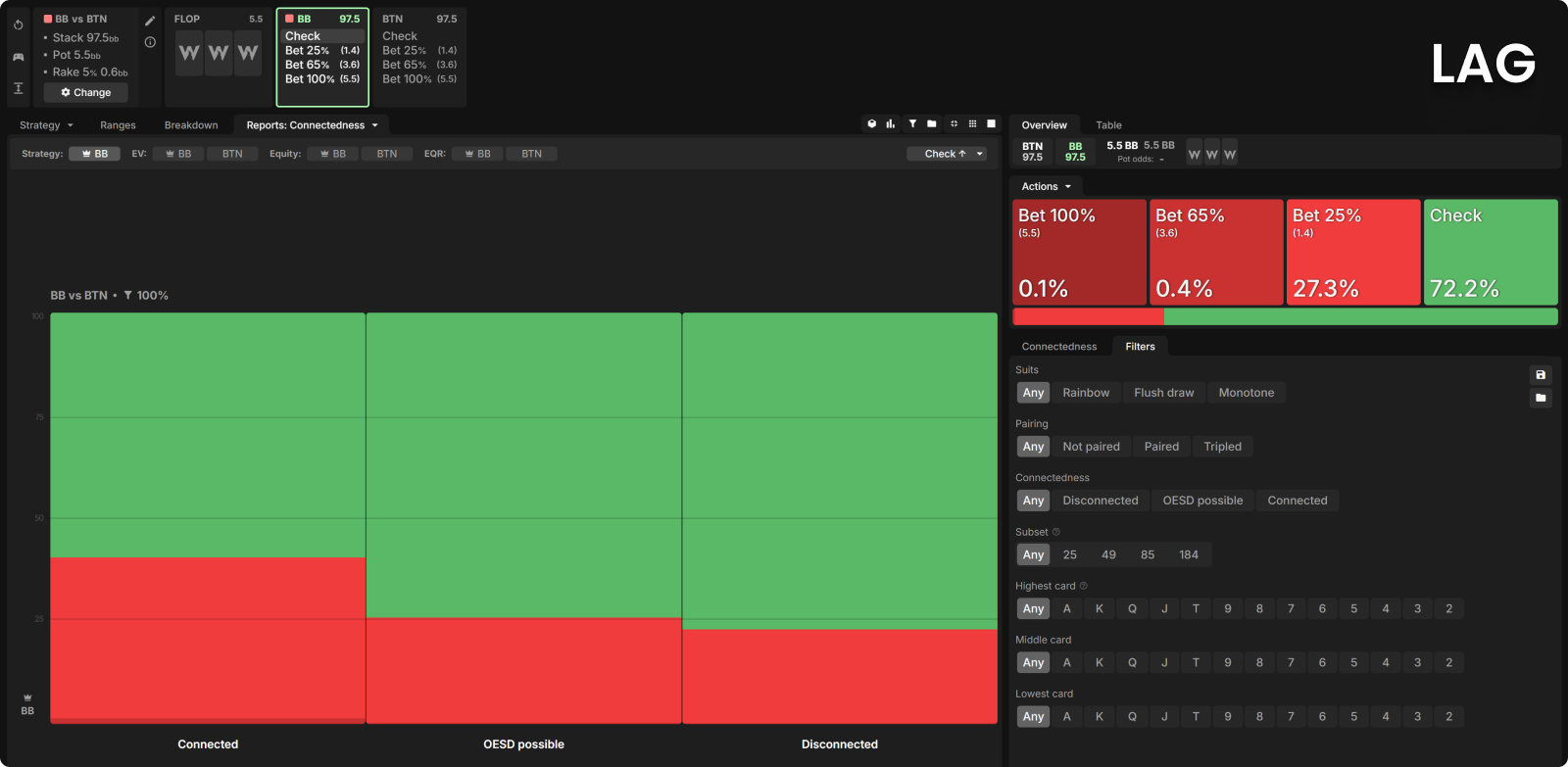
This is an enormous difference! The GTO player almost never leads the flop, except on the most favorable boards. The LAG still leads most often on Connected flops, but they develop a betting strategy on many more textures, ultimately betting more than a quarter of their range.
In the c-betting charts above, you may have noticed that BTN’s c-betting strategy against the LAG was less sensitive to board texture than against the GTO opponent. In other words, they bet into the LAG at roughly the same frequency across Connected, Disconnected, and OESD Possible boards, whereas against the GTO opponent they showed a stronger preference for Disconnected boards. This is because, although the LAG leads many different board textures, they do disproportionately more leading on Connected boards.
BB’s strongest hands can be thought of as star players on a team. These players can be deployed for a variety of purposes, but they only have so many of them. The LAG chooses to put more of their “star players” (nutty hands) on offense, which enables them to bet the flop with many other kinds of hands as well. However, this leaves few nutty hands in their checking range, which is why BTN bets more often when checked to.
The LAG assigns more of their star players to offense, leaving fewer for playing defense.
In theory, the GTO player’s more balanced division of nutty hands between their betting and checking ranges is the better strategy. But the difference is not large. If BTN responds optimally to both strategies, the LAG loses roughly 1% of the pot with their aggressive leading (and their subsequent, overly loose-aggressive mistakes). Which means that if BTN does not respond optimally to both strategies–if they are less familiar with facing donk bets and so respond less well to them–then the LAG could actually outperform the GTO strategy. So, let’s talk about how to respond to those donk bets.
Responding to Donk Bets
As always, we’ll start by comparing the aggregate strategies.
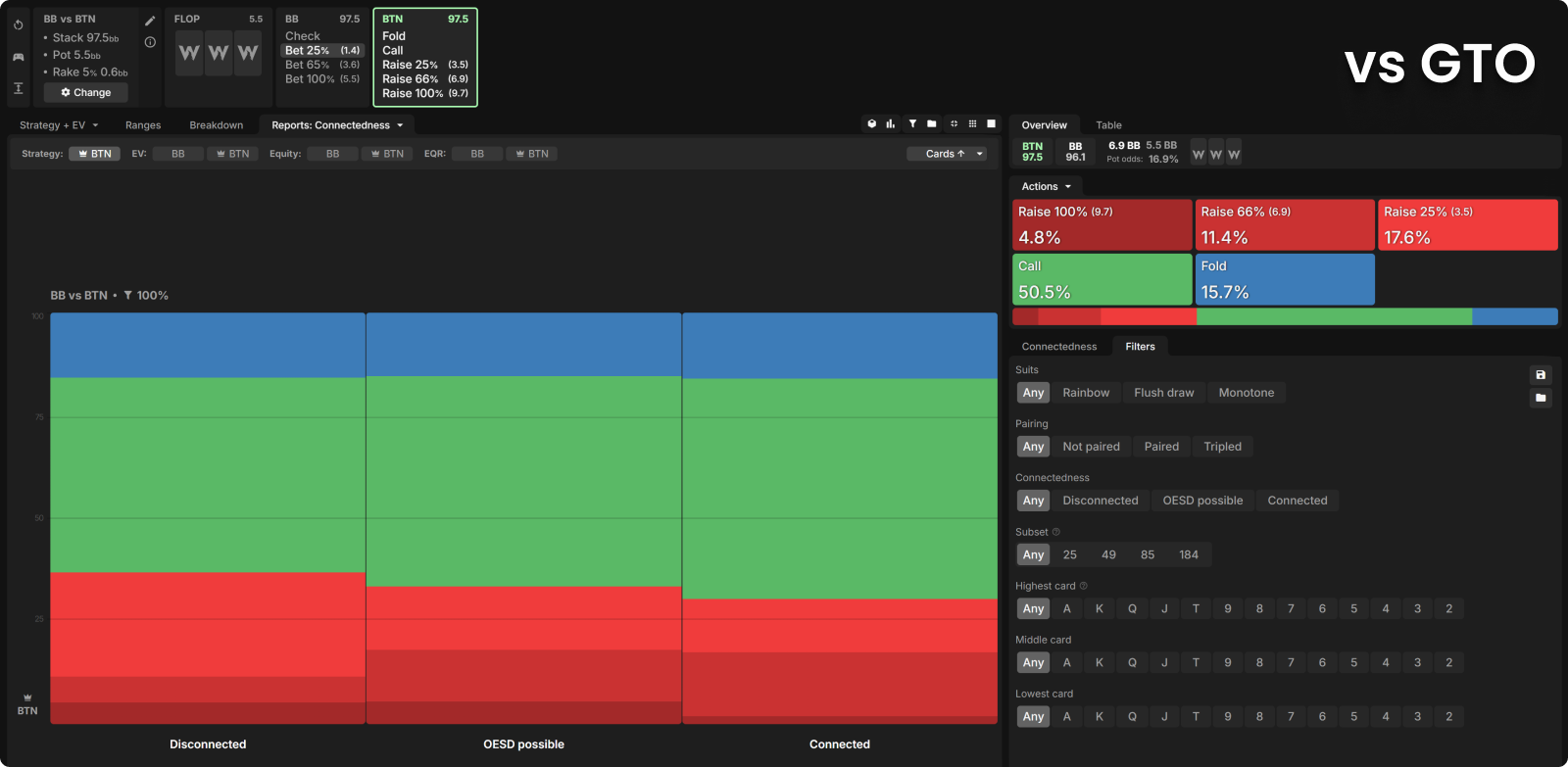
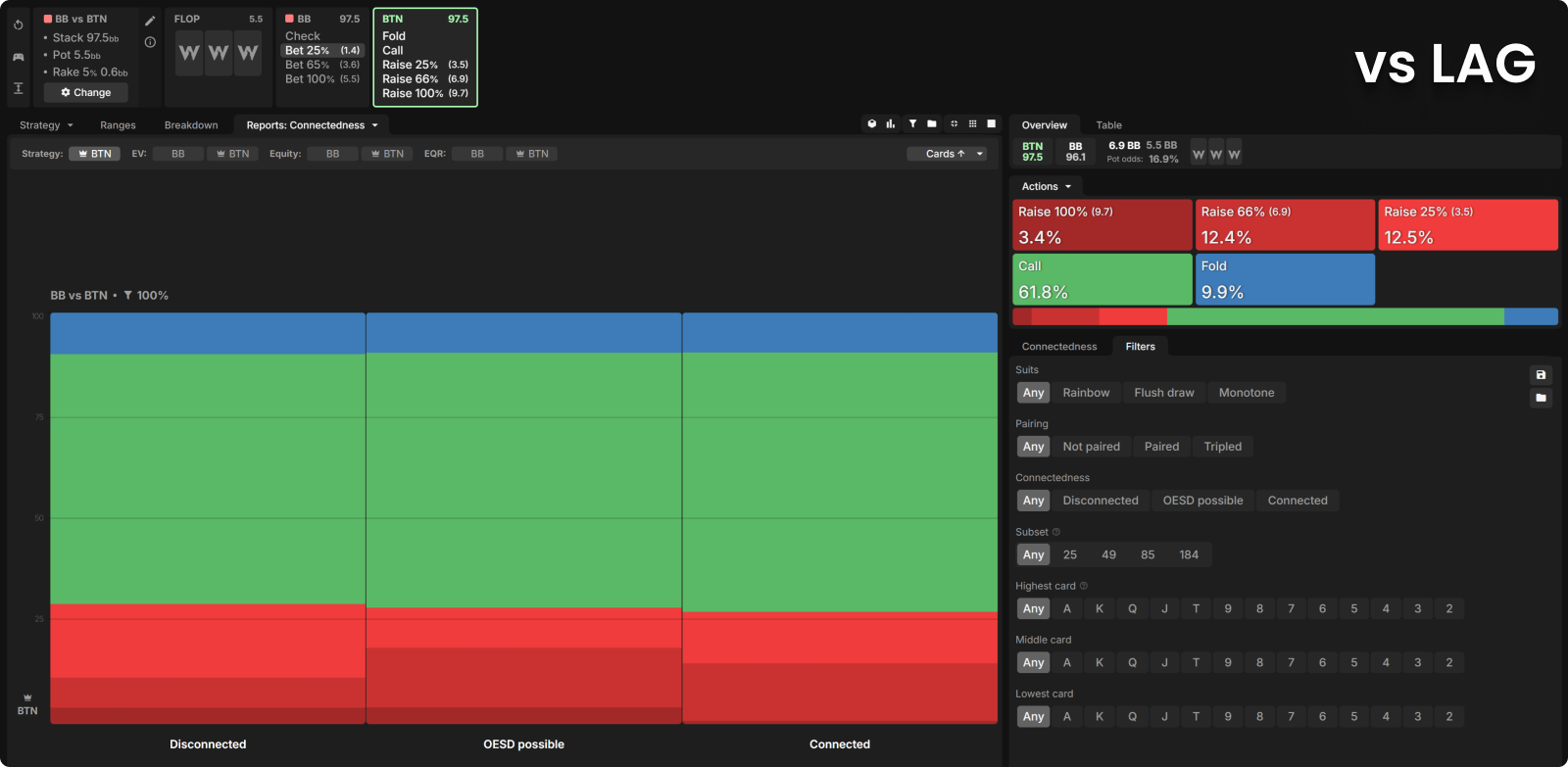
BTN folds less often to the LAG, but they also raise less often. The LAG has many strong hands in their leading range, which makes raising dangerous. But they couple those strong hands with many weaker holdings, which makes folding dangerous.
Flop Example
For a better look at how this plays out in practice, let’s investigate a specific flop where donk betting is an important part of BB’s strategy.
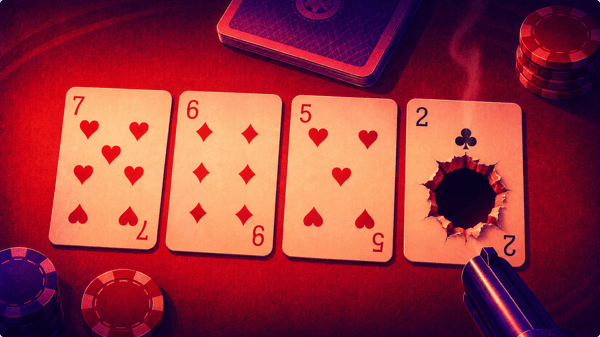
7♥6♦5♥ is one of most led flops at equilibrium, with the GTO player betting quarter-pot with 16% of their range. The LAG takes it much further, betting 66% of their range.
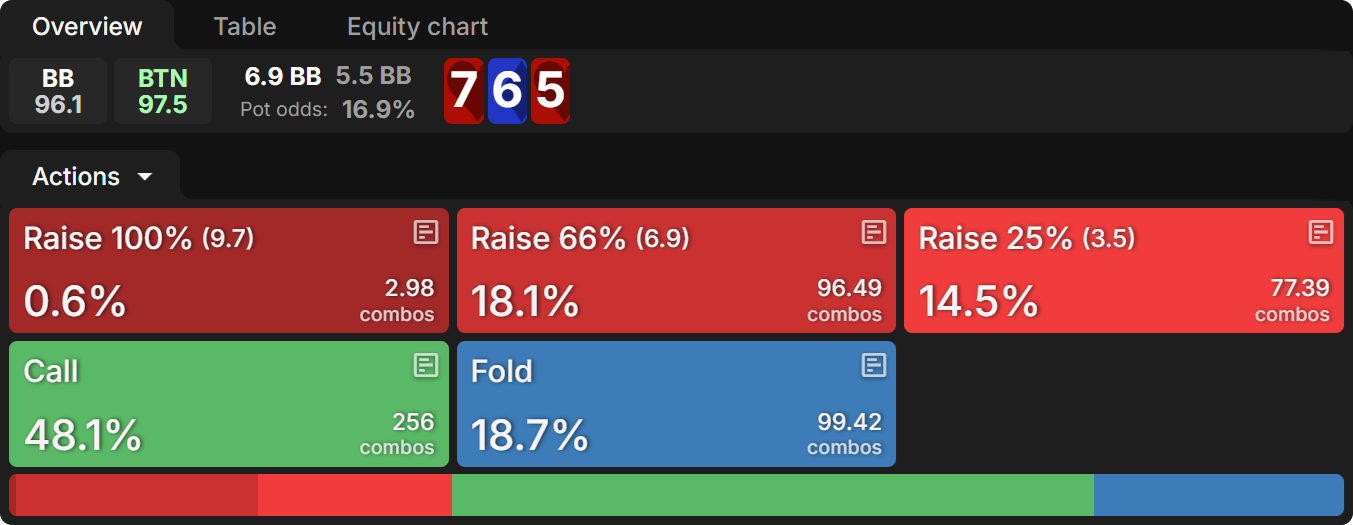
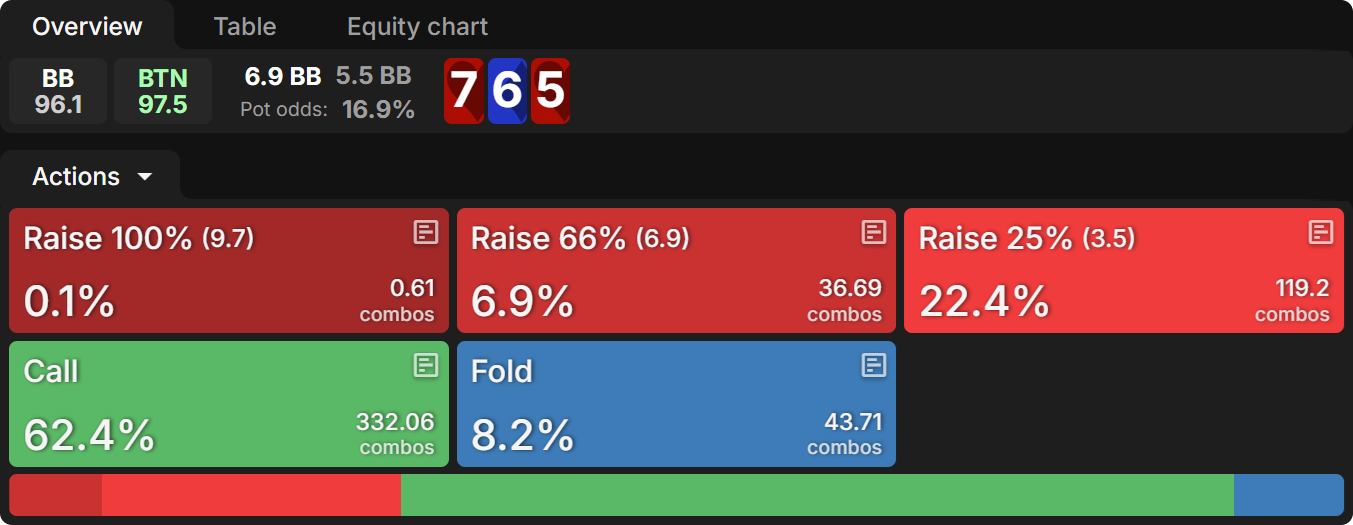
BTN responds much more passively against the LAG player, folding less, but also raising less frequently and to a smaller size.
Some of this is a reaction to the LAG’s aggressiveness (BTN has many hands that could end up in an awkward spot if 3-bet on the flop) but it is also a reaction to the composition of the LAG’s betting range in the first place. The LAG’s betting range contains a higher frequency of Trash and a lower frequency of Best Hands than the GTO player’s, which makes folding less appealing.
Conclusion
Big deviations in the frequency with which a player takes a particular action do not necessarily open up big exploitative opportunities. This is especially true on early streets, where the EVs between multiple options often run quite close. As long as a player maintains a balance between different types of hands within a range, they could, for example, shift many hands from their checking range into their betting range without sacrificing a lot of EV relative to the GTO strategy. And if you respond poorly to an aggressive betting strategy, they could even gain EV!
This is part of what makes LAG players so intimidating. They often force you onto branches of the game tree with which you are unfamiliar and where, if you don’t get the response exactly right, you might even lose EV as a result of their deviation.
Even more so than with the Maniac, fighting fire with fire is not necessarily the key to beating the LAG. Indeed, the most important exploit is to focus your fire where they are not. A player who leads the flop aggressively (but in a reasonably balanced way) will be more weak when they check. A player who raises the flop aggressively will be extra weak after calling.
Respond stubbornly to their aggression and aggressively to their passivity.
You can practice c-betting into a LAG with this drill.
Exploiting Profiles: Episode IV – The TAG
They're not a fish. They're not a maniac. The TAG reg is the opponent you'll face most often, yet most players have no idea how to exploit them.

Exploiting Profiles: Episode III – The Maniac
There's a maniac at your table. They bet every street, call everything, and somehow keep winning pots they have no business being in. So what's the adjustment? Do you start blasting back?
3-Way: How to Exploit a Calling Station?
Andrew Brokos explores the key adjustments to the BTN’s raising range construction strategy when the BB is a calling station.